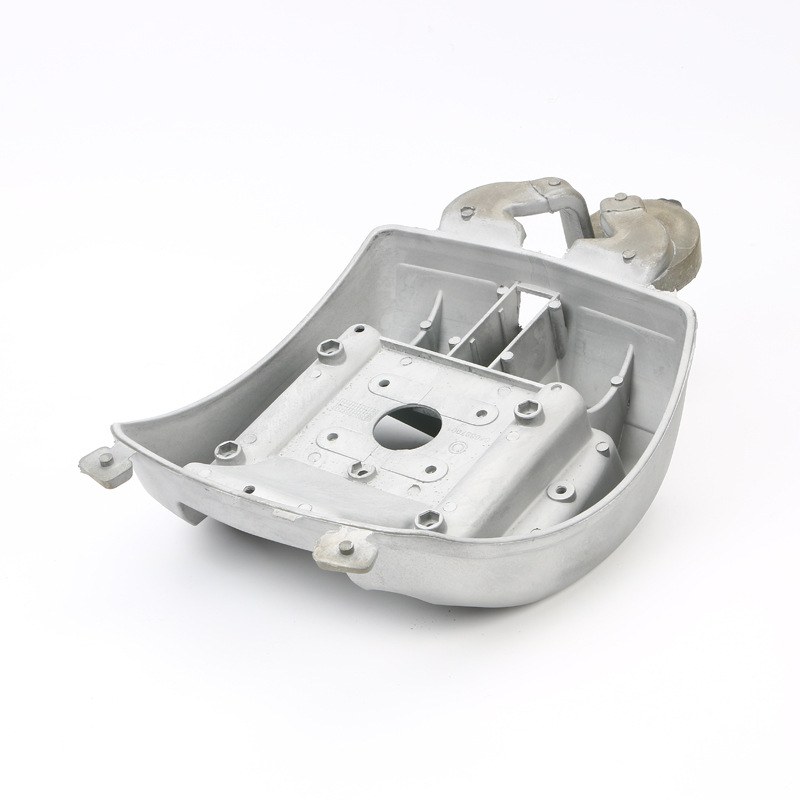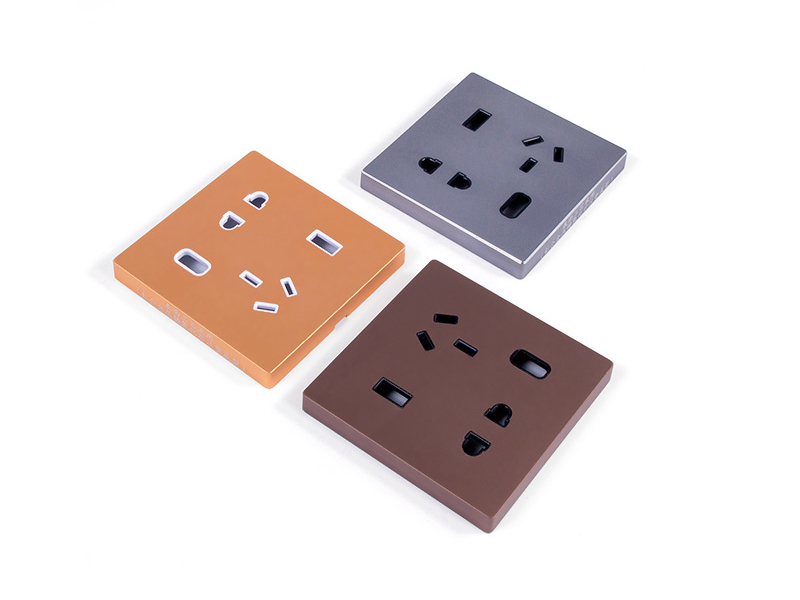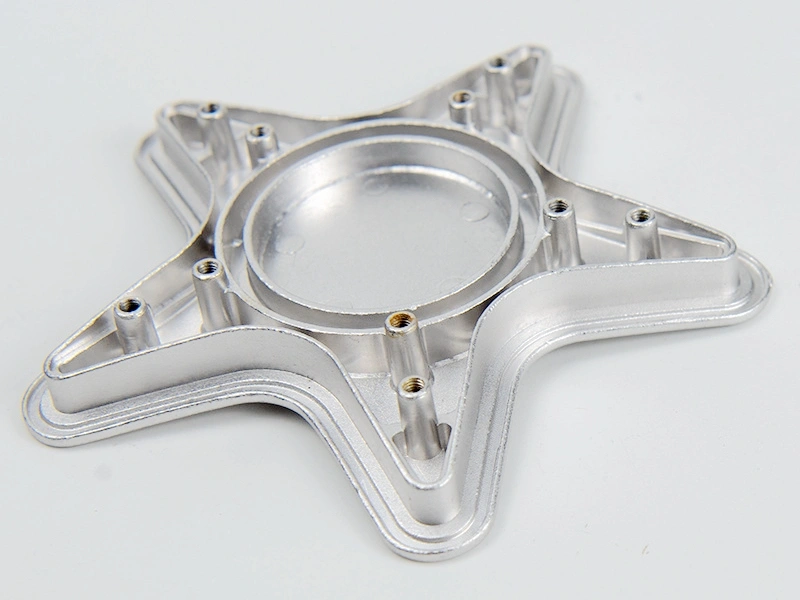
Zamak 5 Density: Weight Budget for Self-Righting Parts
Zamak 5 density sits at 6.6 g/cm³, and that number is the only fixed input in a 300 g weight budget. Everything else is a drawing decision. The 6.6 g/cm³ figure turns volume into grams, so the real question is where the volume goes, not how heavy the part ends up. A 300 g bank still falls over if that mass sits high in the Zamak 5 body, and the split decides that before tooling.
6.6 g/cm³: What the Density Fixes
Density is chemistry, not process. Zamak 5 to ASTM B86 holds 6.6 g/cm³ typical, and no change in wall thickness, injection pressure or die temperature moves it. The exchange rate between a drawing and a scale is fixed: 1 cm³ of the alloy weighs 6.6 g.
Zamak 3 carries the same 6.6 g/cm³, so a heavier bank cannot come from a grade change. Density buys mass in a fixed volume, but only in proportion. Hardness and wear follow composition and section, never the mass per cubic centimeter. Settle which numbers the zinc alloys own and which belong to the drawing before the review starts.
The 300 g Budget: Base First, Wall Second
A 300 g target is not a weight to hit at the end of a project. The target is a budget of 45.5 cm³ of metal, and the drawing has to place that volume before the die is cut. Give the base its share first, at the 12 mm section, then divide what remains between the two shells at 1.2–1.5 mm. Grade and strength belong to the alloy choice; grams belong to the drawing.
Line | Section (mm) | Volume (cm³) | Mass (g) | Held by |
|---|---|---|---|---|
Base pad | 12 | 21.5 | 142 | Sink boundary |
Two shells | 1.2 | 24.0 | 158 | Minimum wall for fill |
Total | mixed | 45.5 | 300 | Weight window ±10 g |
The wall range is the reason the order matters. Two shells at 1.2 mm carry 158 g; the same surface at 1.5 mm carries 198 g. A 40 g swing against a 20 g window means nobody can pick that wall by eye.
Self-Righting: The Center of Gravity Sets It
The bank returns upright because its center of gravity sits below the center of curvature of the base. Tilt the body and the weight acts on a lever arm set by the height gap between those two points. Mass sits on both sides of that balance and cancels, so a heavier bank with a high center of gravity tips at the same angle as a light one.
Run the budget through that test. Place 142 g at 6 mm above the base face and 158 g near mid-height at 50 mm, and the combined center of gravity lands close to 30 mm, about a third of the 95 mm height. Shift 30 g from the base to the wall and the center rises, while the scale still reads 300 g.
One Casting, Two Sections: 12 mm and 1.2 mm
The base section is 12 mm and the wall is 1.2–1.5 mm, a ratio of 8:1 to 10:1 inside one casting. That ratio sets the solidification order: the thin wall freezes first, the base stays liquid longest, and the feed path between them narrows while the base is still shrinking. One square centimeter of wall carries 0.79 g of metal; the same area of base carries 7.9 g.
Cast the base as part of the shell during zinc die casting and the whole mass arrives in one cycle, with no separate weight to fit and no pocket to machine. The same geometry decides which variable is still free. The 12 mm section is held by the sink boundary and the cooling, so added mass has to come from pad area, not pad thickness. Going the other way, a thinner base saves grams that the wall cannot spend, because 1.2 mm is already the fill limit.
Why a Steel Insert Is the Wrong Answer
A steel weight looks like the cheap route to a heavier base. Steel at 7.85 g/cm³ typical is 19% denser than Zamak 5, so 100 g of steel needs 12.7 cm³ while 100 g of zinc needs 15.2 cm³. The insert buys 2.4 cm³ of space and nothing else.
Against that space saving sit a machined pocket, a retention feature, a second material in the coating line and a galvanic pair at the coin slot. The base also stops being one part of one casting, and every one of those items is a drawing change. When a wider cast pad reaches the same 300 g, the insert has no failure mode left to fix.
Sink Marks: Where the 12 mm Boundary Sits
The 12 mm section holds heat while the 1.2 mm wall is already solid, so the base draws its shrinkage from the nearest liquid metal. That metal sits under the visible face, and the face sinks. Polishing levels the local roughness, and the decorative coating still reads the shallow curvature as a bright ring.
Three settings move the boundary outward. Gate into the thick section so the base is fed last, taper the transition, and run the base on its own cooling circuit. Without all three the honest limit sits below 12 mm, and a budget built on 12 mm will not hold. A sink mark that shows only after coating is the expensive version, because the part is already polished by then.
Density and Tolerance: Two Separate Checks
The density figure supports a mass check, not a geometry check. A 300 ±10 g window is ±3.3% of the target, and 10 g of zinc is 1.5 cm³ of metal. Move that 1.5 cm³ from the wall to the base pad and the part still weighs 300 g, while the center of gravity shifts and the sink risk rises.
The joint is measured, not weighed. A feeler gauge reads the seam, and no mass reading substitutes for it, because the same 300 g arrives with the seam open or shut. Weighing catches a missing rib; it never catches an edge that polishing rounded. Mass tolerance is the loosest number on the drawing and the least useful one for fit.
Worked Example: A 300 g Base Pad
Divide the 300 g target by 6.6 g/cm³ and the part has 45.5 cm³ of metal to place. The two shells present about 200 cm² of surface: a Ø60 barrel 95 mm tall plus the two half caps. At the 1.2 mm thin end that surface consumes 24.0 cm³, or 158 g.
What remains is 21.5 cm³, or 142 g, for the base. Spread over a 12 mm section, that volume covers 17.9 cm², a pad about 48 mm across. A full Ø60 pad at the same 12 mm would take 33.9 cm³ and 224 g, pushing the finished part to 382 g, 82 g over the window. Those four steps use only the alloy density and the drawing sections, so they carry over to a cast-and-coated Zamak part of another shape.
Inspection: What a Scale Cannot Prove
Three checks cover the budget, and only one of them needs a scale. The scale confirms 300 ±10 g. A tilt and release test confirms that the part returns upright with coins loaded. A feeler gauge confirms the joint.
Overlap between the three is small. The scale sees total volume, the tilt test sees the center of gravity, and the gauge sees the joint. A batch that passes the first check alone has confirmed about a third of what the drawing asks for.
Miscalculations: Four That Reappear
Four errors show up in most weight reviews. Density multiplied by the outer envelope counts the coin cavity as metal. A thicker base is used to close a shortfall, and the sink mark follows within a batch.
An insert is added for mass that a wider pad would have supplied. The weight window is read as a fit check, so the joint gets signed off by scale. The fix for all four is the same: turn grams into cm³ before touching the drawing.
FAQ