Zinc Die Casting Manufacturer: How to Compare Suppliers
Every supplier you shortlist will tell you the same four things. They run zinc die casting, they hold thin walls, they can plate, and they'll quote in a week. The differences show up later, usually in month six, when a batch comes back with blisters under the plating or a bore that drifted out of tolerance in the warehouse.
None of that is visible in a quote. It's visible in how the supplier controls alloy, stores dies, and documents what it measured.
Why zinc die casting suppliers are not interchangeable
Zinc is less forgiving than aluminum about one thing: impurity control. Lead, tin and cadmium at levels that would be tolerable in another alloy will cause intergranular corrosion in zinc, and the failure doesn't appear at inspection. It appears weeks later as a swollen, cracked part.
That single fact separates suppliers more than machine tonnage does. A caster running clean ingot with a controlled remelt ratio and a spectrometer on every heat will produce parts that last. A caster topping up the furnace with mixed scrap will produce parts that pass first article and fail in the field.
Two suppliers, same drawing, same alloy name, different outcomes. The alloy name on the certificate isn't the control. The control is the process behind it.
The five things that actually differ
Alloy control. Ask for the spectrometer record per heat, the remelt ratio, and the ingot certificate. Then ask what happens when a heat tests out of spec. A supplier with a written answer has a system. A supplier who says "that doesn't happen" has a hope.
Die condition. Zinc runs at a lower melt temperature than aluminum, around 390 °C against roughly 660 °C, so dies last longer and the temptation to skip maintenance is stronger. Ask for the die maintenance log and the last spotting record. A die that's been repaired four times will show it in the parting line before it shows in the part. Die steel and heat treatment decide that life, which is why P20 tool steel keeps showing up in zinc tooling quotes.
Thin-wall capability. Zinc flows better than aluminum, which is why it's used for thin cosmetic walls and fine detail. Production walls of 1.5 mm are common in zinc, and 2 mm is comfortable on most parts. The limit is set by flow length rather than by a single number. Better flow doesn't mean every wall is safe. Ask what the thinnest production wall is, with a part number, not a claim.
The finishing chain. Plating, powder coating and painting are usually subcontracted. Zinc plating on zinc castings is common but sensitive to surface porosity and cleaning. Ask how many finishing vendors are used, and whether the caster or the finisher owns the reject.
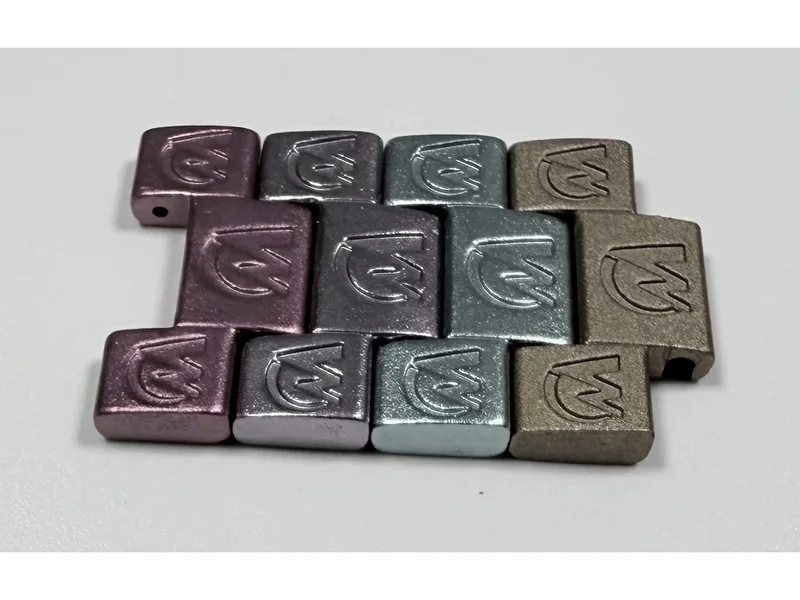
Inspection. Zinc parts fail in ways that visual inspection misses: subsurface porosity that shows up after plating, dimensional drift after aging. Ask for X-ray frequency, salt spray results, and coating thickness records. A 96 h salt spray is a common spec for plated zinc; what matters is whether the report exists and who signed it. If those documents don't exist, the inspection is a person's opinion.
A scoring sheet you can use
Score each supplier out of the weight below. It won't make the decision for you, but it stops the decision from being made by whoever answered the email fastest.
Dimension | Weight | What to ask | Red flag |
|---|---|---|---|
Alloy control | 25% | Spectrometer per heat? Remelt ratio? Ingot certs? | "We use good material" with no records |
Die condition | 20% | Maintenance log? Last spotting date? Die ownership? | Won't show the log |
Thin-wall capability | 20% | Thinnest production wall, with a part number | Only says "we can do it" |
Finishing chain | 20% | In-house or subcontracted? How many vendors? | Finishing "handled by partner" with no name |
Inspection | 15% | X-ray frequency? Salt spray? Thickness reports? | Visual check only |
A supplier that scores well on alloy control and inspection but poorly on finishing is still workable, as long as you know which risk you're carrying. A supplier whose only strong column is price isn't a supplier, it's a bet.
Certifications: ask for the scope page
A certificate proves an audit happened. The scope document proves what the audit covered.
For automotive work, IATF 16949. For general industrial, ISO 9001 as the baseline. For skin-contact hardware and consumer parts, nickel release testing to EN 1811 matters more than the ISO certificate, because that's the test a retailer will ask for.
Then there's the paperwork that isn't a certificate at all: material certificates with heat numbers, PPAP or first article packages, RoHS and REACH declarations. Ask to see a real example of each, not a template. A template tells you nothing about whether the numbers get filled in.
The paperwork test is specific: heat number on the certificate against heat number on the spectrometer printout. Verifying material traceability walks through the check.
Tooling ownership and exit terms
This is the clause that decides what leaving costs you.
Who pays for the die. Where it's stored. Who maintains it and at whose cost. What happens to it if the relationship ends. How much it costs to transfer, and in what condition it's returned.
Get all five in writing before the purchase order. Suppliers who resist are usually protecting a switching cost, and that cost is yours, not theirs.
Ask for the die life record too. A die with documented shot counts and repair history is an asset. A die with no records is a surprise waiting for the next program. The tool and die making process behind that die is where the maintenance profile is set.
Sample versus production: what to compare
A good sample proves the die can make one part. It doesn't prove the process can make ten thousand.
Compare three things before you release volume. The first article report, which should show every drawing dimension with the datum scheme stated. The process capability data from the pilot run, not from the sample run. And the packaging, because a zinc part with a cosmetic face will arrive marked if it's packed like a bracket.
Ask for parts from three different shots in the same run and measure them against each other. Variation between shots is the number that predicts your future. On zinc work, a cast feature usually holds about ±0.1 mm before any machining, and the finishing operation adds its own variation on top.
Cosmetic zinc parts usually go one of two ways: polished bare metal, or coated. The painting and coating route explains what surface preparation the finisher is actually doing before the first coat.
Zamak 3 and Zamak 5: the difference that matters
Most zinc programs come down to one decision, and suppliers often make it for you by defaulting to whatever is in the furnace.
The two alloys differ mainly in copper. Zamak 5 carries roughly 0.7 to 1.1 percent copper; Zamak 3 stays under about 0.25 percent. That difference buys strength and costs ductility, and it changes how the part behaves after months in a warehouse. It also changes weight: Zamak sits near 6.6 g/cm³, roughly 2.4 times the 2.7 g/cm³ of aluminum, so a switch between metals rewrites the shipping cost as well as the design.
Zamak 3 | Zamak 5 | |
|---|---|---|
Copper content | Low, roughly 0.25% max | Higher, roughly 0.7–1.1% |
Strength and hardness | Lower | Higher |
Ductility | Better, bends before it cracks | Lower, more brittle under impact |
Dimensional stability | Better over time | Slightly less stable as copper phases age |
Finishing | Easier to polish and plate | Harder surface, more prep for plating |
Typical use | Decorative hardware, thin cosmetic walls, plated parts | Structural brackets, load-bearing fittings |
If a supplier can't tell you which alloy they'd recommend and why, they're not selecting, they're defaulting. Ask the question with the part in hand and listen for whether the answer mentions the wall thickness. The Zamak 3 versus Zamak 5 comparison goes deeper on composition and aging.
Decorative work is where the alloy choice shows up fastest. The perfume cap project in our partner archive is a straight example of Zamak selection driving finish quality.
A supplier questionnaire you can copy
Send these ten questions before the first call. The answers, and how fast they come back, tell you more than a sample ever will.
Which alloys do you run most often, and which one would you recommend for this part?
Do you test chemistry on every heat? Can you send a recent spectrometer printout?
What is your remelt ratio, and how is scrap segregated by alloy?
What is the thinnest production wall you've shipped, and for which part?
How many zinc machines do you run, and what is the current loading?
Is plating in-house or subcontracted? Can you name the finisher?
What does your die maintenance log look like? Can you send a page?
Who owns the die, where is it stored, and what does transfer cost?
What inspection reports come with a production lot, and who signs them?
What happens when a heat fails chemistry?
Question ten is the one that sorts suppliers. Everyone says their material is controlled. Very few have a written procedure for what happens when it isn't.
Red flags worth walking away from
A quote with no breakdown. A lead time promised before the drawing is read. A refusal to do a video walk-through of the floor. A vague answer on die ownership. A certificate produced without the scope page.
Any one of those can be explained. Three of them together is a pattern.
Send a drawing and the annual volume, and we'll tell you which alloy fits, what the die envelope looks like, and where the thin-wall limits are. Talk to our zinc team.
FAQ
Should I specify Zamak 3 or Zamak 5? Zamak 5 adds copper on purpose, which raises strength and hardness at some cost in ductility. Zamak 3 remains the general-purpose choice for castability, ductility and dimensional stability, so pick Zamak 5 only when a documented load or wear requirement justifies it.
Which zinc alloy is best for corrosion resistance? No grade is universally best. Zamak 3 or 7 suit small detailed parts that need a consistent decorative finish, while Zamak 5 may be chosen for a mechanical requirement. Corrosion life depends more on purity, drainage, pretreatment and the coating stack than on the grade number.
How does Zamak differ from aluminum die casting? Zamak suits small, complex, detailed parts with good dimensional stability and decorative surfaces. Aluminum suits lightweight parts, heat dissipation, larger housings and weight-sensitive structures. The choice follows function, size and environment rather than material price.
How do I verify the alloy actually used? Follow the chain from alloy designation and condition through melt or charge, casting lot, part lot, inspection record and drawing revision. A certificate that carries only an alloy name doesn't close that chain, and the finished part should trace back to the lot.
What are the main parts of a die casting tool? Cavity and core, parting surfaces, gates and runners, vents or overflows, cooling passages, ejection, plus slides, lifters or inserts where geometry needs them. They work as a system, which is why venting and ejection deserve as much scrutiny as the cavity.
At what volume does zinc die casting make sense? There's no benchmark volume. Run the same break-even test used for any process: fixed investment against the difference in saleable recurring cost, then check it against demand, yield and revision risk. Zinc's lower melt temperature changes the inputs, not the method.