When should manufacturers choose zinc die casting instead of aluminum die casting?
Manufacturers should choose zinc die casting instead of aluminum when a compact part gains real value from fine integrated features, favorable small-part dimensional control, a polished or plated decorative route, or hot-chamber production economics, and when zinc's higher mass and service-temperature behavior do not violate the product requirements. The decision should identify a Zamak grade, revised production geometry and complete finish or assembly evidence.
Choose zinc for useful feature density
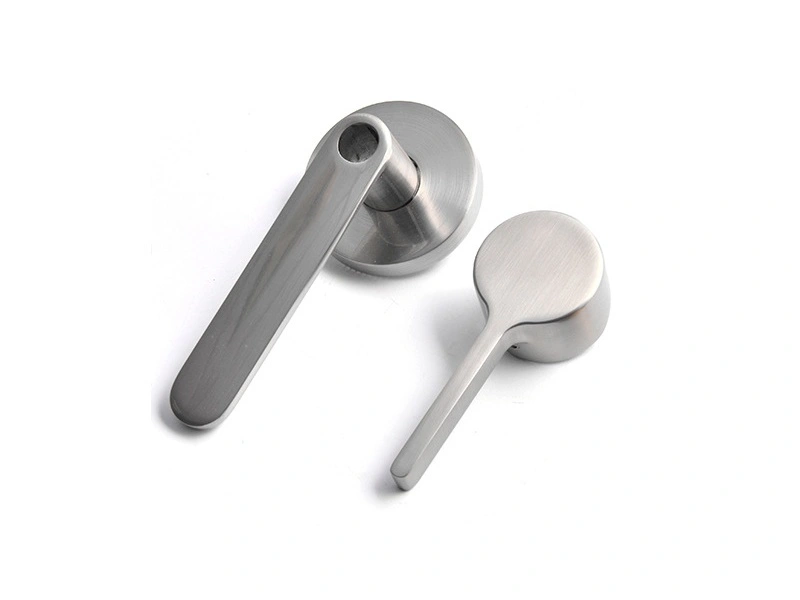
Zinc is a strong candidate for small latch bodies, connector shells, handles, control parts and hardware that combine ribs, bosses, slots, lettering and alignment features. Its casting behavior can make a compact near-net-shape design practical. The business value comes when these features remove machining, purchased components or assembly steps, not merely when the drawing looks complex.
Ask the zinc die casting source to mark gate-to-vent flow, last-fill zones, parting, slides, draft, ejection and tool access. Fine detail is useful only if it fills, releases, trims and remains maintainable over production.
Choose zinc when compact dimensional control matters
Zinc often deserves priority for tightly packaged mechanisms where many local features relate within the same die half. However, accuracy belongs to each characteristic. A dimension crossing a parting plane, slide or long thermal span may still need wider allowance or machining. Finish build can also change a bore, thread or snap fit.
Mark the actual functional characteristics and measure them after the final relevant process. A capability study on a stable trial run is better evidence than a general zinc tolerance table. If aluminum meets the same characteristics without extra operations, accuracy alone may not justify changing material.
Choose zinc for a qualified decorative metal route
Polished and plated zinc is widely used where a compact customer-facing part needs metallic appearance and crisp detail. Select zinc for this reason only when die witnesses, polishing allowance, substrate pores, rack contacts, drainage and the full plating stack have been reviewed. Reflective layers can magnify waves and pits rather than conceal them.
Approve a production-intent casting through polish and plating under defined viewing conditions. Include adhesion, coverage, environmental exposure and finished dimensions. The relevant zinc surface-finish route must be quoted as a complete sequence.
Choose zinc when the hot-chamber model creates value
Program signal | Why zinc may win | What can overturn it | Evidence |
|---|---|---|---|
High demand for a compact part | Hot-chamber cycle and cavity utilization may be favorable | Complex slides, manual trim or unstable cosmetic yield | Capacity and accepted-part cost model |
Long production life | Lower tool thermal loading may support die value | Wear-prone cores or frequent cosmetic maintenance | Tool concept, insert plan and maintenance assumptions |
Assembly consolidation | Cast detail can remove separate pieces | Tool action costs more than the removed assembly | Product-level cost and risk comparison |
Late cosmetic rejection risk | Controlled substrate can support plating | Pores or waves are found after added finishing cost | Pre-finish release gate and yield by stage |
Zinc's lower casting temperature gives a useful directional tooling advantage over aluminum, but it is not a die-life guarantee. Thin cores, shutoffs, slides, gate design, steel, heat treatment and maintenance can dominate. Compare the proposed tool, not category folklore.
Reject zinc when mass controls
Zinc's higher density can disqualify it for a large enclosure, vehicle-mounted component, moving arm or handheld product. Calculate the complete installed mass from a zinc-feasible design. Do not dismiss the penalty because the part is individually small if product count multiplies it across an assembly.
A desired heavy feel is also a requirement, but it should be explicit. If added mass has no customer or functional value, an aluminum design may use material more efficiently.
Reject zinc when temperature or thermal duty controls
Do not choose zinc for a sustained loaded high-temperature position from room-temperature strength data. Review creep, dimensional stability and fastener preload across the real time-temperature profile. Aluminum may be the better starting route, subject to its own alloy and geometry validation.
For a primary heat sink or heat-spreading housing, aluminum normally deserves first evaluation. Thermal function must still be verified with base thickness, fins, interfaces, airflow and coating included.
Confirm zinc does not create a downstream penalty
A zinc casting may form a feature well but create a product problem through weight, galvanic contact, finish chemistry or recycling requirements. Review mating metals, sealants, cleaners, restricted substances and end-of-life obligations. Machining can expose pores and coating can alter fits, just as with aluminum.
Compare accepted finished assemblies. Include tool amortization, metal per shot, yield, trim, machining, polish, plating, inspection, packaging and freight. A high-volume label does not make zinc economical if the finish rejects parts after most value has been added.
Release a zinc selection with evidence
Named Zamak grade and material-control method.
DFM-adjusted CAD, calculated mass and accepted load/temperature limits.
Tool, cavity, slide, trim, maintenance and capacity assumptions.
Feature capability, final dimensions and assembly validation.
Substrate, polish/plating or coating acceptance by visible zone.
Total delivered cost and revalidation triggers.
Choose zinc only when this evidence shows that its compact-detail, finish or production advantages create more value than aluminum for the actual part. The zinc design guide can frame DFM questions, but tool samples and finished-part tests close the decision.