Advanced Zamak Die Casting for High-Quality Furniture and Decorative Hardware
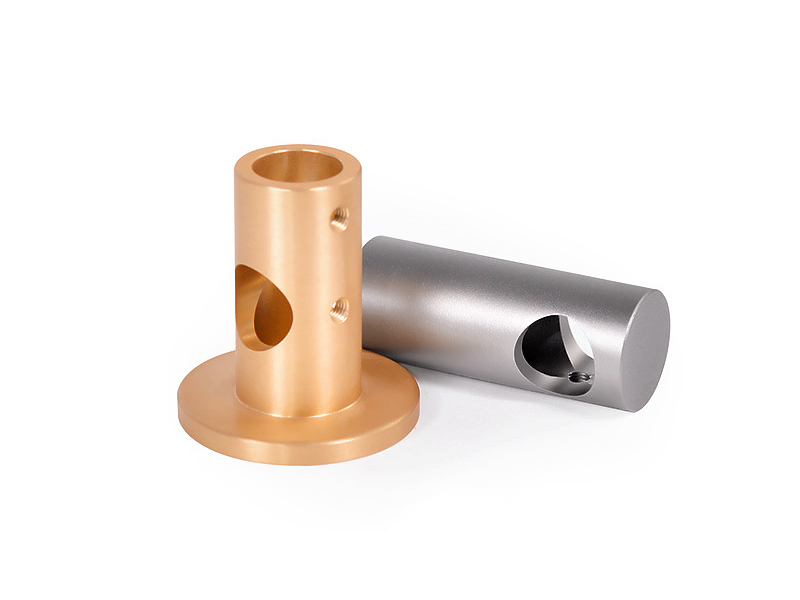
Zamak die casting can produce high-quality furniture and decorative hardware when the part is designed around three requirements at once: the load and mounting interface, the appearance standard, and the complete finish process. It is a strong candidate for pulls, knobs, escutcheons, trim, latch bodies and selected hinge components because zinc alloys reproduce fine geometry and provide a useful substrate for plating, painting and powder coating. That does not make every Zamak part premium or durable. Tool construction, die condition, polishing direction, coating buildup, fastener design and the actual service environment determine whether the finished assembly earns that description.
The practical buying decision is therefore not "Can Zamak look expensive?" It can. The useful question is whether a defined alloy, casting design and finish stack can repeatedly satisfy the approved master sample after assembly and after the agreed use tests. A supplier quoting only a raw casting has not yet quoted the product that the furniture brand will receive.
Define high quality before requesting a quote
"High quality," "luxury," "satin" and "antique brass" are not measurable specifications by themselves. A decision-ready drawing or appearance standard needs viewing conditions, approved color and gloss ranges, texture direction, permissible defect zones, protected contact points and acceptance samples. It also needs functional requirements: mounting-hole location, fastener engagement, allowable handle movement, door or drawer loads, hinge motion, installation torque and the substrate to which the hardware attaches.
Separate surfaces by consequence. A customer-facing Class A face may permit no visible flow marks, pits, blisters or polishing waves under the agreed inspection conditions. A concealed mounting face can often accept a different cosmetic limit, but it still has to sit correctly against wood, composite board, glass or metal. A thread, pivot bore or grounding contact has another standard again. This zoning prevents cosmetic labor from being spent on hidden areas while protecting the features that control appearance and fit.
Screen the hardware function before choosing Zamak
Zamak is not selected from the product category alone. A cabinet pull is usually loaded through its screw bosses and mounting feet. A knob concentrates installation torque around one attachment. An escutcheon may be mostly decorative. A hinge arm or pivot component sees repeated motion, bearing pressure and alignment demands. Large brackets can carry sustained load, and zinc alloys must be reviewed carefully where long-term stress and elevated temperature can produce time-dependent deformation.
Map the force path from the user's hand or moving panel through the casting, insert, screw and furniture substrate. Then identify thin transitions, sharp internal corners, offset loads and prying actions. If the furniture panel, screw embedment or mating pin fails before the casting, simply specifying a stronger Zamak grade will not repair the assembly architecture. For a first manufacturing screen, review the capabilities and limits of zinc die casting against the complete hardware duty rather than the visible shell alone.
Separate handles, hinges and decorative trim
Handles benefit from smooth contours, stable spacing between mounting points and enough boss section to survive tightening and repeated pulling. The critical evidence is usually an assembly pull or torque test using the intended screws and panel construction, not a generic alloy tensile value. A plated handle also needs radii and drainage that allow pretreatment and coating to reach recesses without stains or trapped solution.
Hinges are a different engineering problem. A Zamak hinge leaf or housing may be feasible, but the pivot interface, wear pair, door mass, opening angle, cycle profile and misuse load control the decision. A steel pin, bushing or separate wear element may carry motion more reliably than a cast zinc bore. The test fixture must reproduce the actual offset and mounting compliance. Decorative trim and badges have lighter structural duties, yet their thin edges, clips and attachment points still need protection against distortion during finishing and installation.
Choose Zamak 3 or Zamak 5 by failure mode
Zamak 3 is a common baseline for decorative hardware because it combines established die-casting behavior, dimensional consistency and finishing potential. Zamak 5 can be considered when the design needs a different balance of strength, hardness and ductility. Neither grade should be named "best" without the component geometry and exposure.
For a handle, compare boss cracking, bending at the mounting foot, thread or insert retention, and finish damage during tightening. For a hinge, add bearing wear, permanent set, pin retention and fatigue at the knuckle or arm. For a decorative plate, castability and surface preparation may outweigh a modest mechanical difference. Confirm alloy chemistry and metal-control practice in the quality plan; the label on a quotation is not sufficient evidence that production metal stays within the agreed specification.
Design the casting for the visible surface
The cosmetic face begins in CAD. Abrupt wall changes can disturb fill and solidification. Heavy bosses behind a broad visible face can create local sink, distortion or subsurface porosity that appears during polishing or plating. Sharp corners are hard to cover uniformly and are vulnerable to handling damage. Deep blind recesses complicate cleaning and finishing. A broad flat face can reveal even slight waviness after a bright metallic finish.
Use gradual transitions, practical radii, balanced ribs and enough draft for reliable release. Place gates, overflows, vents, ejector marks and parting lines with the final viewing zones in mind. Decorative texture must be coordinated with draft and ejection; otherwise the tool can drag the texture or polish selected high points. Logo strokes, recessed lettering and fine knurl patterns need minimum feature rules based on the chosen tool process and finish buildup, not on an image alone.
Make tooling and polishing part of the appearance plan
A cosmetic tool is an appearance asset as well as a dimensional tool. Cavity polish, texture, steel condition, slide witness lines and repair history can all print through to the casting. The tool drawing should identify Class A cavities, approved weld-repair rules and surfaces where hand blending is prohibited or controlled. If multiple cavities feed one visible product family, cavity identity should remain traceable through casting and finishing so a recurring appearance shift can be isolated.
A formal tooling review should connect gate location, venting, thermal balance and ejection to visible defects. The tool and die plan also needs a maintenance trigger based on observed flash, texture wear, dimensions and surface condition. A claimed shot life does not tell a buyer when a decorative cavity will stop matching the approved sample.
Select the finish as a complete layer system
A finish name describes an appearance family, not a complete process. Decorative electroplating normally relies on cleaning, activation and one or more metallic layers before the final color or protective top layer. Paint and powder coating require suitable pretreatment and cure conditions. Mechanical polishing or tumbling changes the substrate before coating. An antique appearance may involve a color layer plus controlled relief polishing and sealing. Every step can change edge definition, hole size and how defects are revealed.
Zamak should not be specified for conventional aluminum anodizing. When the design intent calls for a dark, bright, brushed, plated or colored surface, use a process intended and qualified for zinc-alloy castings. The broader zinc finish comparison is useful for creating a shortlist, but the final stack still depends on touch frequency, moisture, cleaners, abrasion, UV exposure, color target and cost.
Finish route | Useful when | Main design or process risk | Evidence to request |
|---|---|---|---|
Decorative plating | A metallic tone, bright or satin reflectance, and crisp detail are central to the product | Pits, blisters, edge burn, poor recess coverage, layer variation and galvanic exposure at damaged areas | Approved plated limit samples, layer specification, adhesion method, exposure test and protected-contact plan |
Wet paint | Brand color, metallic effects or lower-temperature cure options are required | Orange peel, dust, color drift, masking lines, solvent or cleaner attack | Color/gloss master, cure record, adhesion and chemical-contact checks on production-equivalent parts |
Powder coating | A colored or textured film and edge coverage suit the geometry | Film buildup in holes, Faraday-cage thinning in recesses, cure effects and loss of fine detail | Film range by zone, masking plan, fit check, cure verification and appearance samples |
Mechanical polish plus clear protection | The product needs a polished metal character without an opaque color layer | Waves, rounded detail, direction variation, exposed substrate and fingerprint sensitivity | Polish-direction standard, surface limit samples, handling method and agreed exposure test |
Antique or relieved finish | Controlled contrast between recesses and raised features defines the design | Operator-dependent variation and excessive relief removal at edges or logos | Golden sample set showing acceptable light/dark limits and high-wear area expectations |
Control color, gloss, texture and defect zones
A single beauty sample is too narrow for production control. Create a signed master and, where appearance naturally varies, approved light and dark or high and low limit samples. Record substrate alloy, cavity, polishing method, finish supplier, layer stack and topcoat. Define inspection distance, angle, illumination and whether parts are judged individually or as a matched set. A color difference that is acceptable on separate products can be objectionable when two handles sit side by side on one cabinet.
Specify directional texture in relation to the installed product. Brushing on two mating pieces should run in the intended direction after assembly, not merely follow the easiest fixturing orientation. Define where rack or contact marks may occur. Packaging must prevent parts from rubbing each other; a finish that passes the coating line can still arrive scratched if separators, bags and tray orientation are left unspecified.
Build a functional tolerance chain
Do not assign one tight tolerance to every casting dimension. Start with the assembly result: pull spacing, handle stand-off, hinge axis position, flushness, gap, latch engagement or trim alignment. Allocate variation among the casting, machining, coating, insert, screw, mating hardware and furniture panel. Coating buildup belongs in that chain, especially in holes, slots and close-fitting interfaces.
Use cast dimensions where the process can satisfy function and appearance without unnecessary machining. Reserve post-machining for datums, bores, threads or mounting faces whose fit cannot be controlled economically in the cast-and-finished state. A machining setup should reference datums that represent the installed assembly. Checking an isolated hole coordinate while ignoring a warped mounting foot does not prove that the handle will sit flat.
Design fasteners, inserts and contact faces together
Furniture hardware often fails during installation rather than normal use. A screw driven at excessive torque can crack a boss, strip a thread, pull an insert or crush the panel. Define the fastener type, engagement, washer or bearing face, installation tool and torque-control method. If an insert is used, specify insertion direction, retention requirement, allowable rotation and whether it is installed before or after finishing.
Mask or machine electrical, adhesive or high-friction contact areas when the coating would interfere. Protect finished faces during component assembly. For a multi-part handle or hinge, inspect the complete unit for motion, play, gap, flushness and appearance; passing each loose component does not guarantee a good assembly.
Validate durability against the real use condition
Furniture hardware sees fingerprints, skin oils, household cleaners, humidity, kitchen residues, bathroom condensation, sunlight near windows, abrasion from rings or keys and repeated installation loads. Hospitality and commercial furniture may have a different cleaning frequency and misuse profile from residential cabinetry. Outdoor furniture adds water retention, UV exposure, temperature cycling and galvanic contact with other metals.
Select tests from those exposures. Possible evidence includes pull or proof loading, hinge cycling, installation torque, coating adhesion, abrasion, chemical spot tests, humidity or corrosion exposure, UV weathering and thermal cycling. The test method, specimen condition, mounting substrate, load path, duration and acceptance criteria must be agreed for the project. Salt-spray hours alone do not predict service life, and a visual coating pass does not prove that a hinge remains aligned after cycling.
Use a control plan that connects casting and finishing
Incoming alloy control, die condition, casting parameters, trimming, deburring, polishing, cleaning, coating, assembly and packaging form one process chain. A defect may originate well before the stage where it becomes visible. Subsurface porosity can open during polishing; residual release agent can weaken adhesion; aggressive buffing can distort edges; poor racking can leave contact marks; coating buildup can close a slot.
The control plan should identify characteristics by stage and include cavity traceability where useful. First-article review should cover raw castings, prefinished parts and final assembled hardware. During production, combine dimensional checks with signed visual limits and functional gauges. When a finish is outsourced, change control must extend to the sub-tier's chemistry, pretreatment, rack orientation and cure practice. The buyer should know which changes require new samples or renewed validation.
Compare cost at the finished-hardware level
Zamak can consolidate decorative geometry and reduce machining, but raw casting price is only one line. Include tool construction and maintenance, polishing labor, finish yield, masking, inserts, machining, assembly, inspection, matched-set sorting, packaging, scrap and rework. A highly reflective plated face may cost more to prepare and reject than a textured painted surface even when both begin with the same casting.
Ask suppliers to separate recurring and nonrecurring costs and to state finish lot assumptions. Color changes, small releases and many SKUs can create minimum batch charges at the coating supplier. Multi-cavity tooling may reduce casting cost while creating a harder cavity-to-cavity appearance-control problem. The lowest quote is credible only when it covers the same layer stack, defect limits, inspection, testing and packaging.
For one casting sold in several finishes, request a shared casting campaign and separate finish-release matrix. This shows whether unfinished inventory can be postponed safely, which color carries the minimum line charge, and how cavity identity remains traceable after the lot is divided. Include storage protection and the maximum permitted delay before surface preparation; uncontrolled work-in-process can undermine later adhesion and appearance.
Prepare a decision-ready RFQ
Provide 3D CAD and controlled drawings, installed orientation, hardware function, load cases, furniture substrate, fasteners, mating parts, annual demand and release quantities. Mark visible zones, datums, functional dimensions, texture direction, color and gloss references, finish stack if already selected, masking areas, rack-mark locations, inserts, assembly work and packaging expectations. Include the use environment, cleaning agents, exposure risks, validation method and failure consequence.
Request alloy and metal-control assumptions, casting DFM, gate/vent/ejection concept, cavity plan, finish-process flow, sub-tier ownership, defect standards, golden and limit samples, dimensional and functional inspection, change control, traceability and a cost breakdown. A capable supplier should identify conflicts, such as a sharp edge that cannot coat evenly or a plated hole whose buildup threatens fit. The sourcing review described in choosing a zinc die-casting supplier should be extended to the finishing and assembly partners that actually determine the delivered appearance.
Advanced Zamak die casting produces high-quality furniture and decorative hardware only when "quality" is converted into controlled surfaces, functional interfaces and assembly-level evidence. Approve the finished system, not just a polished sample or raw casting. For project-specific DFM and quotation inputs, use the project contact with the complete RFQ package.
FAQs