One-Stop Metal Casting Service: Streamlining Your Production Process
 A one-stop metal casting service can streamline production when one accountable supplier controls the interfaces among engineering, tooling, casting, machining, finishing, inspection, assembly, and delivery. The benefit is not that every operation happens in one building. It is that one controlled revision, one requirement flow, one schedule, and one reaction process follow the part across all operations, including qualified outside processors.
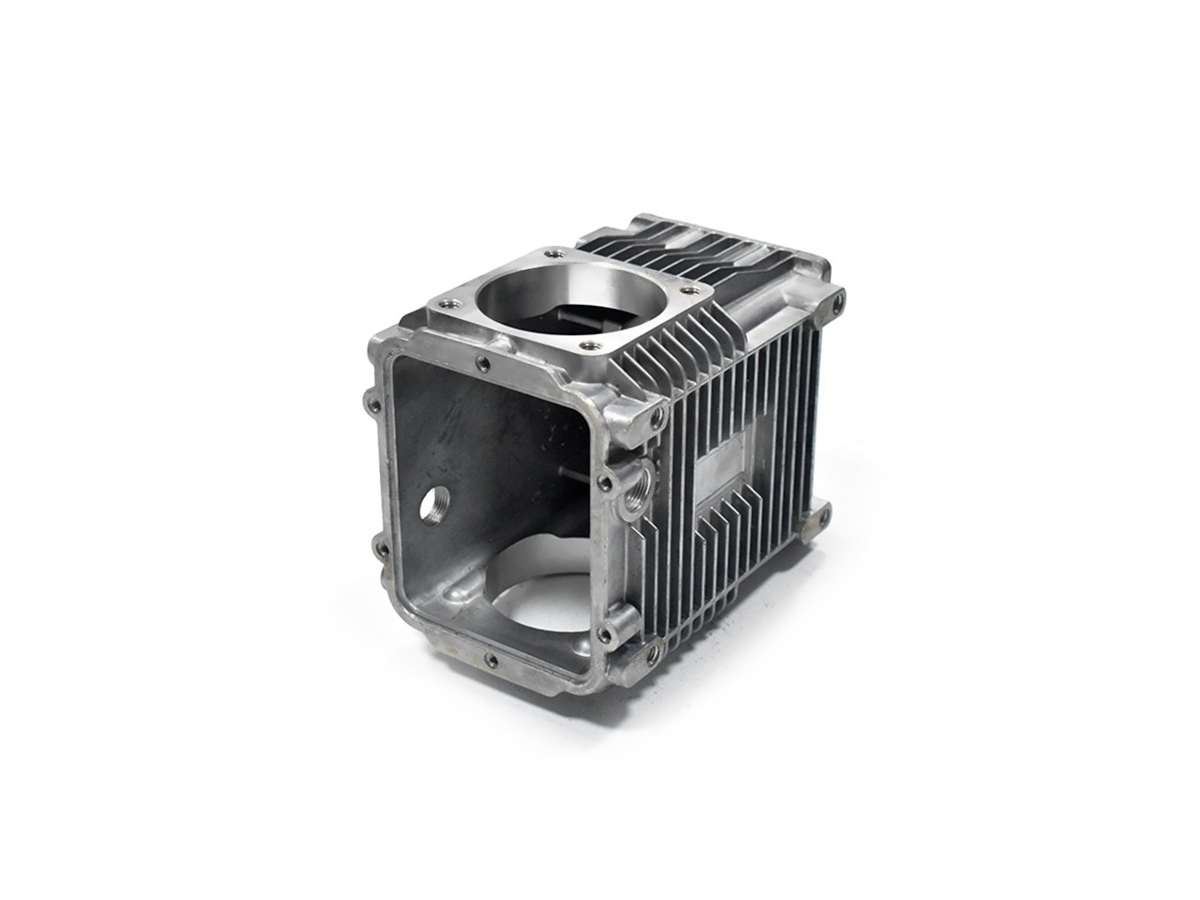
Integration is valuable for cast parts whose final function depends on several operations. A pressure-tight housing may need casting control, datum-based machining, cleaning, coating or conversion treatment, threaded inserts, leak testing, and protective packaging. If those stages are quoted and controlled separately, gaps in responsibility can appear around stock, substrate condition, test state, cosmetic damage, or revision changes. A genuine one-stop plan closes those gaps before production.
Define one-stop by accountability
A one-stop service should provide a named owner for the complete manufacturing route and a clear owner for each technical decision. The lead supplier may perform some operations internally and manage approved partners for others. Buyers need visibility into that model because process location affects capacity, transport, traceability, confidentiality, contingency, and change control.
The quotation should identify the legal and operational boundary. State who designs and owns the die, purchases material, approves outside processors, controls process changes, holds work in process, issues inspection records, accepts nonconforming material, and warrants the final delivered condition. A single purchase order is convenient, but it is not sufficient evidence of integrated control.
Keep product authority with the appropriate party. The buyer owns product requirements and approves concessions that affect function. The supplier owns the proposed manufacturing process and must disclose assumptions. Engineering collaboration should make those responsibilities explicit rather than using "turnkey" to conceal them.
Decide when integration adds value
Integration adds the most value when operations are technically coupled. Casting datums affect machining fixtures. Internal discontinuity risk can affect a machined seal. Alloy and casting skin affect surface preparation. Coating changes dimensions and electrical contact. Assembly can expose tolerance interactions that separate suppliers cannot diagnose alone. One owner can manage the complete cause-and-effect chain.
A simple raw casting with no secondary work may not need a broad service model. A buyer with qualified specialist processors, strong internal engineering, and established logistics may prefer a managed multi-supplier route. The choice should follow technical interfaces, supply risk, and total landed cost rather than a belief that consolidation is always better.
Also consider negotiation and continuity. Consolidating work can reduce transactions and handoffs, but it concentrates dependency. Buyers should retain access to controlled drawings, tool records, approved process specifications, quality history, and ownership terms. Integration should improve control without making the supply chain opaque.
Map the complete production route
Before requesting prices, create a route from controlled product inputs to accepted delivery. Include DFM, prototype evidence, material procurement, tool and trim development, trials, casting, gate and flash removal, heat treatment where applicable, machining, cleaning, surface treatment, assembly, functional tests, inspection, documentation, packaging, and freight. Mark required approval gates.
For each stage, identify its incoming condition and outgoing evidence. Machining may require accepted raw castings, cavity identity, stock, and a released operation drawing. Finishing may require a clean machined substrate, approved masking, and an appearance reference. Assembly may require coating release, purchased-component revision, cleanliness, and a test fixture. This interface map is the working definition of an integrated service.
Interface | Input that must transfer | Evidence before the next stage | Risk if ownership is unclear |
|---|---|---|---|
Engineering to tooling | Approved model, drawing, DFM, demand and critical zones | Tool concept, assumptions and open-item closure | Tool built to an obsolete or unmanufacturable revision |
Tool trial to casting | Corrected die, trim, process state and sample approval | Released cavities and production control plan | Sample success that cannot be repeated at rate |
Casting to machining | Raw datum, stock, cavity/lot identity and acceptance | First-off machining and in-process controls | Stock breakout, fixture distortion or mixed cavities |
Machining to finish | Clean substrate, surface map, masking and sensitive dimensions | Approved production finish and finish-lot records | Adhesion, color, corrosion or fit failure |
Finish to assembly/test | Released coating, component revisions and handling limits | Assembly record and final functional evidence | Cosmetic damage, wrong hardware or invalid test state |
Quality to shipment | Accepted quantity, deviations, documents and packaging plan | Traceable release at the agreed destination | Blocked shipment or field use of the wrong condition |
Control the route from engineering through validation
Begin with engineering and requirements
Casting engineering should translate product requirements into decisions that survive the full route. Review alloy and casting process, parting, draft, walls and transitions, ribs and bosses, cores or slides, gating and overflow zones, ejection, machining stock and datums, coating zones, joining, test access, and appearance.
Mark critical-to-quality characteristics and explain their function. A sealing bore may need casting stock, a stable raw locator, machining, cleaning, and leak testing. A cosmetic face may limit gate, ejector, trim, rack, and packaging marks. An electrical contact may require masking after coating. These relationships should be visible before tooling.
DFM recommendations are proposals, not silent product changes. Record the original requirement, manufacturing issue, proposed revision, cost or risk effect, validation needed, and approving authority. When a recommendation cannot be accepted, the supplier should show the process or secondary operation required to meet the original design.
Use prototypes to close specific gaps
Rapid prototypes can answer package, fit, access, handling, or preliminary function before casting tooling. Machined metal samples can support fixture, thermal, assembly, or selected material work. Alternate-route castings can help with cast-metal machining and finish. None automatically validates production die fill, cooling, ejection, cavity balance, or long-run process behavior.
Build a fidelity matrix for geometry, material, material condition, process, surface, dimensions, assembly, and quantity. State which dimensions are representative in each sample. A prototype hand adjustment or substitute treatment must remain visible in reports so it does not enter the production baseline unnoticed.
Use bridge or production-tool trials when the decision depends on the actual casting mechanism. Target predicted flow-front meetings, trapped-gas zones, heavy sections, pressure-sensitive paths, ejection distortion, trim witness, machined seals, and cosmetic faces. Select inspection and functional tests for those mechanisms.
Select casting route and material together
Metal casting routes have different fixed costs, geometry rules, cooling conditions, material options, surfaces, dimensional behavior, and production rates. High-pressure die casting, gravity or low-pressure casting, sand casting, and investment casting cannot be compared only by raw part price. Include tooling, machining, finish, inspection, demand, and the evidence required by the application.
Specify exact alloy designation, governing standard, material condition, and acceptable alternatives. A380, ADC12, A356, Zamak 3, Zamak 5, brass, and bronze designations imply different process and service considerations. Availability in a small or recurring lot also matters. Do not substitute a familiar grade merely because it is already scheduled.
Connect properties to validation. Corrosion environment, thermal transfer, electrical conductivity, wear, load, temperature, joining, coating, and substance restrictions should drive material selection. Handbook values or a material certificate do not prove every local property in a complex casting; define the evidence needed for the part.
Coordinate tooling and downstream operations
Develop tooling around the downstream route
Tool and die development should account for trim, machining, finish, handling, gauges, and maintenance. The concept should identify tool material, cavities, inserts, slides or cores, cooling, vents, vacuum provisions where used, ejection, gate and overflow removal, spare components, ownership, storage, and modification boundaries.
Machining locators and stock cannot be added thoughtfully after the die is complete. Finish racks and contact points may need noncosmetic zones. Assembly or leak-test fixtures may need stable interfaces. An integrated review lets these downstream requirements shape tool steel before changes become expensive.
Define trial and correction gates. Tool-design approval, trial permission, dimensional sample approval, functional sample approval, and production release are separate milestones. Record which cavities, trim, inserts, parameters, fixtures, and reports were accepted at each gate.
Control the casting-to-machining interface
Post-casting machining needs a controlled raw condition. Separate as-cast and machined dimensions. Define datum transfer, free or restrained measurement, stock, clamp regions, tool access, operation sequence, cutter and fixture life, burrs, chips, cleaning, and the effect of coating on final dimensions.
Internal discontinuities may be harmless in an untouched wall but exposed by a cut or connected to a seal. Plan the casting process and machining depth together for pressure-sensitive features. If impregnation is allowed, define its place in the machining, cleaning, coating, and leak-test sequence and its acceptance authority.
Multi-cavity tools can need cavity-specific evidence or offsets. Preserve cavity and material-lot identity into machining when product risk warrants it. If a machined result drifts, the integrated team should separate casting stock, raw datum, fixture, program, tool wear, measurement, and environmental causes before adjusting the process.
Control finishing as a substrate process
Post-processing and finishing begin with the actual casting substrate. Alloy phases, casting skin, machined zones, porosity, cleaning, and heat exposure affect conversion treatment, anodizing, plating, powder coating, painting, and other selected finishes. Qualification on billet or a hand-polished model may not represent production.
The finish specification should identify purpose, preparation, masking, threads, electrical and thermal contacts, coating-sensitive dimensions, racks and contact marks, cosmetic zones, color or texture reference, cure constraints, corrosion environment, tests, and repair rules. A process name alone cannot define acceptance.
Whether the finisher is internal or external, control the same inputs and records. Name the processor in the approved route where required, define transport protection and queue assumptions, and prohibit unapproved substitution. One-stop accountability does not mean hiding subcontractors; it means managing them under the same product and change controls.
Treat assembly as manufacturing
Assembly can deliver more useful value than separate parts when component interfaces and final tests are controlled together. It can reveal stack-up, thread, seal, connector, cleanliness, and cosmetic issues before shipment. It also introduces purchased-component revisions, torque or joining requirements, orientation, cure, fixtures, poka-yoke, and repair decisions.
Specify incoming acceptance for inserts, fasteners, seals, adhesives, electronics, or mating castings. Define lot or serial traceability as required, work instructions, tool control, functional tests, acceptance, and packaging. If an assembly fails, evidence should distinguish casting, machining, finish, purchased component, assembly method, and test fixture.
Final testing must identify the product state. Leak, electrical, thermal, load, motion, or appearance checks can change after coating and assembly. A raw casting test should not replace a final-condition requirement unless engineering has established equivalence.
Release and sustain the integrated supply chain
Build one quality plan across all stages
An integrated quality plan starts with the drawing and follows each characteristic to the stage where it is created and verified. Material records address chemistry or condition. Casting controls address fill, gas, shrinkage, tool and cavity effects. Machining controls address datums and functional interfaces. Finish controls address substrate and coating. Assembly controls address component and function.
Use inspection methods according to the question. Dimensional measurement, material analysis, visual standards, selected radiography or computed tomography, leak testing, mechanical tests, coating tests, and assembly function do not substitute for one another. Sampling should account for risk, process evidence, cavities, tool state, and the cost of late discovery.
Define containment from the last accepted point. Trace suspect material through downstream operations and shipments. The lead supplier should coordinate the investigation, but the cause must be assigned to the responsible process. Sorting can protect delivery; it does not replace corrective action.
Schedule the critical path, not the company chart
A one-stop supplier cannot remove physical dependencies. Design release precedes tool manufacture. Corrected samples precede production release. Machining needs acceptable raw parts. Finishing needs an approved substrate and specification. Final tests may need fully assembled parts. Integration can shorten approval and transport gaps, but it cannot justify a universal lead-time promise.
Create a dated schedule with technical review, material, tooling, trials, correction, pilot, casting, machining, finish, assembly, inspection, documentation, packaging, freight, and buyer approvals. Identify internal and outside operations, queue assumptions, partial-delivery opportunities, and recovery paths. A repeat order should be scheduled from current tool, material, capacity, inventory, and processor status rather than from the original launch plan.
Use partial deliveries only for a defined decision or supply need. Unfinished samples can support fixture or dimensional review while finished parts continue, but they are not final conforming delivery. Splitting lots can also add setup, quality records, appearance variation, packaging, and freight.
Compare total landed cost and risk
Integrated sourcing can reduce purchase orders, freight legs, duplicate receiving checks, packaging changes, and delays between suppliers. It can also add a management margin or concentrate dependency. Compare like-for-like total landed cost and risk rather than assuming consolidation automatically saves money.
Request separate prices for engineering, tooling, trials, casting, machining, finishing, assembly, testing, packaging, freight, maintenance, and changes. This preserves cost visibility inside one commercial package. Ask who bears loss when a defect is discovered after value has been added and how rework or repeat processing is authorized.
Review cash and inventory. One supplier may hold raw castings and finish to releases, reducing finished-stock exposure. That plan needs ownership, storage, corrosion protection, revision control, and liability. A consolidated shipment may lower freight but delay early usable parts. Model scenarios using the actual demand cadence.
Manage concentration and continuity
Map single points of failure across material, tool, machine, trim, fixture, gauge, finish, assembly component, test equipment, packaging, and logistics. Continuity options include spare inserts, maintenance plans, protected tool data, duplicate fixtures, approved alternate machines, qualified outside processors, safety stock, and second sources. Each protects a different dependency.
Tool ownership and transfer rights should be written before purchase. Define access to models, maintenance history, programs, gauges, approved samples, process rationale, and records. Transfer to another machine or supplier still requires validation because thermal control, shot system, automation, trim, machining, finish, and measurement can differ.
Review proposed sub-suppliers and change notification. The lead supplier should not replace material sources, finishers, heat treaters, or laboratories where approval is required without authorization. Integration is strongest when the buyer can see and govern the real chain.
Control revisions across work in process
A product change can affect the die, pattern, trim, casting stock, machining program, fixture, gauge, finish masking, work instruction, purchased components, test, packaging, and inventory. Set a physical stop point. Record the last accepted old-revision part and first approved new-revision part.
Count raw, trimmed, machined, finished, assembled, packed, and shipped stock. Decide use, rework, restricted application, return, hold, or scrap for each state. Rework needs an instruction and validation; it is not automatically acceptable because one supplier controls all stages.
One route owner can coordinate change impact quickly if records are current. The advantage comes from traceability and authority, not from skipping approval. Rebaseline cost and schedule, identify evidence invalidated by the change, and prevent mixed revisions.
Prepare a complete one-stop RFQ
Provide controlled 3D data and drawings, revision, product function, material and acceptable alternatives, annual and lifetime demand, release cadence, critical characteristics, appearance zones, mating interfaces, machining, finish, assembly components, tests, documentation, traceability, packaging, destinations, target decisions, service demand, and expected change window. Mark requirements open to DFM.
Ask the proposal to show process route, make-or-buy map, approved sub-suppliers, tool and equipment scope, operation interfaces, acceptance gates, accepted-output capacity, quality plan, records, ownership, maintenance, inventory, partial delivery, schedule dependencies, contingency, change control, and commercial exclusions. Confirm who has final responsibility for delivered conformity.
A one-stop metal casting service streamlines production when integration produces fewer ambiguous handoffs and better evidence. The buyer should be able to trace each requirement from the drawing through the operation that creates it, the check that verifies it, and the person who reacts if it fails.
Frequently Asked Questions