
Aplicaciones avanzadas y beneficios de la fundición a presión de aluminio
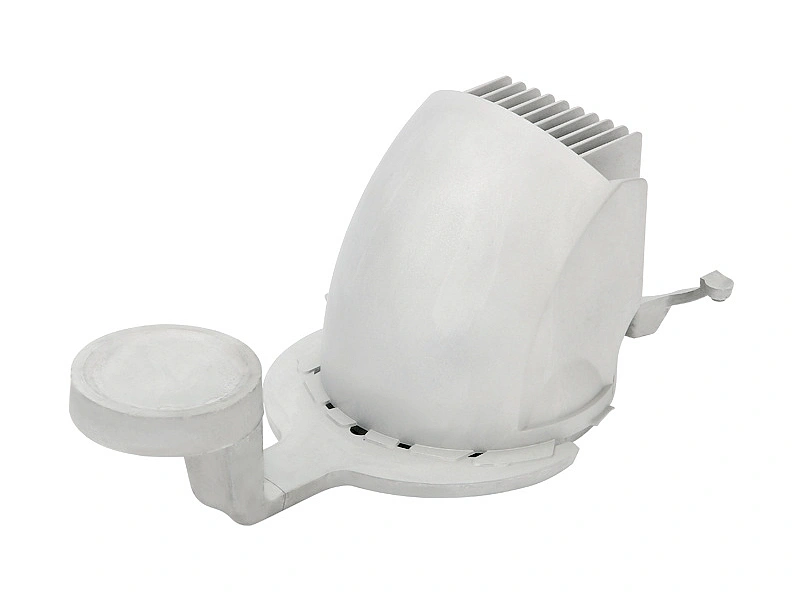
Introduction: Aluminum Die Casting – The Cornerstone of Modern Manufacturing
In today’s rapidly evolving industrial landscape, aluminum die casting has evolved from a traditional component forming method into a core technology that drives product innovation and performance breakthroughs. As a senior engineer at Neway, I see clearly that the true value of aluminum die casting lies not only in its high production efficiency, but also in its ability to deliver an exceptional cost-to-performance ratio—combining lightweight design, high strength, excellent thermal conductivity, and more into one process. It empowers cutting-edge products across diverse fields, from ground transportation to cloud computing infrastructure. This article will take you beyond the basics to explore how advanced processes and carefully selected materials enable aluminum die castings to achieve breakthrough applications in high-end sectors, unlocking substantial value.
The Exceptional Performance of Aluminum Die Castings: The Root of Its Advantages
Unmatched Strength-to-Weight Ratio
One of the most notable advantages of aluminum die castings is their excellent structural strength at very low weight. This is critical for industries focused on energy efficiency and performance. For example, in new energy vehicles, every kilogram of weight reduction can contribute to improved driving range. With optimized structural design, aluminum die castings can replace traditional cast iron or steel components, achieving significant lightweighting while maintaining required safety and stiffness.
Outstanding Thermal Conductivity and Electromagnetic Shielding
With the rise of 5G and the Internet of Things, thermal management and electromagnetic compatibility have become increasingly critical. Aluminum alloys are excellent thermal conductors, making them ideal for heat sinks and chip bases. At the same time, aluminum naturally functions as a Faraday cage, effectively shielding electromagnetic interference (EMI) and protecting sensitive internal electronics. As a result, well-designed aluminum die-cast housings become both the “armor” and the “air conditioner” for communication devices, servers, and related equipment.
High Design Flexibility and Integration
Traditional manufacturing methods often require multiple parts to be joined through welding or fastening. In contrast, through upfront die casting design services, aluminum die casting can integrate complex structures into a single component. This integrated design reduces assembly steps and management costs, while also improving overall structural strength and reliability by reducing the number of joints and interfaces.
Sustainability and Recyclability
In an era where green manufacturing has become a global priority, the 100% recyclability of aluminum alloys is a major competitive advantage. Scrap aluminum products can be repeatedly remelted and reused, with remelting energy consumption at only about 5% of primary production. Choosing aluminum die casting is therefore not just a technical decision, but also a strategic, environmentally responsible choice aligned with sustainable development goals.
How Advanced Manufacturing Processes Enable Exceptional Performance
High Vacuum Die Casting Technology
Conventional die castings often contain internal porosity, making them unsuitable for heat treatment strengthening. High vacuum die casting addresses this by evacuating the mold cavity to near-vacuum conditions during injection, dramatically reducing internal gas pores. This enables components to undergo solution treatment and T6 heat treatment, achieving higher density, strength, and elongation—making them suitable for critical automotive structural parts and other safety-critical applications. This technology represents a high-end extension of our conventional aluminum die casting capabilities.
Squeeze Casting and Semi-Solid Forming Technologies
For applications with special performance requirements, advanced processes such as squeeze casting and semi-solid forming offer more options. Squeeze casting solidifies molten metal under high pressure, producing near-net-shape parts with fine grains and minimal porosity. Semi-solid forming utilizes the thixotropic behavior of alloys in the semi-solid state, effectively reducing casting defects and enabling the production of complex parts with mechanical properties that approach those of forged components.
Precision Gating and Cooling System Design
Even the most advanced process depends on the mold as the “mother tool.” The design of the runner system and cooling channels directly determines product quality, production efficiency, and mold life. Our die mold manufacturing team utilizes mold flow simulation software to optimize metal flow paths and ensure uniform cooling. This ensures stable and consistent casting quality from the very beginning and forms the foundation for high-volume, high-quality production.
How Key Material Choices Enhance Performance
High-Strength Alloys: Applications of A356/A357
When your project requires extremely high strength, A356 aluminum alloy is a top choice. It offers good castability and can be significantly strengthened through T6 heat treatment (solution treatment plus artificial aging). With excellent yield strength and elongation, it is widely used in safety-critical automotive structural components such as suspension arms and steering knuckles.
High Thermal Conductivity Alloys: Choosing Between A383 (ADC12) and A360
In applications where thermal management is critical, material selection becomes even more important. ADC12 aluminum alloy (equivalent to A383) is a highly versatile alloy with good castability, mechanical properties, and moderate thermal conductivity. A360 aluminum alloy, on the other hand, offers superior thermal conductivity and excellent gas tightness. Although it is more challenging to cast, it is an ideal choice for high-power LED housings, engine blocks, and other components requiring efficient heat dissipation.
Alloys for High-Temperature Performance
For components operating in elevated temperature environments, such as engine-adjacent parts, creep resistance and high-temperature stability are crucial. A380 aluminum alloy maintains good strength and hardness at higher temperatures while providing excellent castability, making it a widely used choice that balances performance and cost.
Game-Changing Advanced Application Sectors
New Energy Vehicles and Giga Casting
The new energy vehicle industry serves as a showcase for aluminum die casting technology. From battery pack housings and e-drive units to inverter and controller enclosures, aluminum die casting offers integrated solutions that feature lightweight construction, high sealing performance, and structural strength. In our BYD automotive parts case, the custom die castings we supplied embody our commitment to precision, quality, and performance under stringent automotive standards.
5G Communications and High-End Computing Hardware
The large-scale deployment of 5G base stations and the rapid growth of data centers impose unprecedented requirements on hardware. Aluminum die-cast radomes and filter housings are lightweight, durable, and capable of effective EMI shielding. In high-performance computing, the aluminum die castings we supplied for the Nvidia GPU frame case achieve robust structural support and efficient thermal pathways within limited space, ensuring stable GPU operation.
Aerospace and Precision Instruments
In aerospace and precision instrumentation, every gram of weight saved is highly significant. Aluminum die castings, with their high rigidity and excellent dimensional stability, are widely used in UAV bodies, avionics housings, and optical equipment brackets. They deliver an optimal balance of lightweight design and reliability, even under demanding operating conditions.
High-End Consumer Electronics and Medical Devices
From premium laptop housings to medical device handles, aluminum die casting provides a high-grade metallic appearance, comfortable tactile feel, and strong durability. Through subsequent precision CNC machining and high-quality finishes such as anodizing or powder coating, these castings not only meet stringent aesthetic requirements but also deliver corrosion resistance, wear resistance, and ease of cleaning and disinfection.
Maximizing Value: A Complete Chain from Design to Post-Processing
To fully unlock the potential of aluminum die casting, you need a professional partner capable of supporting the entire product lifecycle. From early collaborative engineering analysis for die-cast parts to rapid prototyping and low-volume manufacturing for market validation, and finally to mature one-stop services for mass production, Neway is committed to creating value at every stage—ensuring smooth realization from concept to finished product.
Conclusion: Choosing the Right Partner to Unlock the Full Potential of Aluminum Die Casting
Aluminum die casting technology is driving modern manufacturing innovation with unprecedented breadth and depth. Its advanced processes and diverse material options offer practical solutions to complex challenges across industries. However, turning this potential into tangible results requires a partner with deep technical expertise, a complete process chain, and extensive project experience. By choosing Neway, you gain a trusted ally who understands your requirements and can provide end-to-end support—from material science to finished products—so that together we can unleash the full potential of aluminum die casting.
Frequently Asked Questions (FAQ)
Can aluminum die castings replace steel in load-bearing structures?
Which aluminum alloy is recommended for projects requiring extremely high thermal performance?
What are the cost differences between high vacuum die casting and conventional die casting?
Can aluminum die castings be used directly in food-contact or implantable medical applications?
How can I determine whether my product is suitable for aluminum die casting?
