How a Custom Metal Castings Manufacturer Supports Reliable Part Production
How a Custom Metal Castings Manufacturer Supports Reliable Part Production
A custom metal castings manufacturer helps buyers turn product drawings, samples, functional requirements, surface standards, and production plans into stable metal parts. Unlike a supplier that may only quote one process, a manufacturer should manage the complete production system behind custom metal castings.
When buyers work with a custom metal castings manufacturer, they usually need more than rough castings. They may need material selection, engineering review, tooling, metal casting production, CNC post-machining, surface finishing, inspection, assembly, packaging, and long-term mass production support.
This guide explains how a manufacturer supports custom metal castings from early design review to finished metal components, helping buyers reduce tooling risk, material mismatch, quality variation, and production delays.
What Does a Custom Metal Castings Manufacturer Do?
A custom metal castings manufacturer builds a manufacturing route around the buyer’s part requirements. The work starts before casting begins. The manufacturer should review the drawing, check material suitability, evaluate tooling feasibility, identify machining areas, plan surface finishing, and define inspection standards.
The goal is not only to make a casting shape. The goal is to deliver a usable metal part that matches the buyer’s application, assembly, surface, quality, and production requirements.
Manufacturer Function | What It Includes | Buyer Value |
|---|---|---|
Design and engineering review | Review 3D models, 2D drawings, tolerances, material needs, and assembly interfaces. | Reduces manufacturing risk before tooling and production. |
Material selection | Compare aluminum, zinc, copper, and related casting materials. | Matches material performance to product requirements. |
Tooling and die making | Design and build molds for repeatable metal casting production. | Improves dimensional stability, surface quality, and batch consistency. |
Metal casting production | Control casting parameters, material batch, mold condition, and process records. | Supports stable production instead of one-time sample success. |
CNC post-machining | Machine holes, threads, sealing surfaces, datum faces, bores, and assembly features. | Turns castings into functional finished metal components. |
Surface finishing | Apply painting, powder coating, anodizing, blasting, tumbling, polishing, or protective coatings. | Controls appearance, corrosion resistance, wear resistance, and final value. |
Inspection and quality control | Use material verification, CMM inspection, X-ray inspection, coating checks, and batch records. | Improves traceability and repeat production confidence. |
Assembly and packaging | Support assembled components, trial assembly, secure packaging, and delivery protection. | Reduces buyer-side secondary operations and delivery damage. |
A manufacturer’s value comes from controlling the full production route, not only providing one casting operation.
Custom Metal Castings Manufacturer vs Die Casting Supplier
A die casting supplier and a custom metal castings manufacturer may overlap, but they are not always the same in project role. A supplier is often evaluated from the purchasing side, while a manufacturer is evaluated by its manufacturing system, production execution, and process control.
If buyers need long-term custom metal castings, finished components, or multiple material options, they should check whether the company has real manufacturing capability across engineering, tooling, casting, machining, finishing, inspection, and mass production.
Comparison Point | Die Casting Supplier | Custom Metal Castings Manufacturer |
|---|---|---|
Main focus | Supplier selection, quotation, and supply capability. | Manufacturing system, production execution, and process control. |
Service scope | May focus on one process or part of the supply chain. | Can cover materials, tooling, casting, post-machining, finishing, and inspection. |
Engineering role | May quote according to the drawing. | Can support DFM review and manufacturing optimization. |
Production control | Depends on supplier resources and outsourced processes. | Emphasizes internal workflow, production records, and quality management. |
Delivery result | May deliver raw castings, semi-finished parts, or finished parts. | More suitable for finished metal castings and production-ready components. |
Long-term value | Supply relationship and price competitiveness. | Manufacturing stability, repeatability, and scalable production system. |
For buyers who need custom metal castings over repeated orders, the manufacturer’s process control is often more important than the first quotation price.
What Types of Custom Metal Castings Can Be Manufactured?
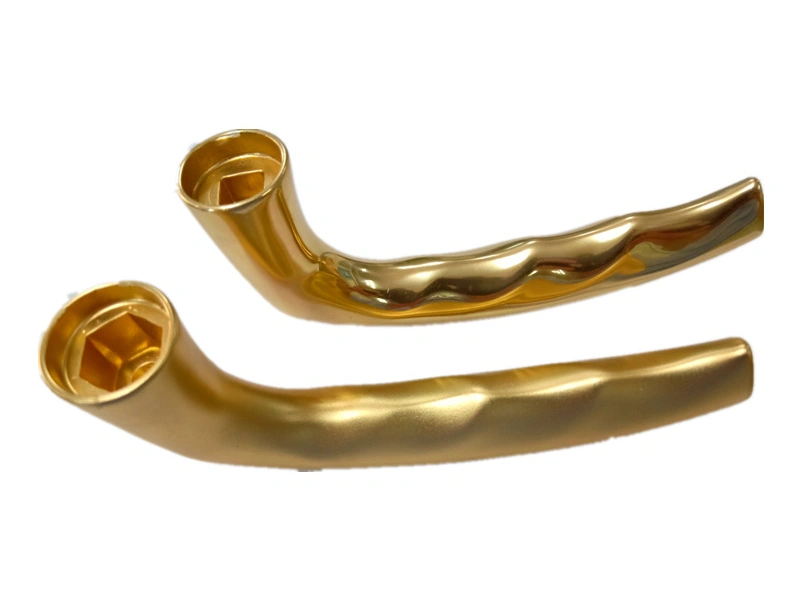
Custom metal castings can include aluminum castings, zinc castings, copper castings, brass or bronze castings, and finished metal components with machining, coating, assembly, or packaging. The correct material depends on the part’s function, weight target, strength, appearance, conductivity, corrosion resistance, and production volume.
Custom Metal Casting Type | Typical Material | Common Applications |
|---|---|---|
Aluminum castings | Aluminum alloys | Housings, brackets, heat sinks, structural parts, lightweight frames. |
Zinc castings | Zamak and zinc alloys | Hardware, decorative parts, connectors, small components, assembly parts. |
Copper castings | Copper alloys | Electrical parts, thermal components, valve parts, pump parts, connector parts. |
Brass or bronze castings | Copper-based alloys | Fittings, valves, corrosion-resistant parts, mechanical components. |
Finished metal castings | Aluminum, zinc, copper, or copper-based alloys | Machined, coated, assembled, inspected, and packaged custom components. |
A broad metal casting manufacturer can help buyers compare material directions before locking the project into one process or alloy.
How a Manufacturer Helps Buyers Choose Casting Materials
Material selection should start from the final application. Buyers may initially request one material, but a manufacturer should still evaluate whether that material truly fits the part’s weight, strength, conductivity, surface finish, corrosion resistance, and production requirements.
This is especially important for custom metal castings because material choice affects tooling, casting behavior, CNC machining, surface finishing, inspection, and long-term production cost.
Buyer Requirement | Recommended Material Direction | Manufacturing Note |
|---|---|---|
Lightweight structure | Suitable for housings, brackets, heat-related parts, and structural components. | |
Small complex details | Suitable for hardware, decorative parts, small assembly components, and detailed features. | |
Conductivity or thermal performance | Suitable for electrical, thermal, connector, and functional conductive parts. | |
Corrosion resistance | Copper alloys or suitable coatings | Should be reviewed with the working environment and surface protection plan. |
Finished appearance | Zinc or aluminum with post-process | Visible surfaces, coating thickness, polishing, color, and packaging should be planned early. |
High-volume repeat orders | Stable alloy and tooling system | Material records, mold maintenance, inspection plans, and batch traceability are required. |
Buyers can use casting material selection to compare aluminum, zinc, copper, and related metal casting materials for custom parts.
Engineering Review Before Custom Metal Casting Production
Engineering review is one of the most important services a custom metal castings manufacturer provides before production. It helps identify risks in part geometry, material choice, tooling, machining, finishing, assembly, and production volume before mold development begins.
A manufacturer should review both the 3D model and 2D drawing. The 3D model helps evaluate structure and tooling feasibility, while the 2D drawing defines dimensions, tolerances, datums, material notes, finish requirements, and inspection standards.
Engineering Review Item | Manufacturer Action | Buyer Benefit |
|---|---|---|
Wall thickness | Check shrinkage, porosity, deformation, filling risk, and local thick areas. | Reduces trial mold rework and casting defects. |
Material selection | Match material properties with function, cost, surface finish, and environment. | Avoids material mismatch and poor long-term performance. |
Tooling feasibility | Review parting direction, undercuts, sliders, draft, gates, and ejection. | Lowers mold development risk. |
Machining allowance | Plan CNC post-machining areas, datums, fixtures, and inspection points. | Protects functional dimensions and assembly fit. |
Surface finish | Evaluate coating, painting, polishing, blasting, anodizing, or other finish feasibility. | Reduces appearance rework and coating problems. |
Assembly interface | Check mating faces, holes, threads, sealing areas, fasteners, and fit relationships. | Improves assembly reliability and final product performance. |
Early metal casting design review and engineering support for metal casting manufacturing can reduce problems before tooling investment begins.
Tooling and Mold Development for Custom Metal Castings
Tooling is a core manufacturing asset for custom metal castings. It affects filling, surface quality, dimensions, cycle stability, ejection, trimming, post-machining, and long-term production consistency. A manufacturer should treat tooling as part of the production system, not only as a one-time cost item.
For custom casting projects, tooling for custom metal castings should be planned with part geometry, material, production volume, surface finishing, and machining requirements in mind.
Tooling Item | Impact on Custom Metal Castings |
|---|---|
Parting line | Affects appearance, trimming, coating quality, machining allowance, and assembly edges. |
Gate location | Affects filling, surface marks, internal defects, post-machining areas, and trimming. |
Venting | Affects trapped air, porosity, short fill, flow marks, and surface quality. |
Cooling layout | Affects deformation, shrinkage, cycle stability, and dimensional repeatability. |
Ejector layout | Affects part release, visible marks, deformation risk, and cosmetic surfaces. |
Tool material | Affects mold life, thermal fatigue resistance, maintenance frequency, and long-term cost. |
Tool maintenance | Affects flash, burrs, wear, dimensional drift, surface quality, and repeat production stability. |
Buyers can review casting tooling materials and options such as H13 mold steel for metal casting tools when tool life and stable production are important.
Metal Casting Production and Process Control
Metal casting production requires process control from material preparation to first article confirmation and in-process inspection. A custom metal castings manufacturer should record and manage material batches, mold condition, process parameters, defect control, flash control, inspection results, and production traceability.
This process management is what helps a manufacturer produce repeatable parts instead of only one acceptable sample.
Production Control Area | Why It Matters |
|---|---|
Material batch | Maintains material consistency and supports traceability across production lots. |
Mold temperature | Affects filling behavior, surface quality, shrinkage, and dimensional stability. |
Casting parameters | Affect porosity, shrinkage, surface condition, flow marks, and production repeatability. |
Cycle control | Supports stable output and reduces batch-to-batch variation. |
Flash control | Reduces trimming work, assembly interference, and finishing defects. |
First article inspection | Confirms production starts from approved dimensions, appearance, and process conditions. |
Process records | Support quality tracking, issue investigation, and long-term production improvement. |
For custom metal castings, production control should connect material, tooling, casting, machining, surface finishing, and inspection. Without this connection, quality problems may be difficult to trace.
CNC Post-Machining for Finished Metal Castings
Many custom metal castings are not delivered immediately after casting. They need CNC post-machining to control functional dimensions, assembly features, sealing surfaces, threads, bores, datum surfaces, and precision fit areas.
Post-machining turns cast shapes into finished metal casting components that can meet product requirements.
Machined Feature | Purpose | Manufacturer Control |
|---|---|---|
Threaded holes | Fastening reliability and repeat assembly. | Tapping, thread gauge inspection, torque check, and burr removal. |
Precision bores | Fit, coaxiality, roundness, and mechanical alignment. | CNC machining, bore inspection, and CMM verification. |
Mounting faces | Assembly stability and flat contact. | Post-machining for custom metal castings and flatness control. |
Sealing surfaces | Leak prevention, contact quality, and surface consistency. | Flatness check, surface control, and sealing validation if required. |
Locating holes | Assembly positioning and alignment. | Fixture inspection or CMM check. |
Datum surfaces | Inspection and assembly reference. | Controlled machining, fixture design, and inspection planning. |
O-ring grooves | Sealing reliability and product function. | Groove machining, dimensional check, and surface inspection. |
Assembly interfaces | Fit with fasteners, shafts, inserts, mating parts, or seals. | CNC post-machining for assembly fit and functional validation. |
Integrated CNC machining for custom metal castings helps keep casting datums, machining allowance, fixtures, inspection, and assembly requirements aligned.
Surface Finishing for Custom Metal Castings
Surface finishing should be planned early because it affects appearance, corrosion resistance, wear resistance, coating thickness, hand feel, assembly clearance, and final product value. The best finishing method depends on casting material, part geometry, working environment, cosmetic standard, and downstream assembly.
Surface Finish | Suitable Custom Metal Castings | Planning Concern |
|---|---|---|
Housings, covers, consumer parts, painted metal casting parts. | Color, adhesion, masking, surface preparation, gloss, and cosmetic consistency. | |
Industrial parts, protective metal parts, coated metal casting parts. | Coating thickness, edge coverage, durability, and assembly clearance. | |
Selected aluminum castings requiring appearance or surface protection. | Alloy compatibility, color variation, surface quality, and process suitability. | |
Parts requiring harder protective surface performance. | Coating performance, service environment, and functional surface requirements. | |
Matte surface, pretreatment, texture control, and surface preparation. | Surface roughness, appearance consistency, and coating compatibility. | |
Small castings, deburring, edge smoothing, and batch finishing. | Edge consistency, burr removal, and protection of delicate features. | |
Polishing | Appearance parts, decorative surfaces, and consumer-facing components. | Base casting defects, polishing direction, visual standard, and surface protection. |
Decorative coating | Hardware, cosmetic parts, trims, and premium finished metal components. | Appearance standard, color consistency, handling, and packaging protection. |
Anti-corrosion coating | Outdoor parts, humid-use parts, and protective cast metal parts. | Protection level, service life, coating durability, and inspection method. |
A complete surface finishing for metal castings plan should be connected with material choice, tooling layout, visible surfaces, machining sequence, coating thickness, assembly requirements, and packaging.
Inspection and Quality Control in Custom Metal Casting Manufacturing
Inspection and quality control should verify that custom metal castings meet material, dimensional, internal quality, surface, coating, functional, and delivery requirements. A manufacturer should not rely only on final visual inspection.
The right quality control plan depends on the part function. A decorative part needs surface and color control. A structural or pressure-related part may need internal defect inspection. A precision assembly part needs dimensional inspection and functional validation.
Inspection Method | What It Controls | Buyer Value |
|---|---|---|
Material verification | Material grade, material batch, and approved material direction. | Prevents wrong material use and supports traceability. |
Alloy composition and material consistency. | Helps ensure custom castings use the correct material grade. | |
First article inspection | Initial sample dimensions, appearance, and process condition. | Confirms production can start from an approved baseline. |
Dimensions, datums, geometric tolerances, and machined features. | Improves assembly reliability and dimensional confidence. | |
Internal flaws, hidden defects, and casting integrity. | Improves reliability for structural or high-risk custom metal parts. | |
Surface inspection | Visible defects, scratches, marks, color, texture, and cosmetic standard. | Protects visual quality and customer acceptance. |
Coating inspection | Coating thickness, adhesion, appearance, coverage, and protection. | Reduces surface failure and coating-related assembly problems. |
Functional testing | Assembly fit, movement, sealing, fastening, or final use performance. | Confirms the casting works in the final product. |
Batch traceability | Material, tooling, process, inspection, finishing, and packaging records. | Supports repeat orders and issue investigation. |
Packaging inspection | Protection of finished surfaces, threads, machined areas, and assemblies. | Reduces transport damage and incoming rejection. |
For repeat orders, quality control for custom metal castings should include approved samples, inspection checklists, process records, tooling maintenance records, and production traceability.
From Prototype to Mass Production With a Custom Metal Castings Manufacturer
A custom metal castings manufacturer should support the project across different production stages. Buyers may begin with prototype review, then move to tooling development, trial casting, sample approval, low-volume production, mass production, and repeat orders.
This staged workflow helps buyers reduce risk before committing to high-volume production.
Stage | Manufacturer Support | Buyer Benefit |
|---|---|---|
Prototype review | Evaluate drawings, material direction, geometry, tolerance, and production feasibility. | Reduces tooling risk and helps confirm the manufacturing route. |
Tooling development | Design and manufacture molds based on part geometry, material, and production volume. | Builds the foundation for repeatable production. |
Trial casting | Verify mold performance, filling, dimensions, surface quality, and defect control. | Identifies production problems before scaling. |
Sample approval | Confirm dimensions, appearance, post-machining, finishing, and functional performance. | Creates an approved standard for future production. |
Low-volume production | Validate small-batch stability, inspection standards, finishing, packaging, and delivery. | Reduces mass production risk. |
Mass production | Manage material records, production parameters, inspection plans, mold maintenance, and delivery. | Supports stable long-term orders. |
Repeat orders | Follow approved material, tooling, inspection, finishing, assembly, and packaging standards. | Keeps batches consistent over time. |
Buyers can use metal casting prototype support, low-volume custom metal castings, and mass production custom metal castings to reduce risk step by step.
How to Choose a Custom Metal Castings Manufacturer for Finished Components
If buyers need finished metal components instead of rough castings, they should choose a manufacturer that can control the complete workflow. This includes casting materials, engineering review, tooling, casting production, CNC machining, post-machining, surface finishing, inspection, assembly, packaging, and repeat production standards.
The manufacturer should be able to explain how each step connects to the final product requirement. This is especially important when the part has critical dimensions, visible surfaces, coating requirements, assembly interfaces, or long-term order plans.
Manufacturer Capability | Why It Matters | Buyer Benefit |
|---|---|---|
Multi-material casting support | Custom parts may require aluminum, zinc, copper, or other casting materials. | Helps buyers match material direction to actual application requirements. |
Engineering review | Design, material, tooling, machining, finishing, and assembly risks can be identified early. | Reduces mold changes, defects, and production delays. |
Tooling development | The mold controls surface quality, repeatability, dimensions, and production stability. | Improves sample success and long-term consistency. |
Metal casting production | Process control affects defects, cycle stability, flash, porosity, and batch results. | Supports repeatable manufacturing quality. |
CNC and post-machining | Finished components often need holes, threads, datums, sealing faces, and machined surfaces. | Improves fit, function, and assembly reliability. |
Surface finishing | Appearance, protection, coating thickness, and hand feel affect final product value. | Supports finished metal castings ready for product use. |
Quality inspection | Material, dimensions, internal defects, coating, and function must be verified. | Reduces incoming inspection failures and long-term quality disputes. |
Assembly and packaging | Finished parts may need assembled delivery or secure packaging. | Reduces buyer-side secondary operations and transport damage. |
Production scaling | Projects may move from prototype to low-volume trial and mass production. | Supports long-term repeat orders with stable standards. |
A one-stop custom metal castings manufacturer can help buyers connect design, engineering, material selection, tooling, casting, machining, finishing, inspection, assembly service for custom metal castings, packaging, and mass production into one integrated manufacturing workflow.
Summary
A custom metal castings manufacturer supports reliable part production by managing the full manufacturing system behind custom cast metal parts. This includes material selection, engineering review, tooling, metal casting production, CNC post-machining, surface finishing, inspection, assembly, packaging, and production scaling.
For buyers who need custom metal castings or finished metal components, the right manufacturer should not only cast the part. It should help convert product requirements into a stable, inspectable, repeatable, and scalable production process.
Manufacturing Area | Key Buyer Question | Recommended Action |
|---|---|---|
Material selection | Which metal casting material fits the part requirement? | Compare aluminum, zinc, copper, and related casting materials based on weight, strength, conductivity, surface, and environment. |
Engineering review | Can the design be manufactured reliably? | Review 3D model, 2D drawing, wall thickness, material, tooling, machining, finishing, assembly, and annual volume. |
Tooling | Can the mold support stable repeat production? | Plan parting line, gate, venting, cooling, ejector layout, tool materials, and mold maintenance. |
Production control | Can the manufacturer control batch consistency? | Manage material batches, mold temperature, casting parameters, cycle control, first article inspection, and process records. |
Post-machining | Which areas need functional precision after casting? | Define threaded holes, precision bores, mounting faces, sealing surfaces, locating holes, datum surfaces, and assembly interfaces. |
Surface finishing | How should the finished metal casting look and perform? | Plan painting, powder coating, anodizing, arc anodizing, sand blasting, tumbling, polishing, decorative coating, or anti-corrosion coating. |
Quality and production scaling | How will the manufacturer keep parts consistent from sample to mass production? | Use material verification, alloy composition analysis, CMM inspection, X-ray inspection, coating inspection, functional testing, batch traceability, prototype validation, and mass production records. |
FAQ
What Capabilities Should a Custom Metal Castings Manufacturer Provide?
How Does a Manufacturer Choose Between Aluminum, Zinc and Copper Castings?
Why Is Tooling Control Important for Custom Metal Castings Manufacturing?
How Are Finished Custom Metal Castings Produced After Casting?
How Can a Manufacturer Keep Custom Metal Castings Consistent in Mass Production?