How Precision Die Cast Parts Achieve Reliable Dimensional Accuracy
How Precision Die Cast Parts Achieve Reliable Dimensional Accuracy
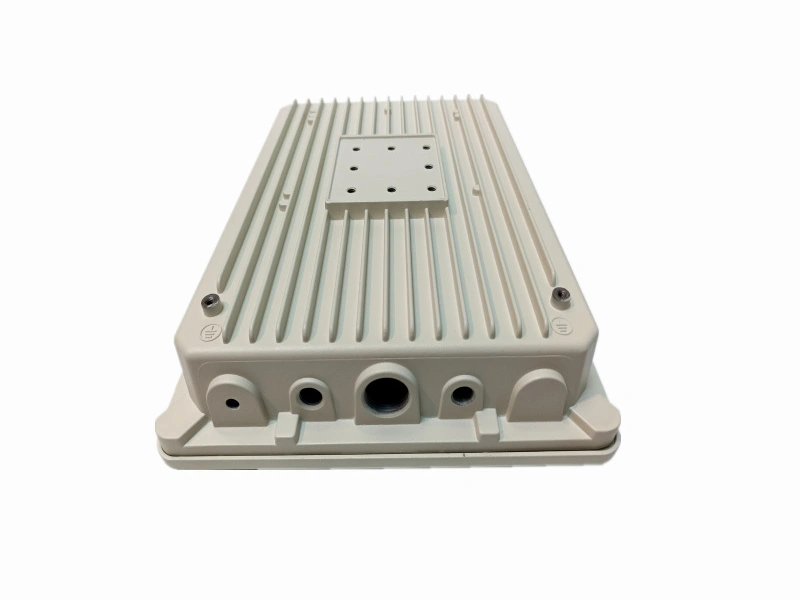
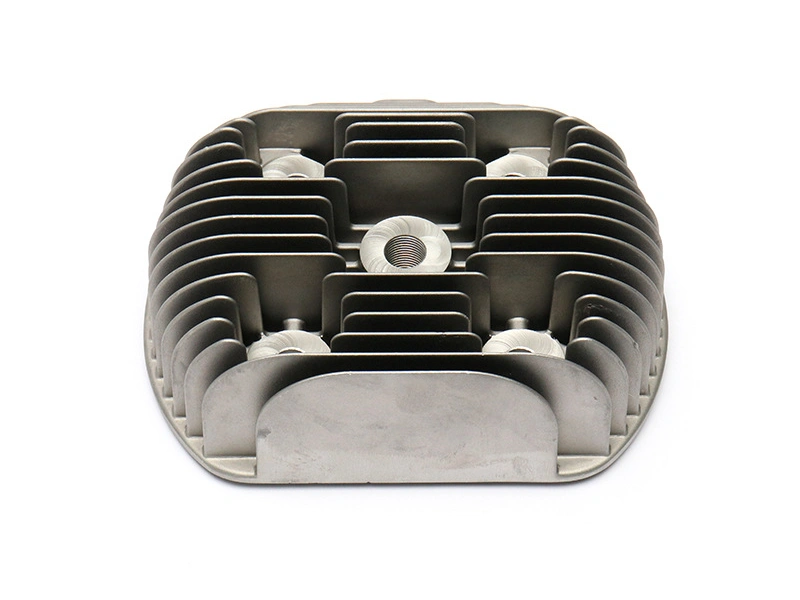
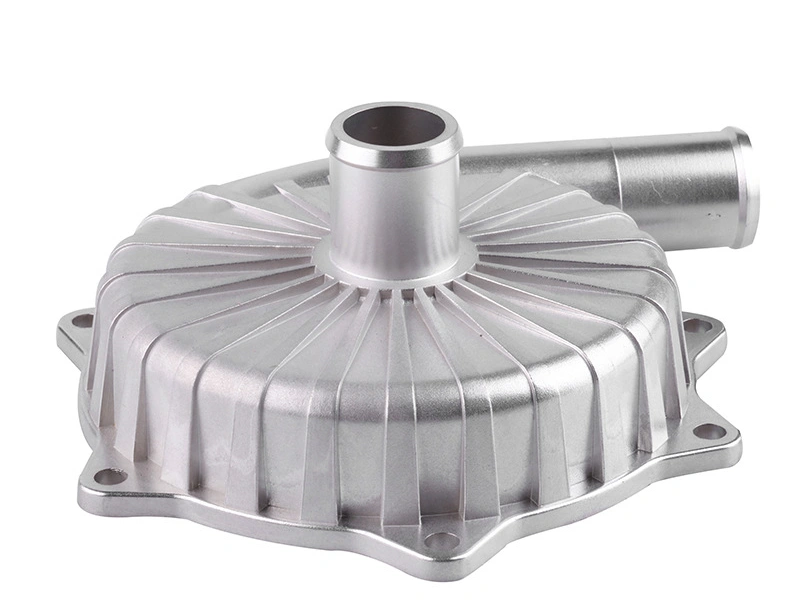
Precision die cast parts are used when custom metal components must achieve stable dimensions, controlled critical features, reliable assembly fit, and repeatable production quality. These parts may include housings, covers, brackets, connector components, heat-related parts, hardware, and finished assemblies that require controlled holes, threads, sealing surfaces, datum surfaces, mounting faces, and functional areas.
When buyers search for precision die cast parts, the goal is not simply to find a casting process with high accuracy. The real goal is to control the dimensions that affect product function, assembly, sealing, fastening, movement, appearance, and long-term production stability.
This article explains how precision die cast parts achieve reliable dimensional accuracy through DFM review, material selection, tooling planning, die casting process control, CNC post-machining, surface finishing, inspection, and mass production quality management.
What Does Precision Die Cast Mean for Custom Metal Parts?
Precision die cast does not mean every dimension on a part must use the tightest possible tolerance. In real manufacturing, precision means the critical features are clearly defined, controlled, inspected, and repeated across production batches.
For custom metal parts, precision may apply to mounting holes, threaded holes, sealing faces, datum surfaces, bearing seats, locating holes, cosmetic faces, or assembly interfaces. Some areas can remain as-cast, while others may require CNC machining or post-machining after casting.
Precision Concept | What It Means for Buyers | Manufacturing Focus |
|---|---|---|
Critical dimensions | Only the dimensions that affect function, fit, sealing, movement, or appearance need tighter control. | Drawing review, tolerance planning, CNC machining, and CMM inspection. |
As-cast precision | Some shapes and surfaces can meet requirements directly after casting. | Tooling accuracy, material flow, process stability, and mold maintenance. |
Post-machined precision | Functional holes, datums, and sealing areas may need CNC machining after casting. | Machining allowance, fixtures, datum control, deburring, and inspection. |
Repeatable precision | Mass production parts must remain consistent, not only one sample. | Process monitoring, tooling maintenance, inspection standards, and batch records. |
The key point is that precision die casting should be planned from design to production. Precision cannot be added only by final inspection after parts are already produced.
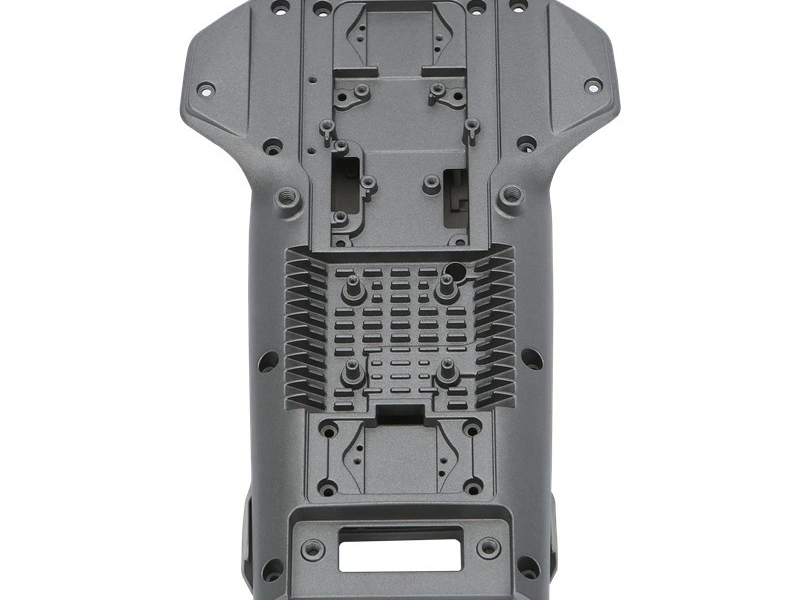
Which Parts Need Precision Die Casting?
Precision die casting is useful when a metal part must fit into an assembly, seal against another part, hold threaded fasteners, maintain flatness, protect cosmetic surfaces, or stay consistent across repeat production. These parts are often used in electronics, industrial equipment, automotive products, tools, devices, thermal systems, hardware, and ready-to-use components.
Precision Die Cast Part Type | Typical Application | Precision Focus |
|---|---|---|
Housings and covers | Electronics, tools, devices, and product shells. | Assembly holes, cosmetic surfaces, flatness, and coating thickness. |
Brackets and frames | Automotive, machinery, robotics, and equipment structures. | Mounting holes, datum faces, strength, and dimensional stability. |
Connector components | Electrical products, industrial products, and assembly systems. | Hole position, sealing surfaces, contact faces, and mating fit. |
Heat-related parts | LED products, power modules, and thermal systems. | Flatness, contact surface quality, dimensional stability, and material selection. |
Hardware parts | Locks, hinges, handles, moving parts, and durable components. | Motion fit, threaded holes, wear areas, and burr control. |
Finished assemblies | Ready-to-use components and assembled metal parts. | Assembly tolerance, functional testing, surface protection, and batch consistency. |
For these products, precision die cast parts should be evaluated by the final use condition, not only by the casting process itself.
Precision Die Cast vs Standard Die Cast Parts
Standard die cast parts focus on forming the shape and meeting general dimensional requirements. Precision die cast parts require more detailed planning around critical features, inspection points, machining areas, and repeat production control.
Comparison Item | Standard Die Cast Parts | Precision Die Cast Parts |
|---|---|---|
Main goal | Basic forming and general dimensions. | Functional dimensions, assembly fit, and batch consistency. |
Drawing focus | General dimensions, shape, and basic requirements. | Critical dimensions, datums, inspection points, and machined features. |
Tooling focus | Basic mold forming and production feasibility. | Parting line, gate, venting, cooling, deformation control, and repeatability. |
Machining focus | Limited post-machining when needed. | Critical holes, flat faces, sealing surfaces, datum surfaces, and assembly faces. |
Inspection focus | Appearance checks and basic sampling. | CMM inspection, X-ray inspection, thread gauges, functional testing, and batch records. |
Production focus | Single batch delivery. | Stable repeat production and long-term quality consistency. |
The core of precision die cast manufacturing is control and repeatability. It is not only about using better machines. It is about controlling the full route from design and tooling to machining, inspection, finishing, and production records.
How to Define Critical Dimensions for Precision Die Cast Parts
Critical dimensions are the dimensions that directly affect product function, assembly, sealing, positioning, movement, and appearance. Buyers should not make every dimension extremely tight. Over-tightening non-critical dimensions can increase tooling cost, machining cost, inspection time, and rejection risk without improving the final product.
Drawings should separate general tolerances from critical tolerances. Datum surfaces, inspection points, post-machined areas, and surface finishing thickness should be defined before tooling and production begin.
Critical Feature | Why It Matters | Recommended Control |
|---|---|---|
Mounting holes | Affect assembly position and product alignment. | CNC machining for precision die cast parts and CMM inspection. |
Threaded holes | Affect fastening reliability and repeat assembly. | Tapping, thread gauge check, torque check, and burr removal. |
Sealing surfaces | Affect contact quality, leak prevention, and functional reliability. | Post-machining, flatness check, and surface inspection. |
Datum surfaces | Affect measurement reference and assembly consistency. | Controlled machining, fixture design, and dimensional inspection. |
Bearing seats | Affect coaxiality, fit, motion, and mechanical stability. | Precision CNC machining, bore gauge check, and CMM verification. |
Cosmetic faces | Affect visible quality, surface finishing, and customer acceptance. | Tooling planning, finishing control, visual inspection, and packaging protection. |
Defining critical dimensions early helps the supplier decide which features can remain as-cast and which features must be machined, inspected, or protected during finishing.
How DFM Improves Precision Die Cast Results
DFM review helps improve precision die cast results before tooling investment begins. A supplier should review wall thickness, draft angles, fillets, ribs, bosses, parting line location, gate and venting layout, machining allowance, material suitability, surface finishing effects, and tolerance stack-up.
This review helps prevent dimensional problems, deformation, shrinkage, porosity, tooling rework, machining conflicts, coating interference, and assembly failure.
DFM Item | Precision Risk If Ignored | Planning Method |
|---|---|---|
Uneven wall thickness | Shrinkage, porosity, deformation, and dimensional instability. | Optimize transitions and avoid unnecessary heavy sections. |
Draft angle | Demolding issues, surface damage, tool wear, and part distortion. | Add proper draft based on mold release direction. |
Sharp corners | Stress concentration, filling problems, and local defects. | Add fillets and improve flow transition. |
Bosses and ribs | Sink marks, distortion, weak areas, and dimensional variation. | Balance structure, rib thickness, boss support, and machining allowance. |
Machining allowance | Insufficient CNC stock and unstable machined features. | Define machined features before tooling and plan datum surfaces. |
Coating thickness | Fit interference, hole size change, and assembly problems. | Review after-finishing dimensions and use masking where needed. |
Buyers can use design support for precision die cast parts and DFM review for precision die cast parts to reduce precision risks before tooling starts.
Tooling Factors That Affect Precision Die Cast Accuracy
Precision die cast accuracy is strongly influenced by tooling. The mold affects filling behavior, parting line position, dimensional repeatability, surface quality, cooling, ejection, shrinkage control, and long-term stability. Precision cannot be created only by final inspection; it must be designed into the tooling stage.
Tooling Factor | Effect on Precision Die Cast Parts |
|---|---|
Mold accuracy | Affects base dimensions, repeatability, and the consistency of as-cast features. |
Gate location | Affects filling, shrinkage, flow marks, deformation, and local dimensional variation. |
Venting | Affects porosity, trapped air, short fill, and surface defects. |
Cooling design | Affects dimensional stability, shrinkage control, warpage, and cycle consistency. |
Ejector layout | Affects deformation, cosmetic surfaces, and ejection marks. |
Multi-cavity control | Affects cavity-to-cavity variation and production consistency. |
Tool maintenance | Affects flash, burrs, surface quality, wear, and dimensional drift. |
Tool revision record | Prevents wrong-version production after engineering changes. |
For precision projects, buyers should review precision tooling for die cast parts, tool materials for precision die casting, and H13 mold steel for precision die casting when mold life and repeatability are important.
Material Selection for Precision Die Cast Parts
Material selection affects dimensional stability, strength, thermal behavior, surface treatment, post-machining, and final application performance. Precision die cast parts should use materials based on function, not only cost or availability.
Material Direction | Suitable Precision Die Cast Parts | Precision Concern |
|---|---|---|
Lightweight housings, structural components, brackets, and heat-related parts. | Deformation, flatness, wall thickness, heat performance, and post-machining. | |
Small complex parts, hardware, decorative parts, and assembly components. | Fine detail, dimensional stability, surface quality, and coating control. | |
Conductive parts, thermal components, connectors, and functional metal parts. | Material performance, post-machining, conductivity, and inspection control. | |
Zinc alloys | Small precision parts, visible components, and hardware parts. | Dimensional repeatability, surface finishing behavior, and detail reproduction. |
Aluminum alloys | Structural and thermal management parts. | Weight, strength, flatness, thermal performance, and coating compatibility. |
Buyers can review material selection for precision die casting when comparing aluminum, zinc, copper, and other casting materials for precision parts.
Post-Machining for Precision Die Cast Parts
Precision die cast does not mean every dimension is achieved directly by casting. In many projects, the best solution is casting plus CNC machining. Casting creates the main shape efficiently, while post-machining controls the critical functional features.
Post-machining should be planned before tooling so the supplier can define machining allowance, datums, fixtures, process sequence, deburring, and inspection methods.
Machined Feature | Precision Purpose | Inspection Method |
|---|---|---|
Threaded hole | Fastening reliability and repeat assembly. | Thread gauge, torque check, and visual burr check. |
Precision bore | Diameter control, coaxiality, roundness, and moving fit. | CMM inspection or bore gauge inspection. |
Mounting face | Flatness, stable contact, and assembly alignment. | Flatness inspection and dimensional check. |
Locating hole | Position accuracy and assembly reference. | |
Sealing surface | Contact quality, sealing performance, and surface consistency. | Surface inspection and flatness check. |
Datum surface | Measurement reference and assembly consistency. | Controlled machining and inspection fixture check. |
Integrated post-machining for precision die cast parts, dimensional accuracy in die casting parts, and CNC post-machining for assembly fit help buyers control the areas that truly affect function.
How Surface Finishing Affects Precision Die Cast Parts
Surface finishing is not only an appearance issue for precision die cast parts. It can affect hole size, assembly clearance, edge condition, surface roughness, coating thickness, visual quality, corrosion protection, and functional fit.
Finishing should be planned with the material, tooling, CNC machining, and inspection strategy. If coating thickness or surface preparation is not considered early, parts may pass machining inspection but fail after finishing.
Surface Finishing Factor | Precision Impact | Planning Method |
|---|---|---|
Coating thickness | Changes hole size, thread clearance, mating fit, and assembly gap. | Reserve clearance, measure coating thickness, or mask critical areas. |
Sand blasting | Changes surface roughness and can affect visible or functional surfaces. | Control blasting area, roughness, and process consistency. |
Tumbling | Affects edges, burrs, and small feature dimensions. | Control cycle time, media type, batch size, and inspection. |
Painting | Affects appearance, adhesion, thickness, masking, and assembly fit. | Check adhesion, color, coating thickness, and protected areas. |
Powder coating | Thickness may be more obvious and can affect assembly clearance. | Evaluate fit after coating and mask critical features when needed. |
Polishing | Can change cosmetic surfaces and expose base casting defects. | Control base casting quality and polishing standard. |
Neway can support surface finishing for precision die casting, painting for precision die cast parts, powder coating for precision die cast parts, anodizing for precision aluminum die cast parts, sand blasting for precision die cast parts, and tumbling for precision die cast parts.
Inspection Methods for Precision Die Cast Parts
Inspection verifies whether precision die cast parts meet drawing, functional, surface, and production requirements. A strong inspection plan should include first article inspection, CMM inspection, X-ray inspection, thread gauge checks, material verification, surface inspection, coating thickness checks, functional testing, and batch traceability.
Inspection Method | What It Verifies | Why It Matters |
|---|---|---|
First article inspection | Initial sample dimensions, appearance, and production baseline. | Confirms the production starting point before batch manufacturing. |
Critical dimensions, geometric tolerances, datums, holes, and machined surfaces. | Supports precise assembly and dimensional confidence. | |
Internal porosity, hidden defects, and casting integrity. | Improves reliability for structural or functional precision castings. | |
Thread gauge | Thread quality, fastening fit, and assembly reliability. | Prevents screw engagement and fastening failures. |
Coating inspection | Coating thickness, appearance, adhesion, and masking quality. | Controls finishing effect on precision and appearance. |
Functional test | Final use performance, fit, movement, sealing, or fastening. | Confirms the part works in real application conditions. |
For precision production, inspection should be planned before mass production starts. The inspection method should match the risk level of each critical feature.
How to Maintain Precision in Mass Production
The real challenge of precision die cast manufacturing is not producing one acceptable sample. The challenge is keeping the same dimensional and functional performance across low-volume trials, mass production, and repeat orders.
This requires material control, mold condition control, casting parameter monitoring, CNC fixture maintenance, first article inspection, in-process inspection, CMM sampling, surface finishing control, assembly testing, batch traceability, and approved sample management.
Precision Control Factor | Possible Production Issue | Control Method |
|---|---|---|
Material batch | Material performance and dimensional behavior may vary. | Material records and approved material standards. |
Tooling condition | Flash, burrs, surface defects, and dimensional drift may increase. | Mold maintenance records and tooling inspection. |
Casting parameters | Porosity, shrinkage, deformation, and surface variation may occur. | Process monitoring and first article confirmation. |
CNC fixture | Hole position or datum accuracy may drift. | Fixture inspection, tool wear checks, and machining process control. |
Surface finishing | Coating thickness, color, or surface condition may vary. | Finish control, approved samples, masking control, and coating inspection. |
Inspection standard | Different batches may be judged by inconsistent criteria. | Inspection checklist, approved samples, and sampling plan. |
Batch traceability | Quality issues become difficult to investigate. | Batch records and traceable production data. |
For long-term supply, quality control for precision die cast parts should connect material, tooling, casting, CNC machining, finishing, inspection, and packaging records.
How to Choose a Precision Die Cast Manufacturer
A precision die cast manufacturer should be able to control the full production route, not only produce castings. Buyers should evaluate whether the supplier can provide engineering review, material selection, tool and die making, casting process control, CNC machining, post-machining, CMM inspection, X-ray inspection, surface finishing control, quality records, and mass production support.
Manufacturer Capability | Why It Matters for Precision Die Cast Parts |
|---|---|
DFM and engineering support | Identifies precision risks before tooling and production. |
Material selection | Matches material behavior with dimensional stability, strength, surface finish, and application needs. |
Tool and die making | Controls base accuracy, cavity consistency, parting line, gate, venting, and repeatability. |
Casting process control | Controls shrinkage, porosity, deformation, surface condition, and batch variation. |
CNC machining and post-machining | Controls critical holes, threads, datums, sealing surfaces, and assembly faces. |
CMM and X-ray inspection | Verifies dimensional accuracy and internal casting reliability. |
Surface finishing control | Prevents coating thickness, surface preparation, or polishing from affecting precision. |
Mass production support | Maintains precision from samples to low-volume production and repeat orders. |
If buyers need precision die cast parts, they should choose a supplier that can control design, tooling, casting, machining, inspection, finishing, assembly, and mass production together. A one-stop precision die cast manufacturer can help reduce handoff risks, while prototype precision die cast parts, low-volume precision die cast parts, and mass production precision die cast parts can support different project stages.
Summary
Precision die cast parts achieve reliable dimensional accuracy through more than the casting process alone. Buyers should define critical dimensions, separate as-cast and machined features, use DFM review, plan tooling carefully, choose suitable materials, control surface finishing, and apply the right inspection methods.
The most important goal is repeatable precision. A single approved sample is not enough if future batches drift in dimensions, surface quality, machining accuracy, or assembly fit. Reliable precision die casting requires connected control across design, tooling, casting, CNC machining, inspection, finishing, and mass production.
Precision Planning Area | Key Buyer Question | Recommended Action |
|---|---|---|
Critical dimensions | Which features truly affect function, fit, sealing, movement, or appearance? | Define critical dimensions, datums, general tolerances, inspection points, and post-machined features. |
DFM review | Can the design support stable precision die casting? | Review wall thickness, draft, fillets, ribs, bosses, machining allowance, coating thickness, and tolerance stack-up. |
Tooling | Can the mold control accuracy and repeatability? | Plan mold accuracy, gate location, venting, cooling, ejector layout, cavity consistency, tool maintenance, and revision records. |
Material | Which material supports dimensional stability and final part performance? | Compare aluminum, zinc, copper, zinc alloys, and aluminum alloys based on precision needs and application. |
Post-machining | Which areas require CNC accuracy after casting? | Define threaded holes, precision bores, mounting faces, locating holes, sealing surfaces, and datum surfaces. |
Surface finishing | Will finishing affect dimensions or assembly? | Plan coating thickness, masking, sand blasting, tumbling, painting, powder coating, anodizing, and polishing effects. |
Inspection and production | How will precision be verified and maintained in batches? | Use first article inspection, CMM inspection, X-ray inspection, thread gauges, coating checks, functional tests, tooling maintenance, and batch traceability. |
FAQ