How to Choose Aluminium Grades for Casting Custom Die Cast Parts
How to Choose Aluminium Grades for Casting Custom Die Cast Parts
Choosing the right aluminium grades for casting is one of the most important decisions in a custom aluminum die casting project. Different aluminum grades can affect part strength, weight, fluidity, corrosion resistance, thermal performance, CNC machining difficulty, surface treatment quality, tooling design, and total production cost.
For buyers, engineers, and product developers, aluminum grade selection should not be treated as a simple material name on a drawing. A material that works well for a simple bracket may not be suitable for a thin-wall housing, a heat sink, a visible electronic enclosure, or a high-strength industrial component. The best aluminum grade depends on how the part will be used, how it will be cast, which areas need machining, and what surface finish is required.
Before starting tooling, buyers should discuss material selection with the supplier together with part structure, wall thickness, tolerance requirements, production volume, surface treatment, and assembly needs. This helps avoid trial mold failure, unstable dimensions, high CNC machining cost, poor surface finish, and mass production rework.
Why Aluminium Grades Matter in Casting Projects
Aluminium grades matter because each casting alloy behaves differently during die casting. Some materials flow better into thin walls and complex structures. Some provide better strength or corrosion resistance. Some are easier to machine after casting. Others may be more suitable for painting, coating, polishing, or selected surface treatments.
If the wrong material is selected, the part may suffer from poor filling, shrinkage, porosity, dimensional instability, weak mechanical performance, poor surface appearance, or increased post-machining cost. In serious cases, the project may require mold modification or repeated trial runs before stable production can begin.
Material selection also affects custom metal casting strategy. The selected grade must match the casting process, mold design, product application, machining plan, surface treatment requirement, and expected production volume.
Material Impact Area | How Aluminium Grade Affects It | Buyer Risk if Ignored |
|---|---|---|
Fluidity | Affects how well molten aluminum fills thin walls, ribs, bosses, and complex cavities | Short shots, cold shuts, and poor detail formation |
Strength and hardness | Affects load-bearing ability, durability, and structural performance | Part failure under real working conditions |
Dimensional stability | Affects shrinkage, tolerance control, and repeatability | Assembly problems and unstable batch quality |
CNC machining | Affects tool wear, surface quality, hole accuracy, and machining time | Higher post-machining cost |
Surface treatment | Affects polishing, painting, coating, and cosmetic finish results | Appearance rejection and finishing rework |
Tooling stability | Affects filling behavior, cooling, venting, and trial mold adjustment | Mold modification and production delay |
Common Factors When Comparing Aluminium Grades for Casting
Buyers should compare aluminium grades based on the actual part requirements instead of choosing a material only by availability or unit price. A casting grade should match the part's function, environment, structure, finishing standard, and cost target.
For example, a heat sink housing may need good thermal performance and stable thin-wall casting. An automotive bracket may need strength, repeatability, and production cost control. A visible electronic enclosure may need better surface finish potential and coating stability. A precision mechanical component may need controlled machining after casting.
Selection Factor | What It Affects | Buyer Concern |
|---|---|---|
Strength | Load-bearing ability and durability | Will the part survive working conditions? |
Fluidity | Thin walls and complex structures | Can the part be cast reliably? |
Corrosion resistance | Outdoor or harsh environments | Will the part last long enough? |
Thermal conductivity | Heat dissipation | Is it suitable for housings or lighting parts? |
Machinability | CNC holes, threads, sealing faces | Will post-machining cost increase? |
Surface finish | Polishing, painting, coating | Can the appearance meet requirements? |
Cost | Material and production cost | Is it suitable for mass production? |
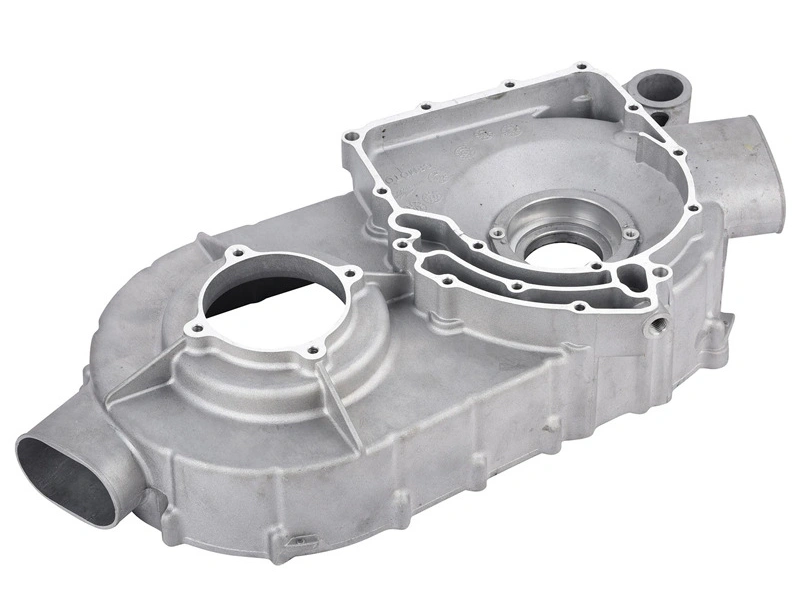
How Application Types Affect Aluminium Grade Selection
Different applications require different material priorities. Buyers should first define what the part must do in real use, then compare aluminium grades based on those requirements. The best material for one part may not be the best material for another project.
Automotive parts usually need strength, weight control, and stable mass production. Electronic housings may need heat dissipation, appearance control, and dimensional stability. Lighting parts often require thermal performance and coating quality. Industrial equipment parts may focus on strength, durability, and service life. Custom mechanical parts usually need a balance between performance, manufacturability, and cost.
Application Type | Material Selection Focus | Common Buyer Priority |
|---|---|---|
Automotive parts | Strength, weight, repeatability | Stable mass production |
Electronic housings | Heat dissipation and appearance | Surface quality and dimensional stability |
Lighting parts | Thermal performance | Heat control and coating quality |
Industrial equipment parts | Strength and durability | Long service life |
Custom mechanical parts | Balanced performance | Cost and manufacturability |
For buyers sourcing custom aluminum die cast parts, the material should be selected together with part design and production expectations. If the part has thin walls, heat dissipation features, cosmetic surfaces, threaded holes, or sealing faces, the material decision should be reviewed before tooling begins.
How Aluminium Grades Affect Die Casting Tooling
Aluminium grades can directly affect die casting tooling because different materials have different flow behavior, shrinkage characteristics, thermal behavior, and solidification patterns. The mold must be designed to match the material and part structure.
If the material has poor flowability for a thin-wall or complex part, the mold may require more careful gate and runner design. If shrinkage behavior is not considered, the part may show dimensional variation or internal defects. Complex structures may require better venting, cooling, and mold flow planning to reduce porosity, cold shuts, and short filling.
Changing material after tooling has already started can create new risks. The gate design, cooling layout, machining allowance, and even some part geometry details may need adjustment. This is why buyers should confirm material selection before tool and die making begins.
Tooling Factor | How Aluminium Grade Affects It | Buyer Risk |
|---|---|---|
Gate design | Material flowability affects how molten aluminum enters the cavity | Poor filling, turbulence, and cold shuts |
Venting design | Material and geometry affect trapped gas risk | Porosity and internal defects |
Cooling design | Thermal behavior affects solidification and cycle stability | Hot spots, shrinkage, and warpage |
Thin-wall filling | Some grades fill thin sections better than others | Incomplete filling or unstable production |
Trial mold adjustment | Unsuitable material selection may require repeated sampling | Higher trial cost and longer lead time |
Material change after mold build | New material behavior may not match the original mold design | Mold modification and delivery delay |
How Aluminium Grades Affect CNC Machining
Aluminum die cast parts do not always need CNC machining on every surface. However, critical holes, threaded holes, sealing faces, assembly faces, bearing bores, flatness areas, and datum surfaces often need post machining after casting.
Different aluminium grades can affect CNC machining cost because material hardness, stability, porosity, and surface quality influence tool life, cutting time, hole quality, thread quality, and final inspection results. A material that is cheaper during casting may become more expensive if it causes difficult machining or higher tool wear.
Buyers should confirm which areas need CNC machining after die casting before requesting a quote. This allows the supplier to evaluate machining allowance, fixture design, cutting strategy, tolerance control, and inspection cost more accurately.
Machining Area | Why Material Matters | Buyer Concern |
|---|---|---|
Threaded holes | Material behavior affects tapping quality and tool wear | Fastening reliability and machining cost |
Mounting holes | Dimensional stability affects hole accuracy | Assembly alignment |
Sealing faces | Casting quality and material stability affect machined surface quality | Leakage prevention |
Bearing bores | Material and porosity affect roundness, surface finish, and tolerance | Wear, vibration, and fit |
Assembly datums | Material stability affects repeatable positioning after machining | Consistent product assembly |
High-tolerance features | Tighter tolerances require more machining and inspection control | Higher cost if over-specified |
For machined aluminum die cast parts, the best strategy is usually to cast the main body and machine only the functional areas. This helps control cost while still meeting assembly and performance requirements.
How Aluminium Grades Affect Surface Treatments
Aluminium grades also affect surface treatment results. Different materials may respond differently to polishing, painting, coating, and other finishing processes. The final surface quality depends on both material selection and the original die casting quality.
Polishing results depend on surface soundness, porosity level, flow marks, parting lines, and casting defects. Painting and coating usually require stable pre-treatment, clean surfaces, and controlled casting quality. Anodizing suitability depends on the aluminum material and die casting quality, so buyers should not assume every die cast aluminum grade will produce the same anodized appearance.
High appearance requirements cannot rely only on late-stage surface treatment. Cosmetic surfaces, gate locations, ejector marks, porosity control, and finishing standards should be reviewed before tooling. If the casting surface has hidden pores or shrinkage, polishing or coating may expose the defect instead of hiding it.
Surface Treatment Requirement | How Aluminium Grade Affects It | Buyer Action |
|---|---|---|
Polishing | Surface soundness affects final smoothness and appearance | Confirm cosmetic surfaces and porosity control early |
Painting | Surface quality and pre-treatment affect adhesion | Define color, finish level, and inspection standard before production |
Coating | Material and casting surface affect coating stability | Confirm coating compatibility during material selection |
Anodizing | Result depends on material and die casting quality | Validate with samples before mass production |
Visible cosmetic finish | Porosity and flow marks can affect appearance after finishing | Plan cosmetic surfaces before tooling |
What Buyers Should Provide Before Choosing Aluminium Grades
Buyers should provide complete project information before choosing aluminium grades for casting. A supplier cannot recommend the best material from a 3D model alone. The correct grade depends on part function, environment, tolerance, surface treatment, machining, volume, and cost target.
Important information includes 2D drawings, 3D models, use environment, strength requirements, weight targets, thermal requirements, surface treatment requirements, tolerance requirements, CNC machining needs, annual demand, target cost, and whether prototype validation is required.
Buyer Information | Why It Is Needed | What It Helps Decide |
|---|---|---|
2D drawing | Shows dimensions, tolerance, surface notes, and critical features | Material, machining, and inspection requirements |
3D model | Shows geometry, wall thickness, ribs, bosses, and part structure | Casting feasibility and tooling strategy |
Use environment | Shows corrosion, heat, wear, or outdoor exposure | Corrosion resistance and surface treatment needs |
Strength requirement | Defines load, impact, and structural expectations | Whether higher strength should be prioritized |
Weight requirement | Shows whether lightweight design is a key goal | Material and structure optimization |
Heat dissipation requirement | Defines thermal performance needs | Material selection for housings, lighting, and thermal parts |
Surface treatment requirement | Shows polishing, coating, painting, or appearance needs | Surface compatibility and finishing cost |
CNC machining need | Defines holes, threads, sealing faces, and datums | Machining allowance and cost evaluation |
Annual demand | Shows production scale | Tooling strategy and mass production cost |
Target cost | Helps balance material performance with total manufacturing cost | Cost-effective material recommendation |
Prototype validation need | Shows whether samples are required before tooling or mass production | Material verification before production investment |
How to Work With a Supplier on Aluminium Grade Selection
Buyers should not only specify one aluminum grade and ask for a price immediately. A better approach is to work with the supplier to evaluate whether the material is suitable for die casting, whether the part structure matches the material, and whether the material will affect tooling, CNC machining, surface treatment, and mass production stability.
A qualified supplier should review wall thickness, ribs, bosses, thin-wall areas, shrinkage risk, machining areas, surface requirements, and production quantity before recommending a material. If necessary, the supplier may suggest changing wall thickness, adjusting reinforcing ribs, modifying machining allowance, or separating cosmetic and functional surfaces.
Neway supports aluminum die casting projects that require aluminium grade selection, tooling for aluminum die cast parts, CNC machining after die casting, custom metal casting, and production planning. For buyers sourcing aluminum die casting, early material evaluation helps reduce tooling risk, post-machining cost, finishing problems, and batch production instability.
Supplier Review Area | What Should Be Evaluated | Buyer Benefit |
|---|---|---|
Material castability | Whether the selected grade can fill the part reliably | Reduces filling defects and trial mold risk |
Part structure | Whether wall thickness, ribs, and bosses suit the material | Improves manufacturability |
Tooling impact | Whether the material affects gate, venting, cooling, or mold life | Reduces mold modification and production delay |
CNC machining cost | Whether the grade affects tool wear, machining time, or tolerance control | Controls post-machining cost |
Surface treatment suitability | Whether the grade can meet polishing, coating, or painting requirements | Reduces cosmetic rejection |
Mass production stability | Whether the material supports stable repeated production | Improves long-term quality and cost control |
FAQ