
Aplicaciones y beneficios de la fundición a presión de cobre y latón de precisión
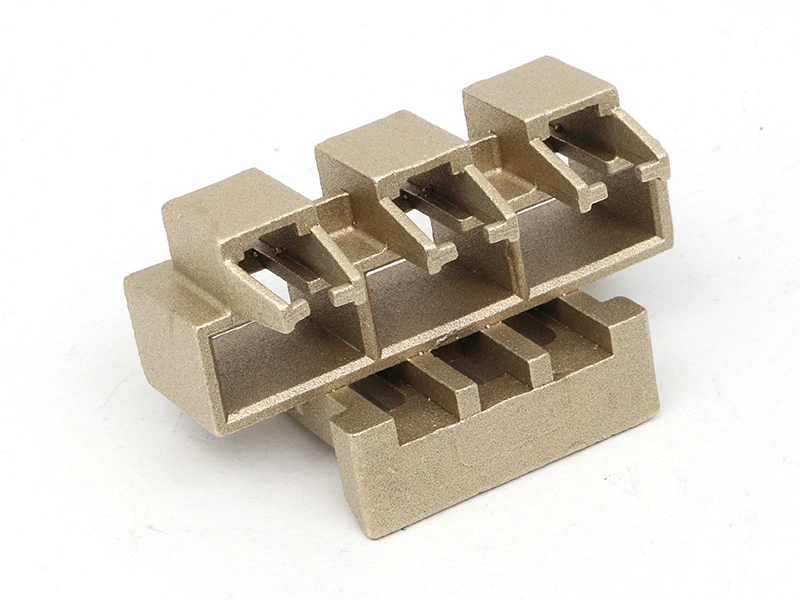
Introduction: Rediscovering the Engineering Value of Copper and Brass
In today’s die-casting landscape, dominated by aluminum and zinc, copper and brass are regaining prominence in high-end engineering applications due to their unique material properties. As a senior die casting engineer at Newway, I have witnessed many customers, in pursuit of higher-performance solutions, pleasantly discover that copper alloy die castings can effectively solve their technical challenges. Whether the goal is outstanding electrical and thermal conductivity or extreme corrosion resistance, precision copper and brass die casting offers highly reliable answers. This article will take you deep into how this traditional yet modern material, empowered by advanced die casting technology, plays an irreplaceable role across multiple industrial sectors.
Unmatched Material Properties: The Foundation of Its Advantages
Excellent Electrical and Thermal Conductivity
Copper is one of the best electrical conductors, second only to silver. The conductivity of many copper alloys can reach more than 60% of pure copper, making them the preferred materials for power transmission and electronic connectors. In real-world applications, the electrical conductivity of copper alloys is often more than 1.5 times that of aluminum alloys, which is crucial in scenarios requiring highly efficient energy transfer. At the same time, copper alloys exhibit a thermal conductivity of approximately 80–160 W/m·K, which is significantly higher than that of many common structural alloys, making them ideal for use in heat sinks, heat exchangers, and other thermal management systems. For example, in EV charging interfaces, copper alloy die castings not only ensure efficient power transmission but also quickly dissipate heat generated by contact resistance, significantly enhancing safety performance.
Inherent Corrosion Resistance and Antimicrobial Properties
Copper alloys exhibit excellent corrosion resistance in atmospheric, fresh water, and seawater environments, thanks to the formation of a dense protective surface film. In marine engineering and chemical equipment, copper alloy die castings can withstand harsh corrosive conditions while maintaining long-term stability. Equally noteworthy is their natural antimicrobial behavior: studies have shown that copper surfaces can kill up to 99.9% of certain bacteria within hours. This makes copper alloy die-cast components especially suitable for medical equipment, food processing machinery, and high-contact public surfaces, providing an additional safeguard for hygiene and safety.
Outstanding Strength, Wear Resistance, and Machinability
Copper alloys not only offer solid mechanical strength but also demonstrate excellent wear resistance. For instance, aluminum bronze can deliver wear performance comparable to certain quenched steels, while maintaining a lower coefficient of friction. These characteristics make copper alloy die castings ideal for bearings, bushings, gears, and other tribological components. Additionally, most copper alloys exhibit superior CNC machinability, allowing for highly precise secondary machining to meet stringent dimensional and surface finish requirements. This synergy between material and process provides an ideal solution for high-end component manufacturing.
Precision Manufacturing Processes That Enable Superior Performance
High-Pressure Die Casting for Precision and Complexity
Modern copper alloy die casting employs advanced high-pressure die casting technology, allowing molten metal to instantly fill every corner of the mold cavity and achieve precise replication, even for extremely complex geometries. This process can produce thin-walled parts with wall thicknesses as low as 0.5 mm while maintaining excellent dimensional stability. Throughout production, we utilize precise temperature control and pressure monitoring systems to ensure consistently high-quality casts for every casting. Such process control capability enables copper alloy die castings to be directly used in precision instruments and electronic devices with stringent dimensional requirements.
Critical Role of Mold Design and Materials
Given that the casting temperatures of copper alloys typically exceed 900°C, die mold manufacturing must adhere to specialized design principles and utilize carefully selected materials. We typically choose high-grade hot work tool steels such as H13 tool steel, combined with dedicated heat treatment processes, to withstand severe thermal fatigue. Mold design must also account for the specific shrinkage characteristics of copper alloys. Through accurate mold flow simulation and optimized cooling layouts, we ensure dimensional accuracy, minimize defects, and extend mold life. This technical expertise is fundamental to achieving both quality and economic feasibility in copper alloy die casting.
Collaborative Design and Rapid Prototyping
During new product development, we strongly recommend involving our die casting design services team as early as possible. Through collaborative engineering, we can optimize product geometry, avoid potential manufacturing issues, and control cost and quality at the source. Meanwhile, our rapid prototyping capabilities allow customers to validate design and performance before committing to large-scale production. This iterative development approach significantly reduces project risk and ensures the final parts fully meet application requirements.
Key Material Selection and Performance Optimization
Top Choice for High Conductivity: High-Purity Copper and Special Brass Grades
For applications requiring extremely high electrical conductivity, such as high-voltage connectors and power busbars, we recommend high-purity copper or specially formulated brass alloys. After proper heat treatment, these materials can achieve conductivity levels that reach or exceed 85% of those of standard pure copper, while maintaining good mechanical strength and castability. In the new energy sector, such materials are increasingly important, especially in EV battery connection systems and charging infrastructure.
High Strength and Wear Resistance: Aluminum Bronze and Silicon Bronze
In demanding environments, such as those found in heavy machinery and marine engineering, Aluminum bronze C95400 delivers outstanding performance. Its tensile strength can exceed 620 MPa, with hardness above HB 170, and it exhibits excellent corrosion and cavitation resistance. Silicon bronze C65500 offers a well-balanced combination of strength and corrosion resistance, making it ideal for chemical pumps, valves, and offshore platform components, where it can maintain reliable performance over decades of service in salt spray environments.
Balancing Versatility and Economy: Brass 360
For many general applications, Brass 360 offers an optimal balance of performance and cost. It provides excellent machinability and good corrosion resistance, making it a popular choice for plumbing fittings, valve components, and architectural hardware. Its lead content enhances cutting performance, significantly improving machining efficiency and effectively reducing overall production costs.
Advanced Application Scenarios: Transforming Industries
Electrical and New Energy Sectors
In electrical and new energy applications, copper alloy die castings are playing an increasingly vital role. High-voltage connectors must combine high conductivity, mechanical strength, and heat resistance. Copper alloy die casting can integrate complex internal cooling channels and external connection features into a single part. In EV charging gun assemblies, copper die-castings ensure the safe transmission of high currents—often hundreds of amps—while integrating locking mechanisms and thermal management functions, showcasing the advantages of functional integration.
Plumbing, Valves, and Marine Engineering
The plumbing industry has long relied on copper alloys due to their comprehensive performance. In valve manufacturing, copper alloy die castings allow complex flow path designs while ensuring long-term sealing reliability. In seawater desalination systems and ship piping, the seawater corrosion resistance of copper alloys makes them one of the few materials capable of meeting such demanding conditions. Our copper alloy die-cast components for marine engineering, combined with specialized surface treatments, can deliver service lives exceeding 20 years in harsh marine environments.
Automotive and Heavy Machinery
The demand for copper alloy die castings in the automotive industry is growing rapidly, especially for critical components such as synchronizer rings in transmissions and engine bearing shells. These parts require good wear resistance, sufficient mechanical strength, and stable friction characteristics—requirements that copper alloys are well-suited to meet. In heavy construction machinery, copper alloy die-cast valve bodies and connectors used in hydraulic systems can withstand working pressures up to 40 MPa while maintaining reliable sealing performance.
Consumer Products and Medical Components
In the consumer sector, copper alloy die castings are favored for their premium appearance and durability. From high-end door locks to professional audio components, the weight, texture, and refined finishes of copper alloys are difficult to replicate with other materials. In medical equipment, the antimicrobial properties of copper alloys provide an added layer of safety for surgical instruments, device housings, and hospital facilities. These applications highlight the dual value of copper alloys in both function and aesthetics.
Post-Processing Solutions That Enhance Value and Appearance
Precision Machining to Ensure Final Dimensions
Die-cast parts typically require post-machining of die-castings to meet final assembly requirements. Our multi-axis machining centers can perform precise milling, drilling, tapping, and other operations on copper alloy die castings, ensuring critical mating surfaces reach dimensional tolerances within ±0.02 mm. This level of precision makes copper alloy die castings suitable for direct use in high-accuracy mechanical systems and instrumentation.
Surface Treatments to Enhance Performance and Aesthetics
We offer a range of surface treatment options tailored to meet the diverse needs of various applications. Sandblasting can produce a uniform matte finish that is both visually appealing and ideal for subsequent coating. Electroplating processes can deposit nickel, chrome, or other metallic layers to significantly improve corrosion resistance and surface appearance. For more demanding environments, we can also offer passivation treatments to form dense oxide films on copper alloy surfaces, further enhancing corrosion performance.
Deburring and Polishing for a Perfect Surface
To ensure the quality of every part, we use professional deburring processes, including vibratory finishing and magnetic polishing, to thoroughly remove flash and machining burrs. For products with special aesthetic requirements, we can also provide mechanical polishing and chemical polishing to achieve mirror-like surface finishes. These refined post-processing steps ensure that every delivered component meets the highest standards of appearance and performance.
Why Choose Newway as Your Copper Alloy Die Casting Partner?
At Newway, we have focused on copper alloy die casting for more than a decade, building deep expertise in both materials and processes. We understand the unique requirements of each application scenario and can provide comprehensive solutions covering material selection, structural design, and manufacturing. Whether for low-volume manufacturing in R&D projects or large-scale production orders, we deliver professional technical support and consistent quality assurance. Our one-stop service model enables customers to focus on their core business while confidently entrusting us with the entire component manufacturing process.
Conclusion: Investing in Durable, High-Performance Materials
With their unique material properties and advanced manufacturing processes, copper alloy die castings offer reliable solutions for a diverse range of industries. When selecting materials, we encourage engineers and decision-makers to evaluate from a full lifecycle perspective. Although the initial cost of copper alloys may be higher than alternative materials, their superior durability and reliability often generate greater value over the entire service life of the product. In the pursuit of high quality and sustainability, copper alloy die castings are undoubtedly a wise and future-proof choice.
Frequently Asked Questions (FAQ)
In plumbing, how many years of corrosion resistance can brass die castings typically provide?
Which post-processing can further enhance the wear resistance of copper die castings?
For both high strength and excellent electrical conductivity, which copper alloy is recommended?
Can Newway provide material certification reports for copper die castings?
