Private-Label Robot Frames: ADC12 Casting and MAO
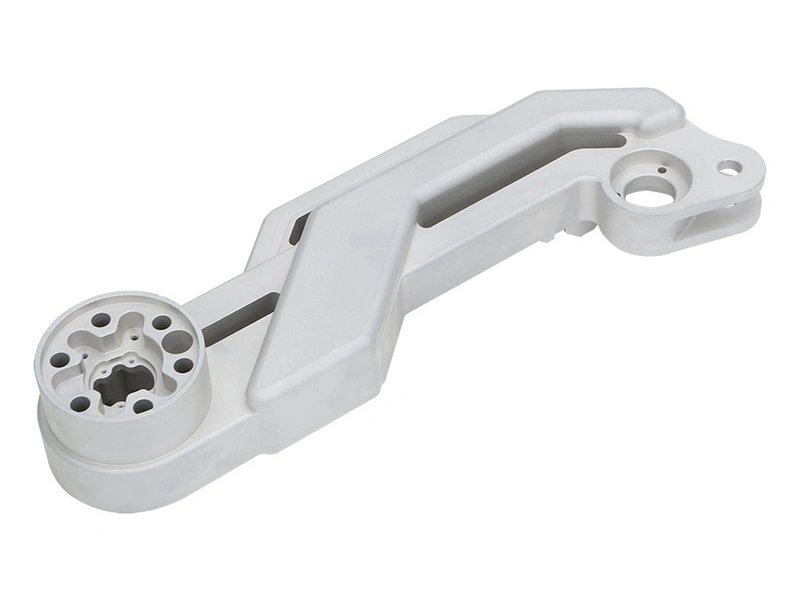
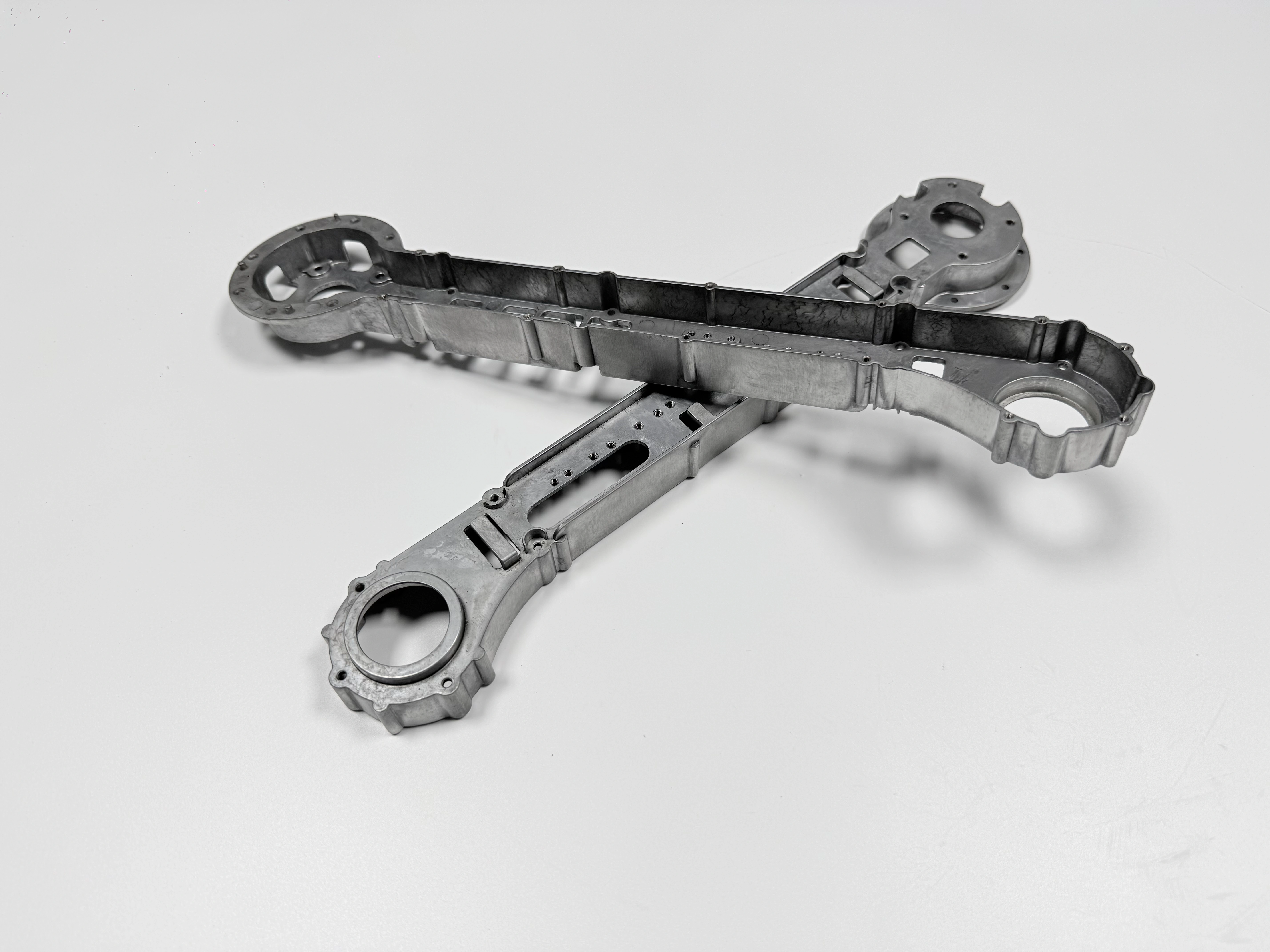
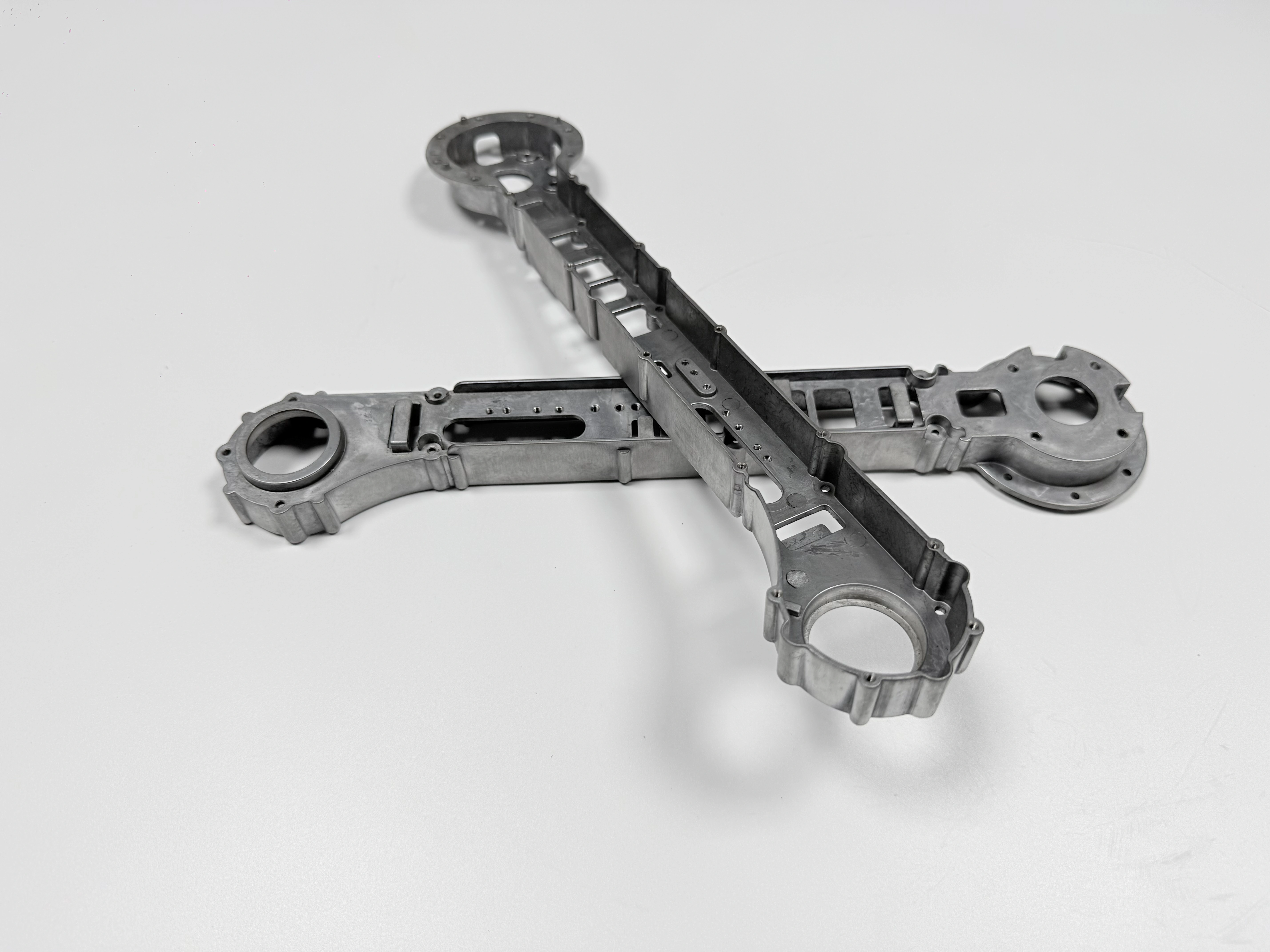
For a private label aluminum die casting program, a repeat order on a robot frame is not the same casting twice. It is the same six records, batch after batch, against a fixed drawing. The drawing fixes a 1.5 mm wall in ADC12, a 320×180×90 mm frame at 1.2–1.8 kg, seats at ±0.02 mm, 400 MPa as a target after T6, and MAO on the outside. Aluminum die casting sets the shape once. The records decide whether a later order matches the first.
What a Repeat Order Repeats
Six records leave with every shipment. A same-heat bar is pulled to ASTM B557, and an X-ray or CT scan reads the thin-wall far end. A CMM point map follows CNC post-machining, the threads take a go/no-go gauge, and a film thickness gauge reads the coating. Salt spray runs last.
Between orders the die rests and the heat lot changes. What repeats is the record set, not the part number. A batch that ships with one record missing is a first batch again.
First-off comes before the run. One frame is measured against the signed sample, with seat and thread readings beside the sample code. Only then does the batch start.
What Each of the Six Records Proves
The six do not overlap. A bar can pass while the wall blisters, and a seat can read inside ±0.02 mm and still move after the final cut. Each record answers one question, and the table pairs it with the limit and the step.
Record | Question | Limit and unit | After |
|---|---|---|---|
Same-heat bar, ASTM B557 | Tensile response | 400 MPa, target | T6 |
X-ray or CT | Far-wall fill | no cold shut or short fill | Casting |
CMM point map | Seat position and flatness | ±0.02 mm, 0.03 mm | CNC |
Go/no-go gauge | Thread fit after coating | pass or hold | MAO |
Film thickness gauge | Mask border held | per lot, no limit set | MAO |
Salt spray | Coating in service | duration on the drawing | MAO |
An incoming inspection may open one record. The plant holds all six, because one pass says nothing about the next.
The Drawing Question That Stops a Batch
One question goes out with every RFQ: does the drawing fix T6 and the mask list before the PO? A drawing that asks for 400 MPa as a measured value stops the program. That figure is a target after T6, and a release reading turns a process window into a number no batch can carry.
T6 is a window, 490–510 °C solution and 150–170 °C aging, set by the heat treatment cycle and confirmed with the foundry before the die is cut. The 0.03 mm flatness callout is a fiftieth of the 1.5 mm wall, and the seat inside it holds ±0.02 mm.
Where the wall can thicken or the 400 MPa target can drop, T6 becomes optional. That trade belongs on the drawing, not in a meeting after the first run.
Mask List on the PO, Not in Email
Four faces stay bare: threads, fits, grounding points, and datums. The coating line reads the drawing and the purchase order, not an email thread. So the list goes on the PO line by line, each line naming the feature, the mask border, and the check after coating.
A miss shows at assembly, when a fastener binds or a seat stands off by the film. By then the batch is at the line. Escalation is one step: the find holds the batch, and the MAO coating lead and the program contact decide on rework or a ream.
Masking costs time, so the list gets trimmed in conversation. A thread that can be reamed after coating may stay bare. A tight thread class cannot. That call is written per feature, or made again at the line.
What This Program Does Not Take
Four orders get declined: a 400 MPa figure written as a measured result, coating released without a mask list, a job compared on unit price alone, and a part with no drawing. Each refusal protects a record that can be checked a year later.
The mask refusal is the costly one. Coating without a list passes inspection and fails at the line, and the rework lands on the batch, not on the purchase order that skipped the list.
No customer name, batch size, price, lead time, or yield appears here. Those sit in the program file, shared under an agreement.
One Cavity, 200,000 Shots, and Handover
The die is a single cavity in H13, run under vacuum, with 200,000 shots as the design target. One cavity is the price of a 1.5 mm wall: one part per shot, and no second cavity to absorb a short fill.
A reorder starts at the die, not at the furnace. Cavity count and shots since the last service are checked before the heat is booked. Tool and die making records travel with the die, and the fill plan is set out in robot frame die casting.
Handover is four items: the signed first-off sample, the record template, the mask list, and the name of the person who stops a run. One step of escalation, no chain. A different part on the same alloy is covered in an ADC12 high-pressure die casting case.
FAQ