How Metal Casting Solutions Support Custom Part Manufacturing
How Metal Casting Solutions Support Custom Part Manufacturing
Metal casting solutions help buyers turn custom part requirements into manufacturable, inspectable, and scalable metal components. For many projects, buyers do not only need one casting process. They need a complete solution that connects material selection, DFM review, tooling, casting, CNC machining, surface finishing, inspection, assembly, packaging, and mass production.
When buyers search for metal casting solutions, they may already have drawings, samples, product functions, cost targets, surface requirements, or production plans. The key question is how to choose the right material, process route, tooling strategy, post-machining scope, inspection method, and delivery model for the custom metal part.
This guide explains how custom metal casting solutions support aluminum, zinc, copper, and multi-material projects from early engineering review to prototype validation, low-volume trial production, and stable mass production.
Why Buyers Need Metal Casting Solutions Instead of a Single Process
Buyers often need metal casting solutions when a single process answer is not enough. A part may look suitable for die casting, but the final project may still require material comparison, tooling review, CNC machining, surface protection, dimensional inspection, assembly, and packaging.
This is common when buyers have a drawing but are not sure whether aluminum, zinc, or copper is the best material. It also happens when buyers want to reduce cost but still need stable quality, or when they need to move from prototype to mass production without creating tooling, machining, finishing, or inspection problems later.
Buyer Situation | Why a Single Process Is Not Enough | Metal Casting Solution Needed |
|---|---|---|
Drawing exists, but material is uncertain | The wrong material can affect strength, weight, surface finish, conductivity, and cost. | Material selection, engineering review, and application-based comparison. |
Product function is clear, but process route is unclear | The part may need casting, CNC, finishing, assembly, or prototype validation together. | Integrated manufacturing route planning. |
Cost target is strict | Reducing unit price without process planning can increase tooling, scrap, and rework cost. | DFM review, as-cast and machined feature separation, and scalable tooling strategy. |
Prototype must become mass production | A prototype-friendly route may not be suitable for long-term production. | Prototype, low-volume, tooling, and mass production planning. |
Finished components are required | Raw castings may not meet assembly, surface, inspection, or packaging requirements. | CNC machining, post-process, quality inspection, assembly, and packaging. |
The purpose of metal casting solutions is to convert a part requirement into a controlled production plan that can be manufactured, inspected, delivered, and repeated.
What Should Be Included in Metal Casting Solutions?
A complete metal casting solution should cover the major decisions that affect the final part. These decisions include whether the part can be cast, which material should be used, whether tooling is needed, which areas require CNC machining, how surface finishing affects assembly, and how quality will be verified.
Solution Area | Buyer Problem Solved | Manufacturing Value |
|---|---|---|
Design review | The drawing may not be fully suitable for casting. | Reduces tooling changes, casting defects, and rework risk. |
Material selection | The buyer may not know whether aluminum, zinc, or copper is best. | Matches strength, weight, surface, conductivity, cost, and application needs. |
Tooling plan | The buyer may not know whether tooling investment is justified. | Builds the foundation for stable production and cost control. |
Casting process | The project needs stable metal part forming. | Controls forming efficiency, repeatability, and batch output. |
CNC machining | Some key dimensions cannot be achieved reliably as-cast. | Controls threads, sealing surfaces, holes, datums, and functional fit. |
Surface finishing | The part needs appearance, corrosion resistance, wear resistance, or protection. | Improves final use value and product acceptance. |
Inspection | The buyer needs confidence in dimensions, internal defects, and batch quality. | Creates measurable quality standards and repeat production records. |
Assembly | The buyer needs ready-to-use components. | Reduces secondary supply chain work and confirms final fit. |
Packaging | Finished castings may be damaged during transport. | Protects machined, coated, visible, or assembled parts during delivery. |
This is why the Metal Casting page should work as a custom metal parts solution entry point, not only a single-process casting page.
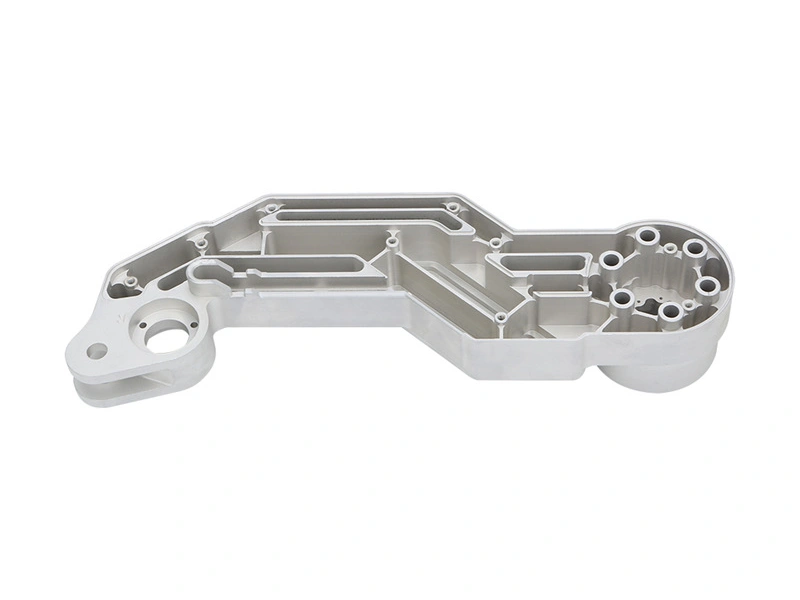
How to Choose the Right Metal Casting Solution by Material
Material direction is one of the first decisions in metal casting solutions. Aluminum, zinc, and copper each solve different buyer problems. A good solution should compare material performance before locking the project into one route.
Material Direction | Suitable Parts | Casting Solution Focus |
|---|---|---|
Lightweight housings, brackets, heat sinks, frames, and structural parts. | Weight reduction, strength, heat dissipation, CNC machining, and surface treatment. | |
Small complex parts, hardware, decorative parts, connectors, and assembly components. | Fine detail, dimensional stability, surface finishing, and visible part quality. | |
Conductive parts, thermal parts, connectors, valve parts, pump parts, and fittings. | Electrical conductivity, thermal performance, corrosion resistance, and functional reliability. | |
Multi-material casting solutions | Projects with several metal part families or different functional requirements. | Unified engineering review, material comparison, and supply chain management. |
Finished casting solutions | Parts requiring machining, coating, assembly, inspection, and packaging before delivery. | CNC, post-process, inspection, assembly, packaging, and production traceability. |
If buyers are not sure which material fits the application, casting material selection can help compare metal casting material solutions before tooling starts.
How Metal Casting Solutions Compare With CNC, 3D Printing and Sand Casting
Metal casting solutions do not always mean casting alone. Some projects need 3D printing for early validation, CNC machining for functional features, sand casting for large low-volume parts, or low-volume manufacturing before mass production.
Manufacturing Route | Better For | When to Combine With Metal Casting |
|---|---|---|
Metal casting solutions | Medium to high-volume metal parts, complex shapes, and long-term repeat production. | When tooling, post-machining, finishing, and inspection need to work together. |
Low-volume high-precision solid parts and critical machined features. | Used after casting to control holes, threads, sealing surfaces, datums, and assembly features. | |
Early prototypes, geometry checks, and design validation. | Used before tooling to reduce design risk. | |
Large parts, lower-volume castings, and flexible metal casting projects. | Used when large size or lower quantity makes die casting less suitable. | |
Trial production, market validation, and production process confirmation. | Used before full mass production to reduce quality and process risk. | |
Stable repeat orders and mature projects. | Used after tooling, samples, inspection standards, and process controls are approved. |
The best metal casting manufacturing solutions often combine multiple processes. The goal is not to force every project into one method, but to choose the route that best supports cost, quality, lead time, and final product requirements.
How Application Requirements Define the Right Metal Casting Solution
Buyers should choose metal casting solutions based on the final application. A lightweight housing, small decorative hardware part, conductive connector, outdoor component, and assembly-ready part may all need different materials, tooling strategies, machining plans, finishes, and inspection methods.
Application Requirement | Recommended Solution Focus |
|---|---|
Lightweight product | Aluminum casting, CNC machining, surface treatment, and dimensional inspection. |
Small detailed metal part | Zinc casting, fine tooling, finishing control, and cosmetic surface protection. |
Conductive or thermal part | Copper casting, material verification, machining, and functional inspection. |
Decorative product component | Cosmetic surface planning, surface finishing, visual standard, and protective packaging. |
Assembly-ready component | Post-machining, assembly, tolerance review, functional testing, and secure packaging. |
Outdoor or harsh environment | Material selection, anti-corrosion coating, coating inspection, and durability planning. |
High-volume production | Tooling strategy, process control, mass production quality control, and repeat order standards. |
This application-based approach helps buyers avoid choosing a process too early. The correct solution should begin with the part function, then define material, tooling, machining, finishing, inspection, and production route.
DFM and Engineering Review in Metal Casting Solutions
The first step in metal casting solutions should not be quotation only. It should be engineering review. Before tooling starts, the manufacturer should check part geometry, wall thickness, draft angle, material suitability, tooling feasibility, gate and venting direction, machining allowance, surface finish feasibility, assembly interface, and tolerance planning.
Engineering Review Item | Problem Prevented |
|---|---|
Wall thickness review | Shrinkage, porosity, deformation, short fill, and unstable casting quality. |
Draft angle review | Demolding difficulty, tool wear, ejection damage, and production instability. |
Material suitability | Wrong material selection, poor performance, high cost, or surface finish problems. |
Tooling feasibility | Mold modification, trial delays, undercut conflicts, and difficult ejection. |
Machining allowance | Insufficient stock for CNC machining, unstable datums, and failed functional features. |
Surface finish planning | Coating failure, appearance defects, color inconsistency, and finish-related rework. |
Assembly interface review | Fit problems, tolerance stack-up, fastening issues, and functional failure. |
Buyers can use metal casting design review and DFM review for casting solutions to identify risks before mold investment.
Tooling Strategy in Metal Casting Solutions
Tooling strategy affects cost, risk, production capacity, dimensional stability, and repeat order consistency. A metal casting solution should define whether the project needs single-cavity tooling, multi-cavity tooling, private tooling, prototype support, tool revision control, or long-term tool maintenance.
Tooling Strategy | Suitable Situation | Buyer Value |
|---|---|---|
Single-cavity tool | Trial production, lower-volume validation, or early-stage projects. | Reduces initial tooling risk and supports controlled validation. |
Multi-cavity tool | High-volume production and repeat orders. | Improves output and can reduce long-term unit cost. |
Private tooling | OEM custom metal parts and proprietary designs. | Protects dedicated part geometry and supports repeat production control. |
Tooling revision control | Projects with drawing updates, sample corrections, or design changes. | Prevents wrong-version production and tooling confusion. |
Tooling maintenance | Long-term production and repeat orders. | Maintains dimensional stability, flash control, and surface consistency. |
A complete tooling solution should review parting line, gate location, venting, cooling, ejector layout, sliders, inserts, mold materials, tool life, trial mold, correction, maintenance, and production version control.
Buyers can review tooling solutions for metal casting, tool materials for casting molds, and H13 mold steel for casting tools when long-term mold performance matters.
CNC and Post-Machining in Metal Casting Solutions
One of the most important cost-control decisions in metal casting solutions is separating as-cast features from machined features. Not every surface should be machined, but some critical areas need CNC or post-machining to meet functional requirements.
Feature Type | Casting Solution | Post-Machining Need |
|---|---|---|
General outer shape | As-cast or finished by surface treatment. | Usually limited machining unless appearance or fit requires it. |
Threaded holes | Cast pilot feature when suitable. | Tapping, drilling, or CNC machining is usually needed. |
Sealing surfaces | Cast with machining allowance. | Post-machining is often required for flatness and sealing reliability. |
Locating holes | Cast or drilled depending on tolerance. | Precision machining is needed when alignment is critical. |
Mounting faces | Cast rough surface when possible. | Machining is needed if flatness or stable contact is required. |
Assembly datum | Planned during DFM review. | CNC machining and inspection are needed for stable assembly reference. |
Integrated CNC machining for metal casting solutions, post-machining for metal cast parts, and CNC post-machining for assembly fit help buyers control final function without over-machining every surface.
Surface Finishing and Protection in Metal Casting Solutions
Surface finishing should be part of the metal casting solution from the beginning. It affects appearance, corrosion resistance, wear resistance, coating thickness, hand feel, assembly clearance, and packaging. If finishing is added after production without planning, it can create rework or fit problems.
Finish Solution | Suitable Purpose | Planning Point |
|---|---|---|
Appearance, color, and product surface value. | Adhesion, color standard, masking, gloss, and packaging protection. | |
Durable protection and coated metal casting parts. | Coating thickness, edge coverage, durability, and assembly clearance. | |
Aluminum part appearance and surface protection. | Alloy compatibility, surface quality, color variation, and process suitability. | |
Matte surfaces, pretreatment, and uniform texture. | Surface roughness, consistency, and downstream coating compatibility. | |
Small part deburring and edge smoothing. | Edge consistency, burr removal, and small feature protection. | |
Decorative coating | Appearance parts, hardware, trims, and consumer-facing parts. | Base casting defects, color consistency, visible standard, and batch control. |
Anti-corrosion coating | Outdoor or humid environment parts. | Protection level, coating durability, service life, and inspection method. |
Wear-resistant coating | Moving, handled, or contact parts. | Friction, wear, coating adhesion, and working conditions. |
A complete surface finishing for metal cast parts plan should be connected with material selection, tooling layout, CNC machining, assembly interfaces, and packaging protection.
Quality and Inspection Planning in Metal Casting Solutions
Quality planning should be included before production starts. For custom metal casting solutions, inspection should not be an afterthought at shipment. The solution should define which quality methods are required based on material, part function, internal risk, coating, assembly, and production volume.
Quality Solution | What It Controls | Buyer Value |
|---|---|---|
Material verification | Material grade, material batch, and approved material direction. | Prevents wrong material use and supports production traceability. |
Alloy composition and material consistency. | Confirms that the casting material matches approved requirements. | |
Critical dimensions, datums, geometric tolerances, and machined features. | Supports assembly fit and dimensional reliability. | |
Internal porosity, hidden defects, and casting integrity. | Improves reliability for structural or functional custom metal parts. | |
Coating inspection | Coating thickness, adhesion, surface appearance, and protection. | Ensures appearance, corrosion protection, and assembly clearance. |
Functional testing | Assembly fit, movement, sealing, fastening, or final use condition. | Reduces customer complaints and confirms product performance. |
Batch traceability | Material, tooling, casting, machining, finishing, inspection, and packaging records. | Supports repeat orders and quality issue investigation. |
For long-term projects, quality control for metal casting solutions should include inspection plans, approved samples, production records, tooling maintenance records, and repeat order standards.
How Metal Casting Solutions Support Prototype, Low-Volume and Mass Production
Metal casting solutions should support different project stages. Some buyers need prototypes before tooling. Some need trial production before committing to high-volume orders. Others need stable mass production with repeatable quality records. A staged solution helps reduce risk step by step.
Project Stage | Casting Solution Focus | Buyer Benefit |
|---|---|---|
Prototype | Validate structure, material direction, function, and early manufacturability. | Reduces mold risk and confirms the design direction. |
Engineering review | Optimize material, drawing, tolerances, tooling, machining, and finishing plan. | Reduces downstream rework and project uncertainty. |
Tooling development | Build the production foundation for repeatable custom metal parts. | Supports stable forming and long-term production consistency. |
Trial casting | Verify mold performance, filling, surface quality, dimensions, and defects. | Finds early problems before production scaling. |
Low-volume run | Validate small-batch stability, inspection standards, finishing, and packaging. | Lowers mass production risk. |
Mass production | Control material, tooling, process, inspection, delivery, and repeat output. | Supports stable long-term orders. |
Repeat production | Maintain approved material, process, quality, finishing, and packaging standards. | Keeps batch results consistent over time. |
Buyers can use prototype metal casting solutions, low-volume metal casting solutions, and mass production metal casting solutions according to the project stage.
How One-Stop Metal Casting Solutions Reduce Project Risk
One-stop metal casting solutions reduce project risk by connecting engineering, material selection, tooling, casting, CNC machining, surface finishing, inspection, assembly, packaging, and mass production under one coordinated workflow. This is especially useful when buyers need finished parts or assembly-ready components.
Project Risk | One-Stop Metal Casting Solution |
|---|---|
Wrong material choice | Engineering review and material comparison before tooling. |
Tooling rework | DFM review, tooling planning, trial mold review, and revision control. |
Machining mismatch | Casting datums, machining allowance, CNC fixtures, and inspection are coordinated. |
Finish affects assembly | Surface treatment, coating thickness, masking, and fit review are planned together. |
Quality dispute | Unified inspection, approved samples, batch traceability, and quality records. |
Delivery delay | Integrated production planning across tooling, casting, machining, finishing, and inspection. |
Packaging damage | Finished part packaging standards protect coated, machined, visible, and assembled parts. |
If buyers need custom metal casting solutions, Neway’s Metal Casting page can be used as the project entry point. From there, the project can be matched with aluminum die casting solutions, zinc die casting solutions, copper die casting solutions, tool and die making for casting solutions, die casting and machining solutions, post processing for metal casting solutions, assembly solutions for metal cast parts, and one-stop metal casting solutions.
Summary
Metal casting solutions help buyers choose the right manufacturing route for custom metal parts. The solution should consider part function, material direction, geometry, production volume, tooling, CNC machining, surface finishing, inspection, assembly, packaging, and long-term production requirements.
Instead of treating casting as a single process, buyers should plan a complete manufacturing solution that can move from prototype validation to low-volume trial production and mass production with stable material, tooling, quality, finishing, and delivery standards.
Solution Area | Key Buyer Question | Recommended Action |
|---|---|---|
Material direction | Should the part use aluminum, zinc, copper, or another casting material? | Compare weight, strength, detail, conductivity, surface finish, environment, and production volume. |
Engineering review | Can the design be cast, machined, finished, inspected, and assembled reliably? | Review wall thickness, draft, tooling feasibility, machining allowance, surface finish, and assembly interfaces. |
Tooling strategy | What tool type supports the project stage and production volume? | Choose single-cavity, multi-cavity, private tooling, revision control, and maintenance planning as needed. |
CNC and post-machining | Which features should be as-cast and which should be machined? | Define threaded holes, sealing surfaces, locating holes, mounting faces, datums, and assembly features. |
Surface finishing | How should the part look, resist corrosion, resist wear, or protect surfaces? | Plan painting, powder coating, anodizing, sand blasting, tumbling, decorative coating, anti-corrosion coating, or wear-resistant coating. |
Quality planning | How will part quality be verified before shipment and repeat orders? | Use material verification, alloy composition analysis, CMM inspection, X-ray inspection, coating inspection, functional testing, and batch traceability. |
Production stage | How can the project move safely from prototype to mass production? | Use prototype validation, engineering review, tooling development, trial casting, low-volume runs, mass production, and repeat production standards. |
FAQ
How Can Buyers Choose the Right Metal Casting Solution for a Custom Part?
How Do Metal Casting Solutions Balance Material, Process and Production Volume?
What Problems Can Integrated Metal Casting Solutions Solve Before Tooling?
How Should Quality Control Be Planned in Metal Casting Solutions?
How Can One-Stop Metal Casting Solutions Reduce Cost, Risk and Lead Time?