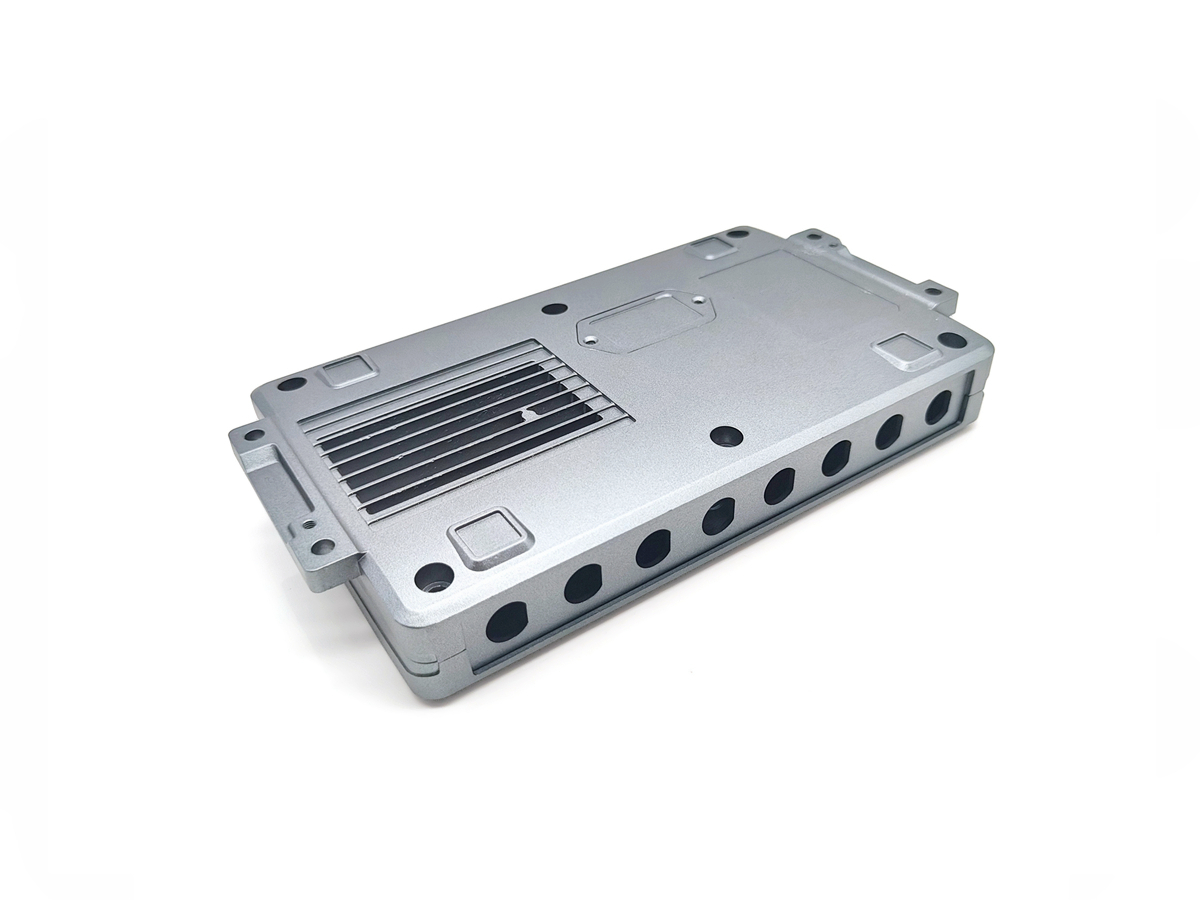
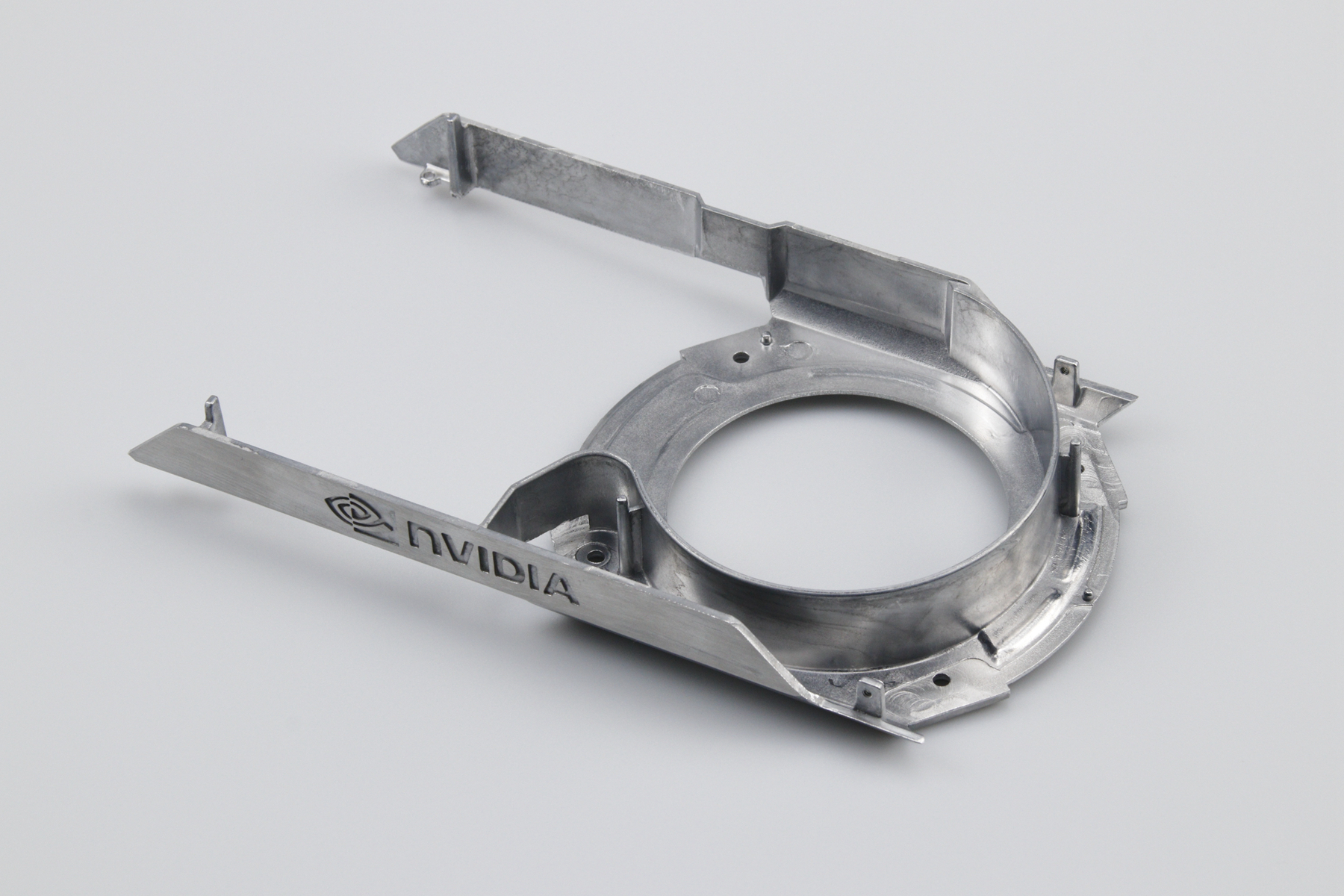
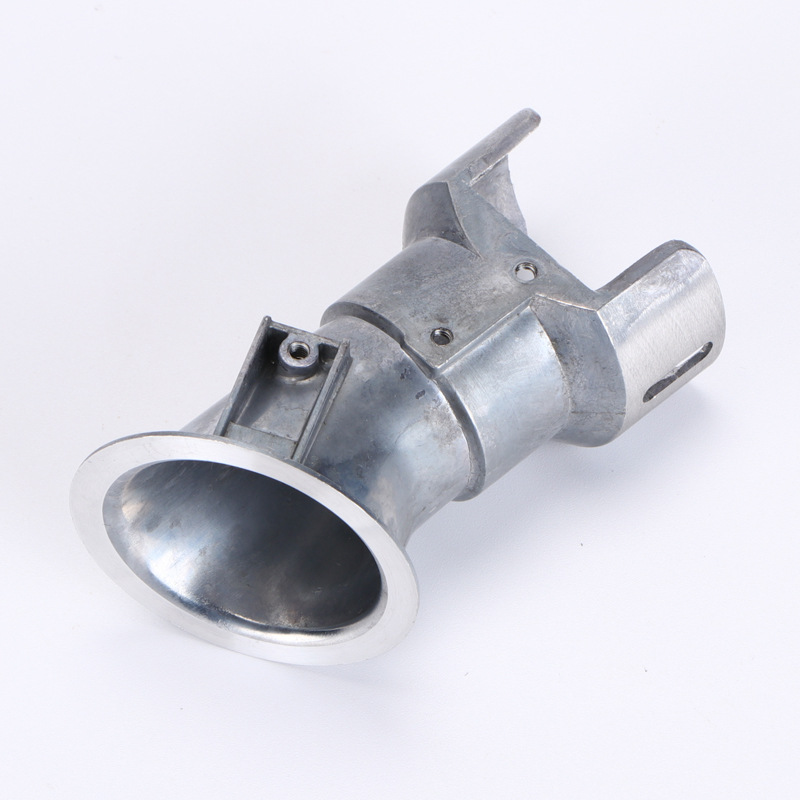
AlSi12 is a silicon-rich aluminum casting alloy optimized for high-fluidity aluminum die casting where complex geometries, thin sections, and excellent surface quality are required. With ~12% silicon, the alloy offers outstanding mold filling capability, low shrinkage tendency, and stable dimensional behavior, making it a preferred choice for decorative housings, electronic enclosures, lighting components, and general-purpose structural parts. AlSi12 provides a smooth as-cast surface and consistent replication of fine details, enabling reduced secondary processing and reliable high-volume production when paired with Neway’s precision tool and die making capabilities.
When higher mechanical strength is required, designers may consider A380 or A383 / ADC12, which introduce copper for strength at the expense of corrosion resistance. For improved ductility and heat-treat response, AlSi10Mg (EN AC-43500) is a common upgrade. If pressure tightness is critical for fluid-handling components, A413 is often selected. For high-wear or elevated-temperature environments, A390 provides superior abrasion resistance. Each alternative balances fluidity, strength, and post-process compatibility differently.
Country/Region | Equivalent / Comparable Grade | Specific Commercial Brands | Notes |
Europe (EN) | EN AC-44300 (AlSi12) | Hydro AlSi12, Rheinfelden AlSi12 | Standard European hypereutectic AlSi12 casting alloy. |
Germany (DIN) | AlSi12 | TRIMET AlSi12, CastSil AlSi12 | DIN designation aligned with EN AC-44300. |
USA (AA) | A413.0 (partial) | AA A413 suppliers | Comparable fluidity; chemistry not identical. |
China (GB/T) | YL112 / ZL112 (AlSi12 class) | Chalco YL112, Nanshan YL112 | Widely used for decorative and thin-wall castings. |
Japan (JIS) | AC3A (nearest) | UACJ / Daiki AC3A | Functional equivalent emphasizing castability. |
AlSi12 was developed to maximize castability and surface quality in aluminum cast components. The high silicon content lowers melting temperature, increases fluidity, and reduces solidification shrinkage, allowing reliable filling of thin ribs, sharp corners, and complex cavities. This design intent makes AlSi12 particularly suitable for aesthetic parts, lightweight housings, and components where dimensional stability and surface finish take precedence over the need for high structural strength. It is frequently selected for parts that require minimal machining and consistent cosmetic quality across large production volumes.
Element | Silicon (Si) | Iron (Fe) | Copper (Cu) | Magnesium (Mg) | Manganese (Mn) | Zinc (Zn) | Aluminum (Al) |
Composition (%) | 11.0–13.0 | ≤0.8 | ≤0.3 | ≤0.3 | ≤0.5 | ≤0.3 | Balance |
Property | Density | Melting Range | Thermal Conductivity | Electrical Conductivity | Thermal Expansion |
Value | ~2.65 g/cm³ | ~570–585 °C | ~150–170 W/m·K | ~30–35% IACS | ~21–22 µm/m·°C |
Property | Tensile Strength | Yield Strength | Elongation | Hardness |
Value (as-cast) | ~170–230 MPa | ~80–120 MPa | ~2–4% | ~70–90 HB |
Exceptional fluidity for thin-wall and complex die-cast geometries.
Low shrinkage and good dimensional stability.
Smooth as-cast surface suitable for decorative applications.
Good corrosion resistance in atmospheric environments.
High thermal conductivity for heat-spreading housings.
Lower strength than Cu-containing alloys, favoring non-load-bearing parts.
Minimal tendency for hot tearing.
Reduced need for extensive post machining.
High-pressure die casting: AlSi12 is ideally suited for HPDC due to its excellent flow characteristics, enabling stable filling of thin sections down to ~1.0–1.5 mm with low defect rates.
Tooling considerations: Lower thermal stress compared with Cu-rich alloys allows longer die life when using standard H13 tool steel.
Post machining: Limited post machining is typically required; CNC operations focus on critical interfaces and mounting features.
Deburring and finishing: Tumbling and light edge finishing are sufficient for most cosmetic parts.
Inspection: Visual inspection and dimensional checks ensure surface consistency and geometric accuracy for appearance-critical components.
Anodizing (decorative): Produces acceptable cosmetic finishes, though color uniformity must be validated due to high Si content.
Powder coating: Powder coating offers durable protection and consistent appearance.
Liquid painting: Painting provides smooth, high-quality decorative surfaces.
Sand or bead blasting: Sand blasting creates uniform matte textures prior to coating.
Chromate conversion: Improves corrosion resistance and coating adhesion.
Laser marking: Enables clean, permanent identification on cosmetic housings.
Consumer electronics housings and frames.
Lighting fixtures and architectural components.
Decorative automotive interior parts.
Heat-dissipation covers and enclosures.
General-purpose thin-wall aluminum castings.
When complex geometry and thin walls are the primary design drivers.
When surface appearance and dimensional stability are critical.
When high thermal conductivity is required without heavy mechanical loading.
When minimizing machining and tooling wear is important.
When cost-effective, high-volume die casting is needed.