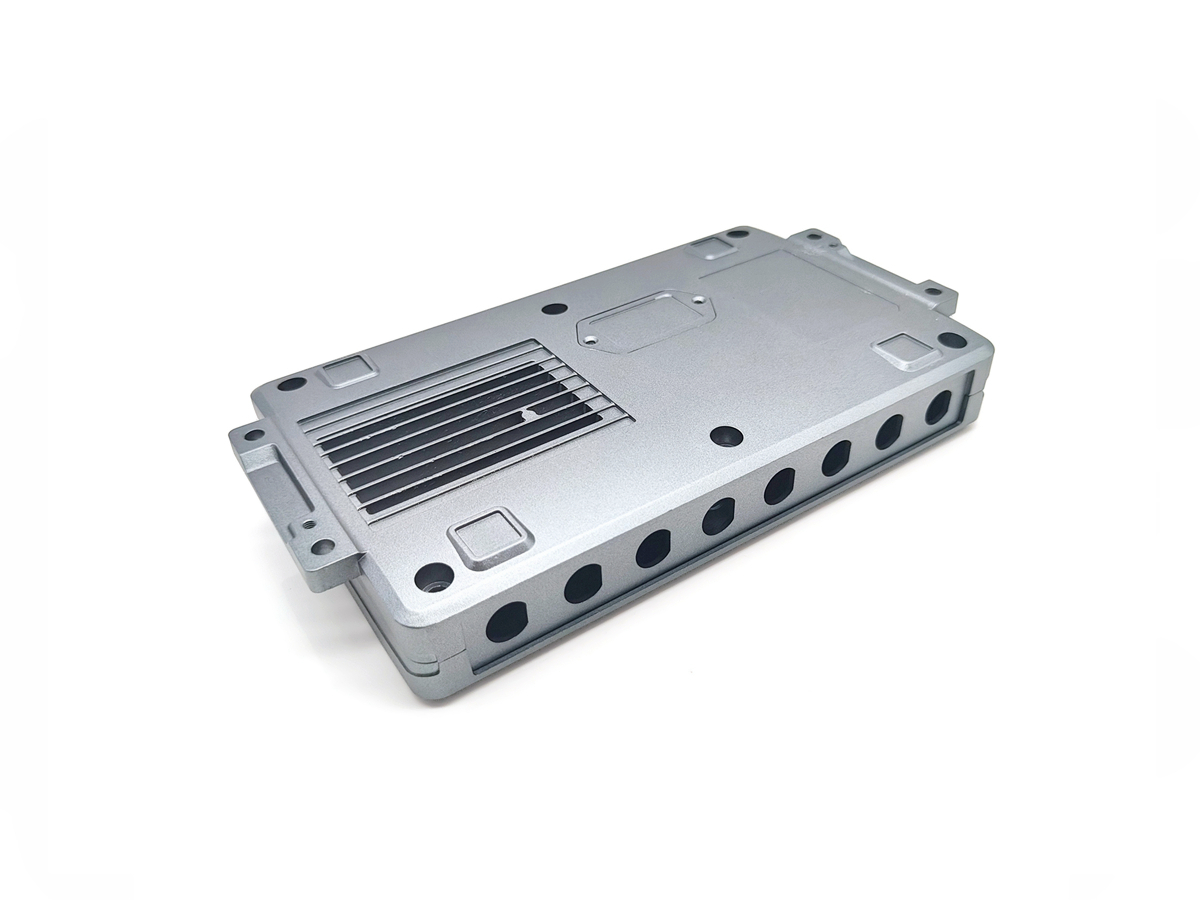
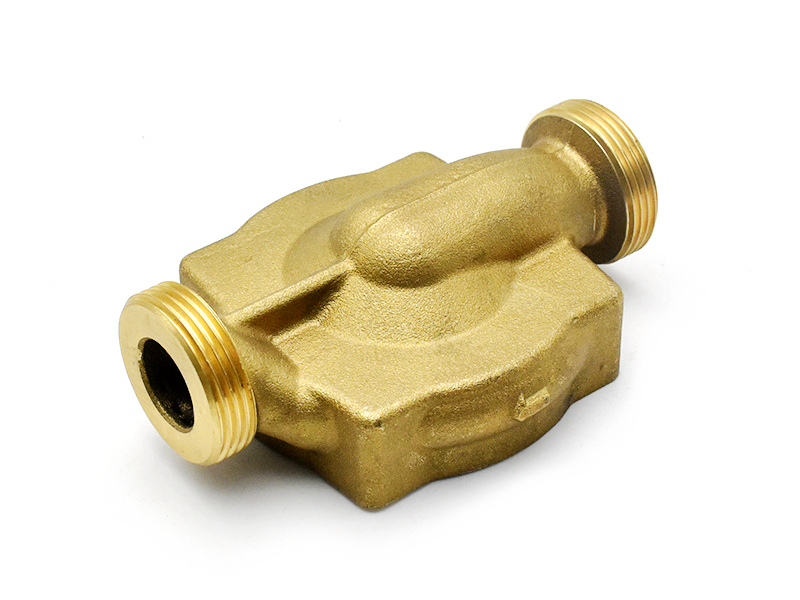
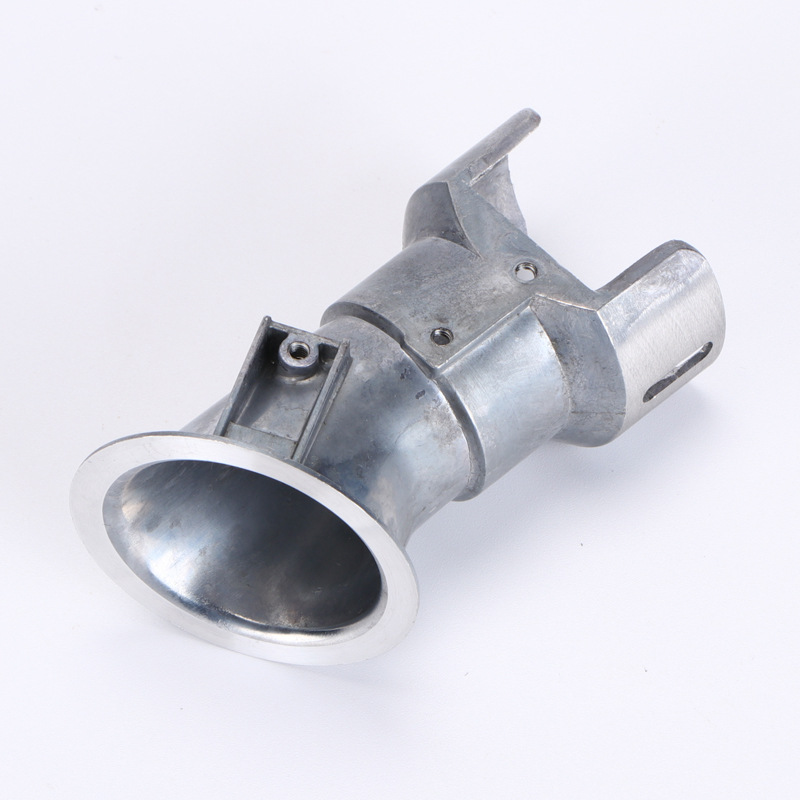
CuZn10 is a low-zinc brass alloy engineered for precision copper die casting and machining applications where excellent ductility, corrosion resistance, and surface quality are required. With approximately 10% zinc and a high copper balance, CuZn10 exhibits superior formability and stable mechanical behavior compared with higher-zinc brasses. Its clean microstructure supports smooth casting surfaces and predictable machining, making it well suited for fittings, valve components, decorative hardware, electrical connectors, and thin-wall mechanical parts. When combined with Neway’s controlled melting practice and optimized tool and die making, CuZn10 delivers reliable dimensional accuracy and consistent cosmetic quality across medium-to-high production volumes.
If higher strength and wear resistance are needed, CuZn37 or CuZn40 provide increased hardness at the expense of ductility. For improved machinability in threaded parts, Leaded Free-Cutting Brass C48500 is often selected. Where corrosion resistance in potable water or low-lead compliance is critical, Silicon Brass C87850 offers a suitable alternative. For bearing or sliding applications, Leaded Bronze C83600 provides superior lubricity, while higher-strength service may justify Aluminum Bronze C95400.
Country/Region | Equivalent / Comparable Grade | Specific Commercial Brands | Notes |
Europe (EN) | CuZn10 (CW501L) | Wieland CW501L, Aurubis CW501L | Standard low-zinc brass with high ductility. |
USA (ASTM) | C22000 | Olin C220, Mueller C220 | Commercial bronze; closest functional equivalent. |
China (GB/T) | H90 | Chalco H90, Nanshan H90 | Common low-zinc brass for fittings and hardware. |
Japan (JIS) | C2200 | UACJ C2200, Mitsubishi C2200 | Equivalent composition used in precision components. |
UK (BS) | CZ101 | Avon CZ101 | Traditional designation aligned with CuZn10 chemistry. |
CuZn10 was designed to prioritize ductility, corrosion resistance, and surface finish rather than maximum strength. Its low zinc content minimizes stress-corrosion susceptibility and provides stable performance in water, mild chemicals, and atmospheric exposure. Designers choose CuZn10 for thin-section castings, intricate fittings, and visible components where uniform appearance, reliable sealing, and ease of secondary forming are essential. The alloy supports light mechanical loading while maintaining excellent aesthetic quality, making it a strong choice for architectural, plumbing, electrical, and consumer hardware.
Element | Copper (Cu) | Zinc (Zn) | Lead (Pb) | Iron (Fe) | Other |
Composition (%) | ~89–91 | ~9–11 | ≤0.05 | ≤0.05 | Trace |
Property | Density | Melting Range | Thermal Conductivity | Electrical Conductivity | Thermal Expansion |
Value | ~8.8 g/cm³ | ~930–970 °C | ~120–140 W/m·K | ~28–30% IACS | ~19–21 µm/m·°C |
Property | Tensile Strength | Yield Strength | Elongation | Hardness |
Value | ~250–320 MPa | ~90–120 MPa | ~25–35% | ~70–90 HB |
Excellent ductility and formability for thin-wall castings.
High corrosion resistance in water and atmospheric environments.
Smooth as-cast surface suitable for decorative finishing.
Low susceptibility to stress-corrosion cracking.
Good electrical and thermal conductivity.
Stable machining behavior with clean surface finish.
Good soldering and brazing compatibility.
Balanced cost for copper-rich precision components.
Copper die casting: CuZn10 fills dies smoothly due to its copper-rich composition, supporting thin sections and fine details in precision copper die casting.
Gravity and sand casting: Suitable for larger or lower-volume components where uniform solidification and surface quality are required.
CNC machining: Performs well on CNC machining centers, enabling tight tolerances on sealing faces, threads, and mating features.
Drilling and threading: Clean chip formation allows accurate threads and smooth bore finishes.
Deburring and finishing: Tumbling or light brushing removes minor burrs and prepares surfaces for coating or assembly.
Inspection: Dimensional checks and surface inspection are applied to ensure cosmetic and functional consistency using Neway’s inspection equipment.
Polishing: Achieves bright, decorative finishes for visible components.
Clear lacquer or protective coating: Prevents oxidation and color change.
Nickel or chrome plating: Enhances wear resistance and appearance.
Powder coating: Provides durable color finishes for consumer and architectural hardware.
Bead blasting: Produces uniform matte texture prior to coating.
Laser marking: Enables permanent identification without affecting corrosion performance.
Plumbing fittings and valve components.
Electrical connectors and terminals.
Architectural and decorative hardware.
Light-duty mechanical fittings and couplings.
Consumer hardware requiring clean surface finish.
When high ductility and corrosion resistance are required.
When thin-wall casting and smooth surfaces are design priorities.
When electrical or thermal conductivity is beneficial.
When decorative appearance matters alongside functional reliability.
When low-lead or cleaner brass chemistry is preferred.