How to Source Zinc Die Casting Components for Precision Assemblies
How to Source Zinc Die Casting Components for Precision Assemblies
Zinc die casting components are widely used in precision assemblies, decorative hardware, electronic housings, locks, connectors, hinges, consumer product parts, and industrial small mechanisms. Compared with simple casting blanks, these components often need stable dimensions, controlled cosmetic surfaces, functional holes, threads, coating thickness control, and reliable assembly performance.
When buyers source zinc die casting components, they should not evaluate only the casting process. A reliable sourcing decision should consider component function, zinc alloy selection, mold design, post-machining requirements, surface finishing, assembly fit, inspection standards, packaging protection, and long-term production consistency.
This article explains how buyers can evaluate custom zinc die cast components before quotation, compare zinc with other manufacturing methods, define critical component requirements, and choose a supplier that can support tooling, die casting, CNC machining, finishing, assembly, and mass production.
Why Buyers Search for Zinc Die Casting Components
Buyers searching for zinc die casting components usually already have a practical purchasing need. They may be sourcing small metal parts for an assembly, decorative hardware for a consumer product, connector shells for electronics, hinge parts for movement, or plated components for visible product areas.
The search intent is usually not basic process learning. Buyers want to find a supplier that can manufacture components that are ready for assembly, surface finishing, inspection, packaging, and repeat production. This makes zinc die casting components different from ordinary raw castings.
Buyer Need | Typical Component Example | Supplier Capability Required |
|---|---|---|
Small complex metal components | Locks, levers, brackets, knobs, hinges, connector shells. | Tooling, zinc alloy selection, stable die casting, and detail control. |
Precision assembly components | Threaded parts, locating parts, hinge parts, mating components. | CNC machining, post-machining, CMM inspection, and fit validation. |
Decorative zinc components | Caps, trims, handles, cosmetic covers, fashion hardware. | Surface planning, polishing, coating, painting, and appearance control. |
Repeat production components | Hardware parts, consumer product shells, industrial small components. | Mass production planning, tooling maintenance, batch inspection, and traceability. |
For buyers, the key question is not only whether the supplier can make a zinc casting. The real question is whether the supplier can deliver a zinc die cast component that fits the final product, meets appearance requirements, passes inspection, and remains stable across repeated orders.
Common Types of Zinc Die Casting Components
Zinc die casting components are used in many industries because zinc alloys can reproduce fine details, support stable small features, provide a strong metal feel, and accept different surface finishes. These components may be functional, decorative, structural, or assembly-ready.
Component Type | Common Applications | Buyer Concern |
|---|---|---|
Hardware components | Locks, handles, hinges, knobs, fittings. | Strength, appearance, plating quality, wear resistance, and long-term durability. |
Electronic components | Connector shells, device housings, covers, shielding parts. | Dimensional stability, EMI shielding, hole position, wall thickness, and assembly fit. |
Decorative components | Caps, trims, fashion hardware, visible covers. | Surface quality, plating thickness, fine details, texture, and color consistency. |
Mechanical components | Levers, small brackets, moving parts, gear-like components. | Wear resistance, hole accuracy, moving fit, and post-machining control. |
Consumer product components | Shells, frames, cosmetic covers, product fittings. | Appearance, touch feel, coating consistency, and batch repeatability. |
Industrial components | Mounts, small housings, fixtures, machine accessories. | Reliability, functional dimensions, machining, inspection, and repeat orders. |
Many zinc die casting components are not standalone blanks. They become part of larger assemblies, so buyers should evaluate not only casting quality, but also machining, finishing, assembly interface, and final-use requirements.
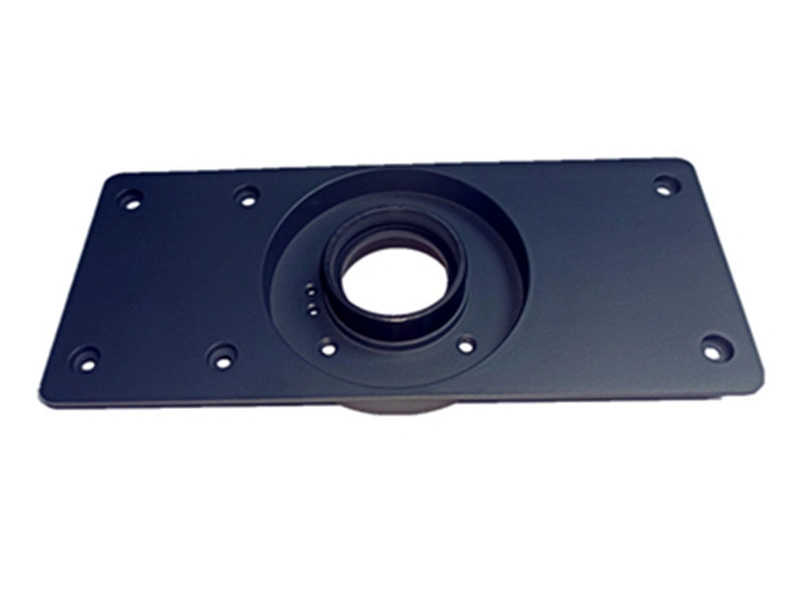
Zinc Die Casting Components Compared With Aluminum, Plastic and CNC Components
Zinc die casting components should be compared with other manufacturing options before production begins. Zinc is often selected when the component needs small size, detailed geometry, stable dimensions, decorative surface quality, and repeated batch production.
Option | Better For | Limitation |
|---|---|---|
Zinc die casting components | Small complex metal components, decorative parts, precision hardware, plated components. | Heavier than aluminum and not ideal for large lightweight structural components. |
Lightweight structures, larger housings, heat sinks, and weight-sensitive parts. | Fine decorative detail and plating appearance may not be as suitable as zinc for some parts. | |
Plastic components | Insulating parts, lightweight shells, low-load housings, plastic consumer parts. | Limited metal feel, strength, wear resistance, and premium plated appearance. |
Low-volume high-precision solid parts and prototype components. | Higher cost for high-volume components with complex cast geometry. | |
Sheet metal components | Simple thin panels, bent brackets, covers, and folded structures. | Limited for complex three-dimensional shapes and integrated small details. |
If the component needs compact geometry, clear details, metal weight, good cosmetic finishing, functional features, and stable production, zinc die casting is often a strong manufacturing choice.
How to Classify Zinc Die Casting Components Before Quotation
Before requesting a quotation, buyers should classify zinc die casting components by function. This helps suppliers understand whether the part is mainly functional, cosmetic, structural, connector-related, or assembly-ready. Without this classification, suppliers may miss important details such as machining allowance, coating thickness, assembly datums, or cosmetic surface control.
Component Category | Main Requirement | Quotation Focus |
|---|---|---|
Functional components | Holes, threads, mating faces, movement fit, positioning features. | Tolerances, post-machining, inspection method, and functional testing. |
Cosmetic components | Visible surfaces, plating, color, texture, decorative appearance. | Surface quality, mold marks, polishing, coating process, and packaging protection. |
Structural components | Load, hardness, wear resistance, stiffness, and durability. | Alloy selection, wall thickness, ribs, bosses, and mechanical reliability. |
Connector components | Sealing, pin location, EMI shielding, interface fit, alignment. | Precision holes, mating features, surface control, and assembly validation. |
Assembly-ready components | Ready for installation or direct product assembly. | CNC machining, finishing, assembly service, functional inspection, and packaging. |
This classification helps buyers communicate requirements clearly. For example, a zinc die cast cosmetic cover should not be quoted the same way as a hinge component, connector shell, or threaded mechanical part.
Zinc Alloy Selection for Die Casting Components
Zinc alloy selection affects component strength, hardness, dimensional stability, surface finishing, weight feel, wear resistance, and long-term performance. A supplier should recommend a material based on component function instead of using one default alloy for every project.
Common zinc alloys for die casting components include Zamak 3, Zamak 5, Zamak 7, ZA-8, and Zamak 2. Each alloy has different strengths for custom zinc die cast components.
Zinc Alloy | Suitable Component Type | Selection Reason |
|---|---|---|
General zinc die casting components, housings, hardware, small parts. | Good dimensional stability and balanced performance for broad applications. | |
Small structural parts, hardware, load-related components. | Higher strength and hardness than common general-purpose zinc alloys. | |
Thin-wall parts, cosmetic components, complex detailed parts. | Good flowability and surface performance for fine component features. | |
Wear-resistant or higher-strength functional components. | Suitable for selected mechanical applications requiring stronger performance. | |
Components requiring higher strength and wear resistance. | Should be evaluated according to working environment, load, and finishing needs. |
For zinc alloy die casting components, material selection should be reviewed together with tooling, surface treatment, machining, and assembly. A decorative component may prioritize surface quality and plating compatibility, while a mechanical component may require hardness, wear resistance, and tighter post-machined features.
Design Factors for Precision Zinc Die Casting Components
Precision zinc die casting components usually have more complex requirements than simple shapes. They may include thin walls, small holes, bosses, ribs, hinge areas, decorative faces, locating datums, threads, and surfaces that need plating or coating. Each design detail can affect casting quality and assembly performance.
Before tooling starts, buyers should confirm which areas are critical for assembly, which features can remain as-cast, which holes require machining, and which surfaces are visible after final product assembly.
Design Factor | Risk If Ignored | Planning Method |
|---|---|---|
Thin wall | Short fill, cold shut, flow marks, or unstable filling. | Review alloy flowability, gate design, venting, and mold flow path. |
Boss and rib | Shrinkage, deformation, cracking, or weak local structure. | Control wall transition, rib thickness, boss support, and machining allowance. |
Hinge area | Binding, looseness, poor movement, or misalignment. | Control hole position, coaxiality, machining strategy, and fit testing. |
Cosmetic face | Visible parting lines, ejector marks, gate marks, or surface defects. | Plan parting line, ejector pin, gate removal, polishing, and finishing early. |
Assembly datum | Assembly deviation, tolerance stack-up, or unstable product fit. | Define datums, post-machined areas, inspection points, and assembly interfaces. |
For complex zinc die casting components, early design and engineering review can help reduce tooling revisions and improve manufacturability.
Tooling Planning for Zinc Die Casting Components
Tooling planning is especially important for zinc die casting components because many components are small, detailed, cosmetic, and assembly-related. The mold must control detail reproduction, surface quality, parting line location, ejector marks, venting, dimensional repeatability, and long-term production stability.
A professional tooling for zinc die casting components plan should evaluate parting line, gate location, ejector pin layout, venting, sliders, inserts, multi-cavity consistency, mold material, trial mold validation, and maintenance strategy.
Tooling Factor | Why It Matters for Components | Planning Focus |
|---|---|---|
Parting line | Can affect visible surfaces, assembly faces, and finishing quality. | Avoid critical cosmetic faces and important mating surfaces where possible. |
Gate location | Can leave marks or affect flow into small features. | Balance filling performance with visible surface protection. |
Ejector position | Can create marks, deformation, or cosmetic defects. | Keep ejector marks away from decorative and functional areas. |
Venting | Affects short fill, porosity, surface flow marks, and fine details. | Plan enough air escape paths for small complex component cavities. |
Sliders and inserts | May be required for undercuts, side holes, grooves, or complex features. | Review complexity, maintenance, cycle time, and production stability. |
Multi-cavity mold | Can improve output but may create cavity-to-cavity variation. | Control balance, inspection plan, and consistency across cavities. |
Tooling maintenance also matters for repeat production. As molds wear, flash, burrs, and dimensional drift may increase. For long-term zinc die casting component supply, the supplier should have a process for mold maintenance and production monitoring.
Post-Machining for Zinc Die Cast Components
Zinc die casting can produce accurate small components, but functional areas may still require post-machining for zinc die casting components. This is especially true when the component includes threads, hinge holes, locating features, sealing surfaces, or precision assembly datums.
The best approach is not to machine every surface. Buyers should define which features are functional and which areas can remain as-cast. This reduces unnecessary cost while protecting the performance of critical features.
Component Area | Usually Machined? | Reason |
|---|---|---|
Threaded holes | Yes | Helps ensure thread strength, fastening reliability, and repeatable assembly. |
Hinge holes | Often yes | Controls coaxiality, motion clearance, and hinge movement. |
Locating holes | Yes | Ensures assembly positioning and alignment with other components. |
Sealing surfaces | Often yes | Improves contact, flatness, and sealing performance. |
Cosmetic exterior | Not always | Usually controlled through casting quality, polishing, and surface finishing. |
Internal ribs | Usually no | Most internal support ribs can remain as-cast if not used as functional datums. |
When functional accuracy is required, integrated CNC machining for zinc die cast components and CNC post-machining for assembly fit can help control holes, threads, mating surfaces, and assembly datums after casting.
Surface Finishing and Appearance Control for Zinc Die Casting Components
Surface finishing for zinc die casting components should be planned based on final product use. A decorative handle, a connector shell, a painted product cover, and an industrial moving component may all require different surface control methods.
If zinc die casting components are visible after assembly, surface finishing cannot be treated as an afterthought. Cosmetic surfaces, parting lines, gate marks, ejector marks, polishing requirements, coating thickness, and packaging protection should be considered before mold production.
Finish Requirement | Component Example | Planning Concern |
|---|---|---|
Decorative plating | Handles, caps, trims, lock covers, visible hardware. | Cosmetic surface control, plating thickness, base casting defects, and adhesion. |
Device shells, covers, consumer product components. | Color consistency, masking, surface preparation, and adhesion. | |
Industrial components and coated zinc die cast parts. | Coating thickness, assembly clearance, edge coverage, and corrosion protection. | |
Polishing | High-end cosmetic components and premium visible parts. | Surface defects may become more visible after polishing. |
Fashion hardware, trims, product covers, decorative shells. | Surface preparation, color control, scratch resistance, and final appearance. | |
Moving components, contact parts, mechanical zinc components. | Friction, wear, coating adhesion, and service environment. |
For zinc die cast components with appearance requirements, post processing for zinc die casting components should be planned with tooling, not after casting is complete.
Assembly Planning for Zinc Die Casting Components
Assembly planning is critical because zinc die casting components are often used with plastic parts, steel pins, springs, screws, electronic inserts, seals, shafts, or other metal parts. A component may pass casting inspection but still fail if coating thickness, burrs, hole position, or thread depth affects final assembly.
Buyers should identify assembly interfaces early. This includes screw fastening areas, hinge movement, snap-fit features, coated surfaces, visible surfaces, mating faces, and packaging protection requirements.
Assembly Requirement | Possible Issue | Control Method |
|---|---|---|
Screw fastening | Insufficient thread depth, weak thread engagement, or burr interference. | Tapping control, thread gauge inspection, torque check, and drawing definition. |
Hinge movement | Binding, looseness, misalignment, or unstable rotation. | Hole machining, coaxiality control, pin fit test, and trial assembly. |
Snap-fit | Deformation, breakage, or poor fit after repeated use. | Design review, alloy selection, wall thickness control, and functional testing. |
Coated surface | Assembly clearance changes after coating or plating. | Coating thickness control, masking, tolerance compensation, and fit validation. |
Visible component | Scratches, dents, coating damage, or appearance rejection during transport. | Protective packaging, visual inspection, and handling control. |
For ready-to-use components, assembly service for zinc die casting components can reduce buyer-side secondary operations and improve consistency between casting, machining, finishing, and final product assembly.
Quality Inspection for Zinc Die Casting Components
Quality inspection for zinc die casting components should cover dimensions, threads, surface quality, coating thickness, fit, function, packaging, and batch traceability. Since many zinc components are small and used in assemblies, even a minor dimensional deviation or burr can create final product problems.
Inspection should be planned according to the component category. Functional components need dimensional and assembly checks. Cosmetic components need visual standards and finishing control. Connector components may need hole position, coating, sealing, and fit validation.
Inspection Item | Why It Matters | Suggested Method |
|---|---|---|
Critical dimensions | Affect assembly, alignment, function, and product reliability. | CMM inspection, fixture inspection, calipers, and sampling plans. |
Thread quality | Affects fastening strength and assembly repeatability. | Thread gauge inspection, torque testing, and post-machining inspection. |
Surface quality | Affects decorative value and customer acceptance. | Visual standard, defect limit sample, polishing inspection, and finishing checks. |
Coating thickness | Affects corrosion resistance, appearance, and assembly clearance. | Coating inspection, thickness measurement, and masking verification. |
Functional fit | Affects final product performance and assembly reliability. | Trial assembly, fixture testing, hinge movement checks, and connector fit validation. |
Packaging inspection | Protects cosmetic zinc die casting components during shipment. | Protective packaging review, scratch prevention, separation, and final shipment checks. |
For long-term purchasing, buyers should also review batch consistency and traceability. This helps ensure that repeat orders match approved samples and that any production issue can be traced back to material, tooling, machining, finishing, or packaging conditions.
How to Choose a Zinc Die Casting Components Supplier
Choosing a zinc die casting components supplier should not be based only on the lowest unit price. Components often involve multiple linked requirements, including alloy performance, tooling stability, precision casting, CNC machining, surface finishing, assembly, inspection, and repeat production.
If a buyer sources casting, machining, finishing, and assembly from separate suppliers, responsibility can become unclear when the final component does not fit, the coating is too thick, the surface has defects, or the assembly fails. A one-stop zinc die casting component supplier can reduce these risks by managing the full workflow.
Supplier Capability | Why It Matters for Components | Buyer Benefit |
|---|---|---|
Zinc alloy knowledge | Determines performance, weight feel, surface treatment compatibility, and durability. | Helps match each component to the correct material instead of using one default alloy. |
Tooling capability | Controls detail reproduction, parting line, ejector marks, flash, and repeatability. | Improves sample approval and long-term component stability. |
Precision casting control | Affects dimensions, filling, porosity, surface defects, and small feature stability. | Reduces scrap, rework, and assembly risk. |
CNC machining support | Controls functional holes, threads, hinge areas, locating surfaces, and mating faces. | Improves precision assembly and functional reliability. |
Surface finishing capability | Controls decorative appearance, coating thickness, corrosion resistance, and handling quality. | Supports plated, painted, coated, and cosmetic zinc die cast components. |
Assembly support | Confirms that components can be used in the final product. | Reduces buyer-side secondary operations and coordination risk. |
Quality inspection | Verifies dimensions, appearance, threads, coating, fit, and batch consistency. | Supports stable long-term purchasing and fewer incoming failures. |
Mass production support | Keeps repeat orders consistent over time. | Supports mass production zinc die casting components and repeat procurement. |
If buyers are purchasing zinc die casting components rather than simple raw castings, they should choose a supplier that can coordinate die casting, mold making, CNC machining, surface treatment, assembly, inspection, and production scaling in one controlled manufacturing system.
Case References for Zinc Die Casting Components
Case references can help buyers understand whether a supplier has experience with real zinc die casting components, not only general casting capability. Projects involving decorative coatings, lock accessories, painted product shells, or assembled hardware can show how tooling, casting, finishing, and quality control work together.
Case Reference | Related Component Type | Why It Is Useful for Buyers |
|---|---|---|
Decorative zinc die casting components with coating requirements. | Shows the importance of surface planning, decorative coating, and visible component control. | |
Lock system accessories and metal casting components. | Useful for buyers evaluating hardware, precision fit, and repeat component supply. | |
Painted zinc die cast product shell. | Shows how zinc die casting, painting, cosmetic control, and final product use connect. |
When reviewing supplier cases, buyers should check whether the case is relevant to their component type. A decorative component, a lock component, and a painted shell may require different tooling, finishing, inspection, and packaging controls.
Summary
Zinc die casting components are suitable for small complex metal parts, precision hardware, connector shells, decorative parts, lock components, consumer product covers, and assembly-ready components. Buyers should evaluate them based on function, material, tooling, post-machining, surface finishing, assembly, inspection, and production stability.
Compared with simple casting blanks, zinc die cast components require closer coordination between design, mold making, die casting, CNC machining, coating, assembly, and quality control. Choosing an integrated supplier can help buyers reduce project risk, improve component consistency, and support stable repeat production.
Evaluation Area | Key Buyer Question | Recommended Action |
|---|---|---|
Component function | Is the part functional, cosmetic, structural, connector-related, or assembly-ready? | Classify the component before quotation and define critical requirements clearly. |
Material | Which zinc alloy supports the required performance? | Compare Zamak 3, Zamak 5, Zamak 7, ZA-8, and Zamak 2 based on application. |
Design | Can the geometry be cast consistently? | Review thin walls, bosses, hinge areas, cosmetic faces, and assembly datums. |
Tooling | Can the mold support detail reproduction and repeat production? | Plan parting line, gate, ejector pins, venting, sliders, inserts, and mold maintenance. |
Post-machining | Which areas need tighter functional accuracy? | Define threads, hinge holes, locating holes, sealing surfaces, and mating faces. |
Surface finishing | Does the component need decorative or protective finishing? | Plan plating, painting, coating, polishing, packaging, and cosmetic standards early. |
Assembly and quality | Can the component be used reliably in the final product? | Use trial assembly, CMM inspection, thread checks, coating inspection, and batch traceability. |
FAQ
How Should Buyers Classify Zinc Die Casting Components Before Quotation?
How Do Tolerances Affect Zinc Die Casting Components Used in Assemblies?
What Design Details Help Zinc Die Casting Components Avoid Flash, Burrs and Deformation?
What Should Buyers Confirm for Zinc Die Casting Components Used in Hinges, Locks and Connectors?
How Can Zinc Die Casting Components Be Validated Before Long-Term Production?