When Metal Casting is the Most Cost-Effective Manufacturing Option
Metal casting is the most cost-effective manufacturing option when a castable geometry consolidates meaningful features, the selected alloy and casting process can meet the acceptance criteria, and the expected releases spread tooling and qualification costs across enough accepted parts. The decision must compare delivered components at the same revision, quality level and demand scenario. A low casting price is not an economic win if machining, finishing, inspection, scrap exposure or inventory is omitted.
Casting can be economical at low, medium or high volume, but not by the same route. Sand or investment casting may avoid expensive permanent tooling for a short run. High-pressure die casting can justify substantial tooling when repeat demand, cycle capacity and feature integration support it. The correct question is therefore not simply whether volume is high. Ask which alloy-process-design combination produces the lowest risk-adjusted cost over the program.
Compare the same delivered part
Start by defining the purchased condition. One quotation may stop at an unmachined casting; another may include heat treatment, critical machining, coating, pressure testing, reports and protective packaging. Their piece prices cannot be compared directly. Build the comparison from the finished drawing and the same annual demand, release size, delivery point and acceptance plan.
A useful program-cost equation is: one-time engineering, tooling and qualification plus recurring casting, secondary processing, inspection, logistics and expected nonconformance cost. Add inventory carrying cost and planned tool maintenance where they differ between routes. Divide by accepted saleable quantity only after applying realistic release and yield assumptions. Keep estimates as ranges until trials establish the uncertain drivers.
The casting project cost model should expose assumptions rather than hide them in one unit price. Procurement can then see whether a quotation wins because of true process economics or because a required operation was excluded.
Casting cost decision table
Project condition | Why casting may win | What can reverse the decision | Evidence to request |
|---|---|---|---|
Repeated complex geometry | Ribs, bosses, pockets and mounts can be formed together | Slides, cores, trimming or inaccessible inspection make the tool too complex | Tool concept, parting, core/slide plan and DFM review |
Large machining removal | Near-net shape can reduce purchased stock and spindle time | Cast stock, porosity or datum variation still requires broad cleanup | Machining allowance map and production-intent trials |
Assembly consolidation | One casting can replace joined pieces, fixtures and handling | Serviceability, distortion or one-piece scrap consequence becomes worse | Assembly cost, load path, repair and failure analysis |
Stable repeat demand | Tooling and qualification are spread across accepted production | Forecast falls, revision changes or releases create excess inventory | Demand scenarios, tool life basis and change forecast |
Short run or large envelope | Expendable molds can avoid permanent-die investment | Patterns, cores, cleaning and machining dominate a very small lot | Pattern/core scope, foundry limits and delivered-part quote |
Functional cast surface | Noncritical surfaces may leave the mold without machining | Cosmetic, sealing or coating requirements demand extensive preparation | Surface zones, physical master and finish trial |
Recoverable alloy system | Returns and runners may have an established controlled recovery route | Special chemistry, contamination or traceability limits recovery | Material balance, source controls and certificate plan |
Geometry creates the economic case
Form features instead of cutting them
Casting earns its strongest advantage when the mold creates costly geometry repeatedly. Internal passages, curved walls, ribs, bosses, bearing supports and local thickness transitions can replace extensive stock removal or multiple fabricated pieces. The saving is not the mere presence of complexity. Each feature must release from the mold, fill, feed or vent correctly and remain inspectable.
Review parting line, draft, cores, slides, ejector access, gates, risers and trimming while the design is still flexible. A feature that requires a fragile core or complicated slide can cost more than machining it after casting. The casting design review should label which geometry is molded, machined, inserted or assembled and show why.
Consolidate parts without concentrating risk
Replacing a welded or bolted assembly can remove purchased components, fixtures, joint preparation, weld inspection, fasteners and assembly labor. It may also improve alignment by placing features in one datum structure. Those are real economic gains only if the casting can be produced and repaired at acceptable risk.
Consolidation can also make one defect scrap a larger, more valuable component. It can reduce field serviceability or create heavy junctions that are difficult to feed. Compare the complete bill of process for both concepts, including leak paths, distortion correction, joining qualification and replacement strategy. Do not assign free savings to a part-count reduction.
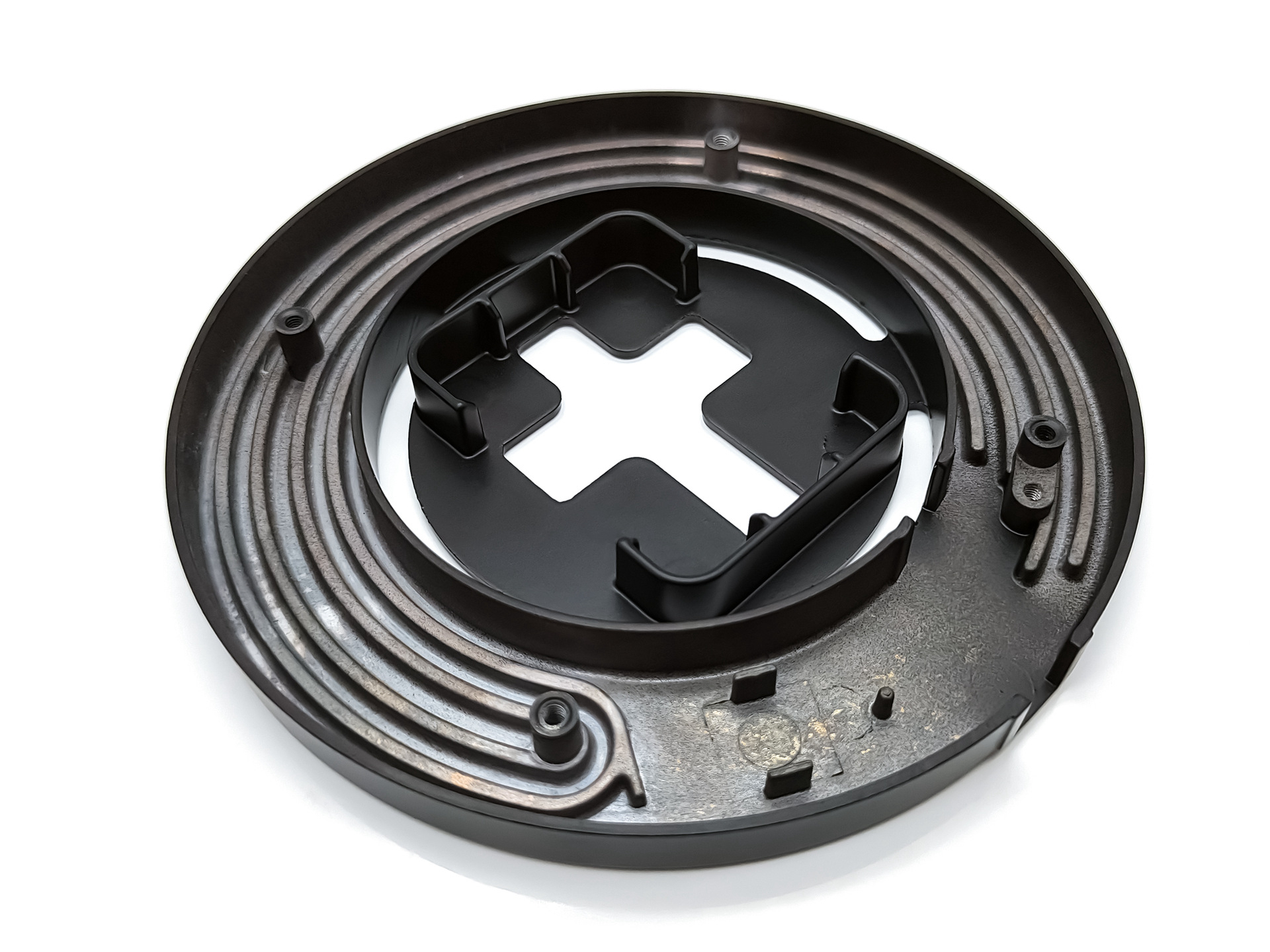
Volume is a scenario, not a universal threshold
Tooling amortization depends on cumulative accepted quantity, not a headline annual forecast. Model at least a downside case, expected case and upside case. Include engineering changes, launch scrap, replacement inserts, preventive maintenance and the time value of cash. A permanent die can look attractive at forecast volume yet remain uneconomic if the product changes before the tool is recovered.
Release pattern matters too. A large annual quantity shipped in irregular small lots may create setup, color, inspection, storage and minimum-load costs. Stable releases can support material planning and repeat process control. For uncertain demand, low-volume validation can use an expendable or bridge route before committing to production tooling.
Do not carry a break-even quantity from another project. It changes with part mass, cavity count, tool architecture, alloy, machine size, secondary operations, acceptance criteria and competing process. Calculate the crossover from actual quotations and update it after design or demand changes.
Select the casting process before claiming savings
Permanent-die routes
Aluminum die casting can be economical for repeated parts that benefit from integrated thin sections, controlled surfaces and rapid mold cycling. Zinc die casting can support compact detailed geometry and finishing, but density, service temperature and alloy requirements still govern. Neither route is automatically economical merely because the forecast is high.
Projected area, fill distance, wall transitions, thermal balance, undercuts and machine availability define the tool and cell. Add trim dies, slides, vacuum provisions, inserts, cooling, automation and gauges where needed. Confirm cavity count from quality and capacity evidence, not from an optimistic cycle calculation.
Expendable-mold routes
Sand casting may provide the lowest program cost for large parts, broad alloy choices, short programs or geometry that does not justify a permanent die. Its economic model includes pattern equipment, cores, molding, melt yield, shakeout, cleaning, heat treatment and machining allowance. A low pattern price does not guarantee a low delivered cost.
Investment casting can be attractive when fine geometry, difficult-to-machine alloy or part consolidation removes substantial machining and assembly. It also carries wax tooling, shell, cutoff, finishing and process-control costs. Compare its specific quote with other routes; do not treat it as the default answer for every intricate component.
Compare casting with realistic alternatives
Casting versus CNC machining
CNC machining often leads when demand is low or uncertain, geometry is accessible, revisions are likely, and critical properties require wrought stock. Casting gains ground as repeated stock removal, long cycle time or assembly features outweigh tooling and qualification. Hybrid production is common: cast the near-net body and machine only sealing faces, bores, threads and datums.
The comparison must include purchased-stock form, workholding, tool wear, inspection access and chips or returns under the actual material-control system. The broader machining-versus-casting decision should be made at finished-part level, not by comparing machine hourly rate with foundry piece price.
Casting versus fabrication, forging and additive production
Fabrication can be economical for open shapes made from standard sheet, tube or plate, especially when tooling avoidance and revision speed matter. Forging can justify its dies where directional flow, fatigue or impact requirements favor the process, but often needs substantial machining. The casting-versus-forging comparison must keep material condition and acceptance equivalent.
Additive production can avoid hard tooling and create internal geometry that conventional molds cannot release. Its unit economics may suit prototypes, spares or low demand, while casting may lead after design stabilization. Printed patterns or cores can also support casting without making the two routes mutually exclusive. Quote the intended alloy, post-treatment, supports, inspection and surface finishing before drawing a crossover.
Secondary operations can decide the result
A casting that leaves the mold near net shape may still require trimming, deburring, blasting, impregnation if permitted, heat treatment, straightening, machining, washing, coating, marking, assembly and testing. These operations may exceed the foundry conversion cost. Map every drawing feature to its process and inspection step.
Machining stock must cover process variation without hiding avoidable excess. Too little stock risks unclean surfaces; too much adds cycle time and can expose internal porosity. Datum design should locate critical machined relationships from stable casting features. Confirm the route with production-intent samples rather than relying only on nominal CAD.
Surface finishing is part of material and process selection. Alloy chemistry, cast skin, porosity, parting lines and polishing affect anodizing, plating and paint appearance. A finish trial must use the production alloy and representative cast surface. Otherwise the project may approve an attractive prototype that the production casting cannot reproduce.
Include quality cost and downside exposure
Inspection should target credible failure modes. Visual checks find surface defects but not every internal discontinuity. Dimensional reports do not prove pressure integrity. Radiography, sectioning, leak tests, material tests or process records may be appropriate for defined zones and risks, but indiscriminate testing adds cost without guaranteeing function.
Define lot, sampling, measurement method, acceptance criteria and reaction plan before comparing quotes. Add setup pieces, destructive samples and first-article effort to the commercial model. If a failure can stop an assembly line or create costly field replacement, compare prevention and containment costs rather than selecting the lowest nominal piece price.
The supplier's engineering proposal should connect each major defect risk to process control and verification. Claims about generic low scrap, tight tolerance or long tool life are not substitutes for a project-specific control plan.
Freeze the comparison baseline
Give every candidate process the same dated drawing, material requirement, forecast, delivery condition and inspection plan. Record approved exceptions separately. When a DFM change benefits one route, update the alternative concepts fairly or explain why they cannot adopt it. Otherwise the cost model compares different products.
Keep quotation revision, currency, freight term, metal-price basis and validity with the calculation. Reopen the crossover when a critical tolerance, annual demand, alloy, finish or test changes. This version control prevents an old low quote from surviving after its assumptions have expired and gives engineering and procurement one auditable decision record.

Commercial controls that protect the savings
State who owns patterns, dies, slides, trim tools, fixtures and gauges; where they are stored; what maintenance is included; and how replacement is approved. Clarify tool capacity basis, spare strategy and end-of-program disposition. A low initial tooling quote can become expensive if ownership or maintenance assumptions are unclear.
Control material and process substitutions. An alternate ingot source, foundry, heat-treatment source, coating supplier, cavity, gating revision or production transfer may change performance or appearance. Define notification and requalification according to risk. Savings that depend on uncontrolled substitution are not bankable.
Use quotation scenarios for demand and design uncertainty. Separate one-time charges from recurring unit cost and show price effects for release size, material index, inspection level and delivery condition. Record validity and exclusions. This gives procurement a basis for negotiation without asking the supplier to absorb undefined scope.
Treat capacity and cash flow as part of cost
A quoted unit price has little value if the nominated cell cannot support launch, normal demand and recovery after downtime. Ask which furnace, molding line, die-casting machine, trim cell and machining resources constrain output. Review planned utilization, changeover assumptions, maintenance windows and alternate capacity. Do not convert a theoretical cycle into committed weekly output without allowances for setup, inspection and actual operating pattern.
Capacity shortages create premium freight, overtime, excess safety stock or missed deliveries. Excess capacity can also be expensive if a dedicated tool or minimum material purchase is underused. Model inventory at each stage, including cast blanks waiting for machining or finish. Payment timing for tooling, qualification and inventory affects cash before piece-price savings are realized.
Test the economics against changed assumptions
Assumption to vary | Why it matters | Decision signal |
|---|---|---|
Cumulative accepted demand | Changes tooling amortization and inventory exposure | Casting must remain competitive in the approved downside case |
Engineering revision date | Can obsolete tooling or unfinished inventory | Delay hard-tool release if design maturity is inadequate |
Machining time and tool wear | Can erase near-net-shape savings | Confirm with representative cast stock |
Accepted yield by stage | Later rejection carries accumulated value | Locate prevention and inspection before the costly stage |
Release size and schedule | Changes setup, minimum-load and inventory cost | Quote actual releases, not annual volume alone |
Tool maintenance or replacement | Changes lifecycle capital and downtime | Define included maintenance and replacement trigger |
Validate the crossover before full commitment
Begin with DFM, process selection and a transparent cost model. Then validate high-uncertainty items with simulation, prototype tooling, soft patterns, sample castings or representative coupons as appropriate. Measure fill, soundness, dimensions, machining response, surface finish and functional performance. Update cost ranges using observed data.
Use gates: concept feasibility, tooling release, first casting, secondary-process approval, functional validation and production approval. At each gate, compare remaining casting risk with the best alternative. Sunk engineering effort should not force a casting route that no longer meets cost or performance.
Casting is the cost-effective choice only after the candidate route closes mandatory requirements and wins under credible demand and yield scenarios. This conclusion is stronger than a generic volume rule because it remains auditable when the drawing, forecast or supply plan changes.
Define stop conditions before tooling release
Do not continue merely because design and sourcing effort has already been spent. Pause or reject the casting route if mandatory properties cannot be demonstrated in the production material condition, the geometry requires unstable filling or feeding, finishing cannot meet appearance, critical defects cannot be verified economically, or the downside demand case no longer recovers the investment. Record the owner and date for each stop decision.
A route can also be technically feasible yet commercially wrong. Warning signs include dependence on one unavailable machine, unresolved tool ownership, no acceptable alternate material source, secondary operations omitted from the quote, or a schedule that requires unapproved production before validation. In those cases, revise the part, select another casting process, use a bridge method or return to machining or fabrication. This discipline prevents sunk cost from being mistaken for economic evidence.
RFQ inputs for a cost-effective casting decision
Provide 3D CAD and drawing revision, alloy and allowed alternatives, annual and lifetime demand, release sizes, program duration, demand scenarios, load and environment, critical dimensions, cosmetic zones, pressure or fatigue requirements, heat treatment, machining, joining, surface finish, inspection methods, reports, packaging, delivery point and approval schedule.
Ask the metal casting supplier for the proposed alloy-process pair, DFM changes, tool architecture, cavity and capacity basis, simulation or trial plan, secondary route, acceptance plan, one-time and recurring cost, maintenance, lead-time assumptions, source controls, change notification, exclusions and reasons any competing route was rejected.
FAQ
How Can Aluminum Die Casting Reduce Custom Part Manufacturing Costs?
When Should Buyers Switch from CNC Machining to Aluminum Die Casting?
What Design Changes Help Lower Aluminum Die Cast Part Costs?
How Do Tooling and Production Volume Affect Aluminum Die Casting Cost?
Can One-Stop Manufacturing Reduce the Total Cost of Aluminum Parts?