Aluminum Die Casting Materials for Custom Production Parts
Aluminum Die Casting Materials for Custom Production Parts
Aluminum die casting materials shape the final part long before molten metal enters the die. The alloy affects filling behavior, porosity risk, pressure tightness, strength, corrosion resistance, machining stability, coating performance and the way a buyer should inspect finished parts. Choosing A380, A360, A413 or ADC12 by habit can create avoidable problems when the part has sealing faces, thin ribs, threaded bosses, cosmetic surfaces or outdoor exposure.
Most buyers searching this topic already have a part in development. They may be building a housing, cover, motor bracket, lighting body, pump component, electronics enclosure, heat sink frame or industrial handle. Their decision is not simply "which aluminum alloy is common." The useful question is which alloy gives the best balance of castability, functional performance, secondary machining and finish acceptance for the real part.
Neway treats material selection as part of the manufacturing route. A die cast aluminum part may start with an alloy decision, but the final result also depends on wall thickness, gate and vent design, machining allowance, parting line location, heat dissipation requirement, coating plan and inspection method. The best material choice is the one that lets the finished part meet its working requirements with stable production evidence.
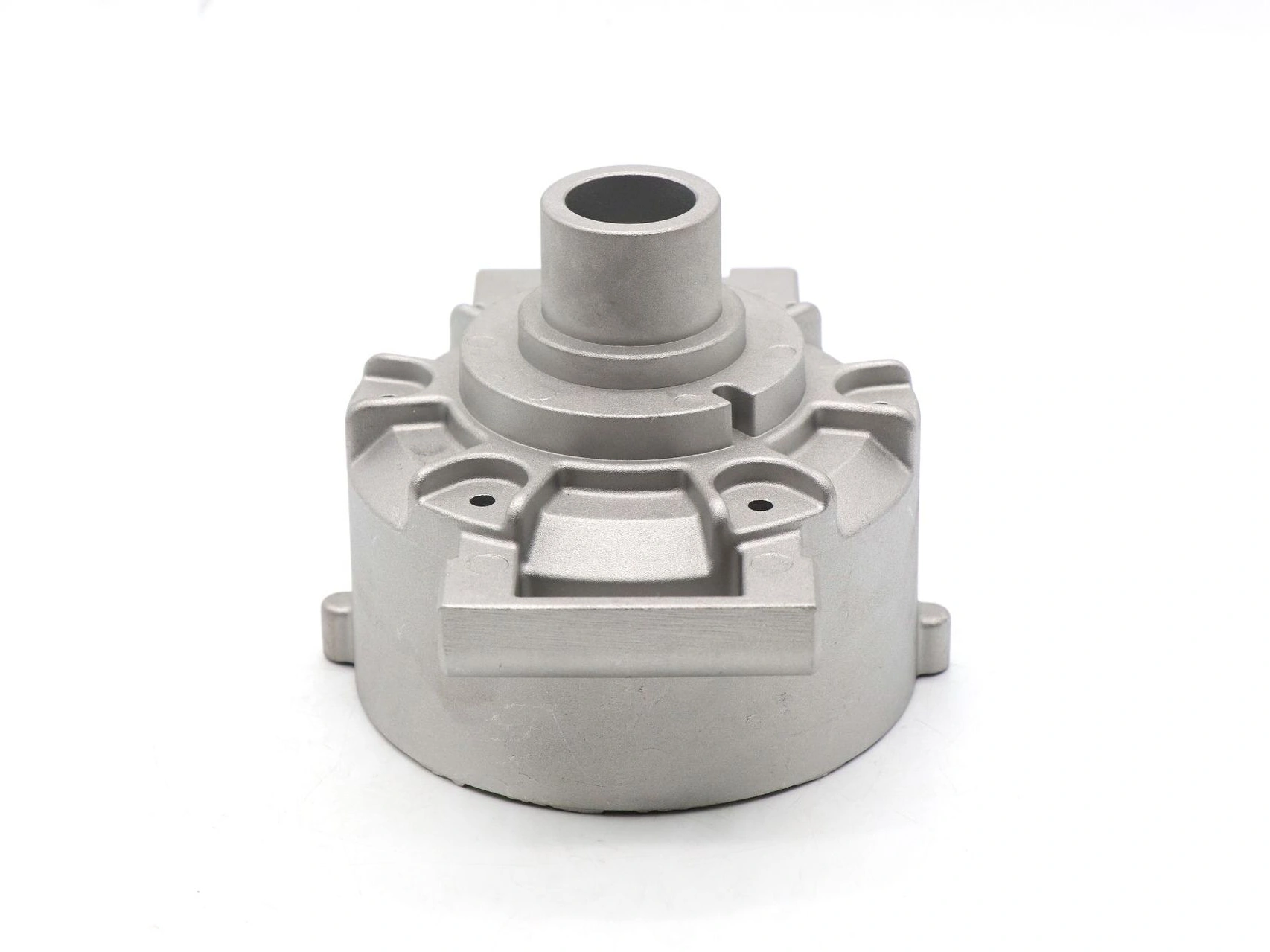
What Buyers Should Decide Before Choosing an Aluminum Die Casting Material
Before selecting an aluminum die casting material, buyers should define what the part must do after casting, machining and finishing. A low-cost electronics cover, a pressure-related pump housing and an outdoor lighting body may all be aluminum die castings, but they do not need the same alloy priorities. One may prioritize fluidity and cost. Another may prioritize pressure tightness. Another may require better corrosion resistance and a stable coating surface.
The drawing should identify load areas, sealing faces, threaded holes, bearing seats, cosmetic faces, heat dissipation surfaces and any area that must be machined after casting. These notes help the supplier judge whether the alloy choice will support the real part. A material that fills thin walls well may still need careful review if the part will be anodized or pressure tested. A material with better corrosion behavior may still be uneconomical if the application does not need that property.
Buyer Requirement | Material Question | Manufacturing Risk if Ignored |
|---|---|---|
Thin walls and ribs | Does the alloy have enough fluidity for the geometry? | Cold shuts, incomplete fill or weak ribs |
Outdoor use | Is corrosion behavior suitable with the chosen finish? | Coating failure or premature surface corrosion |
Pressure or sealing function | Can the alloy and tooling route control porosity? | Leak test failure or machining exposure of pores |
Threaded bosses | Will the material machine and hold threads reliably? | Poor fastening, burrs or stripped threads |
Cosmetic finish | Will the surface accept the planned coating or polish? | Blisters, visible pores, uneven color or rework |
Heat dissipation | Is thermal behavior adequate for the application? | Temperature rise or poor contact after machining |
Common Aluminum Die Casting Materials and Where They Fit
A380 is one of the most widely used aluminum die casting materials because it balances castability, strength, cost and general manufacturing stability. It is often used for housings, brackets, covers and industrial components where the part needs good production economics and moderate mechanical performance. A380 is often a practical starting point when the buyer does not have a special corrosion, pressure tightness or finish requirement. For alloy-sensitive projects, A380 aluminum die casting is a better reference than treating every aluminum or zinc grade as interchangeable.
A360 is often reviewed when corrosion resistance or pressure tightness matters more. It can be useful for parts exposed to moisture or for components that need better sealing reliability, but it may require a more careful casting route and cost review. A413 is known for strong fluidity and can help with thin sections or pressure-tight applications in some cases. ADC12 is common in many Asian supply chains and is often used for cost-effective aluminum die casting where the buyer accepts its property profile and finish limits. For alloy-sensitive projects, A360 aluminum die casting is a better reference than treating every aluminum or zinc grade as interchangeable.
A356-T6 is a different discussion. It is not normally the default alloy for high pressure die casting. It is common in sand casting, gravity casting or permanent mold routes when heat treatment and structural properties matter. Buyers comparing aluminum die casting materials should avoid forcing every aluminum casting alloy into the same process route. The right question is whether the part should be high pressure die cast, sand cast, gravity cast or machined from billet.
Material Direction | Typical Strength | Buyer Fit | Watch Point |
|---|---|---|---|
A380 | Balanced castability, strength and cost | General housings, brackets, covers and production parts | Review corrosion and cosmetic finish expectations |
A360 | Better corrosion direction and pressure-related use cases | Outdoor housings, pump bodies, sealed covers | May need more careful process and cost review |
A413 | High fluidity and useful pressure tightness direction | Thin wall or leak-sensitive components | Confirm mechanical and finish requirements |
ADC12 | Cost-effective die casting material in many supply chains | Commercial housings, covers and general die cast parts | Confirm equivalency, finish and drawing acceptance |
A356-T6 | Heat-treated structural casting direction | Sand casting, gravity casting or permanent mold parts | Do not treat it as a default HPDC substitute |
How Alloy Elements Change Castability and Part Risk
Aluminum die casting alloys are not just labels. Silicon improves fluidity and helps fill thin walls and complex shapes. Copper can support strength and hardness but may reduce corrosion resistance in some environments. Magnesium and other elements may influence strength, corrosion behavior and finishing response. Iron can help reduce die soldering in high pressure die casting, but too much iron can affect ductility and surface quality.
Buyers do not need to become metallurgists, but they should understand why two aluminum alloys behave differently in the same die. A thin electronic enclosure may require good flow into ribs and bosses. A pump cover may require leak control after machining a sealing face. A decorative handle may require a finish route that hides or controls cast surface variation. Alloy chemistry, die design and process control work together.
Material certificates and equivalent standards matter when the drawing names a specific grade. If the buyer allows ADC12 as an equivalent for another aluminum die casting material, the approval should be written clearly. If an application has corrosion, pressure or regulatory requirements, silent substitution can become a production risk.
Matching Aluminum Die Casting Materials to Part Functions
For structural brackets and mounting parts, buyers usually care about load path, boss strength, thread engagement and dimensional repeatability. A380 or an equivalent die casting material may be suitable when the design has enough wall thickness, proper ribs and local machining for critical features. If the bracket faces impact load, vibration or safety requirements, material selection should be reviewed with the part geometry and inspection method, not by tensile data alone.
For housings and covers, the decision may focus on fluidity, cosmetic surfaces, heat dissipation and coating. A die cast housing often contains ribs, screw bosses, cable openings and sealing faces. The alloy must fill the geometry and still allow machining where required. For visible housings, the finish route matters as much as the alloy label. Painting or powder coating may hide some cast texture, while clear or decorative finishes expose more surface variation.
For leak-sensitive parts, the buyer should ask about pressure tightness, porosity control, impregnation if relevant, machining exposure of pores and pressure test standards. A413 or A360-style choices may be reviewed for certain pressure-related applications, but alloy choice alone cannot guarantee a leak-free part. Gate design, venting, vacuum assistance, machining allowance and inspection all matter. When the drawing is still open, A413 aluminum die casting gives buyers a useful reference for comparing alloy trade-offs before RFQ release.
How Material Choice Affects Machining After Die Casting
Many aluminum die cast parts need CNC machining after casting. Typical machined features include threaded holes, sealing faces, bearing bores, datum pads, mounting slots and flat contact surfaces. The selected material affects tool wear, burr behavior, surface finish and the chance of exposing subsurface porosity during machining.
Buyers should separate as-cast and machined requirements on the drawing. Asking the supplier to hold tight tolerance on every surface can increase cost without improving function. A better route is to cast the general shape and machine only the features that control assembly, sealing, movement or inspection. Material choice should support that machining strategy.
If a sealing face is machined after die casting, the buyer should ask whether the alloy and casting route can control porosity near that face. If threads are tapped after coating, the buyer should confirm whether tapping occurs before or after finishing and how the final gauge check is performed. These details are often more important than the alloy name printed on the quote.
Sample Validation Before Locking the Material
Material approval should be based on samples that represent the intended production condition. A raw A380 casting sample can show filling and general shape, but it does not prove powder coating quality, machined sealing faces or thread fit after finishing. A buyer comparing A360 and ADC12 for an outdoor housing should request the same machining and coating route on both sample directions if appearance or corrosion performance drives the decision.
Early samples should answer three material questions. First, does the alloy fill the actual geometry without short shots, cold shuts or weak ribs? Second, does the alloy behave acceptably during machining of holes, bores, threads and gasket faces? Third, does the surface meet the finish standard after pretreatment, coating or anodizing review? If any answer is unclear, the material should remain open until another sample or pilot batch gives stronger evidence.
Buyers should also avoid approving a material from a hand-polished display sample alone. Polishing can hide parting line marks, flow texture and small pores that will still matter in repeat production. A good sample package includes raw casting review, machined feature inspection, finish sample approval and a note explaining which defects are acceptable in visible and hidden zones.
Surface Finishing and Anodizing Limits for Die Cast Aluminum Materials
Surface finishing can change the material decision. Aluminum die castings can be painted, powder coated, polished, plated in some cases, or given other post-process finishes. Decorative anodizing is more difficult on many high pressure die casting alloys than on wrought 6061 or 6063 because silicon and other alloying elements affect color uniformity and surface appearance. Buyers expecting a clean decorative anodized finish should confirm feasibility before committing to die casting. When the drawing is still open, aluminum die casting alloy options gives buyers a useful reference for comparing alloy trade-offs before RFQ release.
For many die cast aluminum parts, powder coating or painting is a more practical finish than decorative anodizing. Powder coating can provide color and protection, but it requires attention to outgassing, cleaning, masking and coating thickness around holes or mating surfaces. If the part has threads, bores or sealing faces, masking should be defined before samples are approved.
Finish validation should use actual cast parts, not generic coupons. A cast surface with pores, flow marks or parting line cleanup behaves differently from a flat test panel. The buyer should approve the finish sample, defect boundary and packaging method together.
Material Certificates, Equivalents and Production Control
Material control becomes important after the first order. If the drawing calls out A380 but allows ADC12 equivalent, the approval should state the allowed standard, certificate expectation and whether future changes require buyer approval. If A360 is selected for corrosion direction, switching to a lower-cost alloy later may change field performance even if the part still looks similar.
Buyers should request material records for samples and production batches when the material affects safety, corrosion, pressure tightness or customer requirements. The record does not need to make the project complicated, but it should show the alloy used, the heat or batch reference when available, and any approved equivalent. This keeps purchasing, engineering and quality aligned when repeat orders are placed months later. When the drawing is still open, how alloy selection affects machined features and assembly fit gives buyers a useful reference for comparing alloy trade-offs before RFQ release.
Control Point | What to Record | Why Buyers Need It |
|---|---|---|
Sample alloy | Actual material used for trial parts | Prevents approving one alloy and producing another |
Equivalent rule | Allowed substitute and approval condition | Controls cost changes without hidden risk |
Finish sample | Coated or anodized condition tied to material | Protects visible surface standard |
Critical inspection | Leak, CMM, gauge or finish checks | Connects material choice to functional proof |
Porosity, Pressure Tightness and Inspection Planning
Porosity is one of the key risks in aluminum die casting materials. Some porosity may be harmless in non-critical areas. Porosity near a sealing face, threaded hole or pressure boundary can cause leaks, poor appearance or scrap after machining. Buyers should tell the supplier which areas cannot tolerate exposed pores and which areas are less critical.
Pressure tightness depends on material selection, part design, die design, process control and inspection. A buyer should not rely on an alloy name as a leak guarantee. If the part is a pump body, valve cover, fluid housing or sealed electronics enclosure, the RFQ should include pressure test requirements, leak rate expectations, machined sealing faces and any impregnation restrictions.
Risk Area | Inspection Method | Buyer Note |
|---|---|---|
Sealing face | Flatness check, visual pore review and leak test if required | Define whether pores are allowed after machining |
Threaded hole | Thread gauge and visual burr check | Confirm tapping sequence and coating effect |
Cosmetic surface | Visual standard under agreed lighting | Separate visible and hidden zones |
Critical datum | CMM or fixture gauge | Use stable machined datums where needed |
Pressure boundary | Air, water or application-specific leak test | State pressure, duration and acceptance level |
Short Example: Choosing Material for an Outdoor Aluminum Housing
A buyer needed an outdoor pump controller housing with thin ribs, a machined gasket face, threaded mounting bosses and a black powder coated finish. A low-cost die casting material looked attractive at the quotation stage, but the application required corrosion resistance, stable sealing and clean finish after machining. The engineering review compared A380, A360-style direction and ADC12 equivalency based on corrosion exposure, casting cost, machining risk and coating acceptance.
The project moved forward with a material direction that gave better corrosion confidence and a tooling plan that protected the gasket face. Prototype samples included machining, powder coating, thread gauge checks and a basic leak review. The buyer approved the material after seeing finished samples, not after reading a property table. That approval gave the production team clear evidence for future repeat orders.
What to Prepare for an Aluminum Die Casting Material RFQ
An RFQ for aluminum die casting materials should include the 3D model, 2D drawing, preferred alloy or allowed equivalents, application environment, annual volume, batch quantity, critical dimensions, machined features, finish requirement, pressure or leak requirements, inspection level and target launch stage. The supplier can then recommend whether A380, A360, A413, ADC12 or another route is appropriate.
RFQ Item | Why It Matters for Material Selection |
|---|---|
Preferred alloy and equivalents | Clarifies whether A380, A360, A413, ADC12 or another material is allowed |
Application environment | Shows whether corrosion, heat, pressure or wear matters |
Machined areas | Identifies sealing faces, threads, bores and datum pads |
Finish requirement | Controls painting, powder coating, anodizing feasibility and masking |
Leak or pressure test | Helps evaluate porosity risk and inspection route |
Volume and launch stage | Guides tooling, sample validation and production planning |
Neway can review aluminum die casting materials together with tooling, casting, CNC machining, surface finishing and inspection. This gives buyers a practical material decision for finished production parts rather than a loose alloy comparison separated from manufacturing reality. The material decision should be checked against surface finish compatibility for aluminum alloy die cast parts when casting route, surface finish or production risk depends on the grade.
FAQ
How Do Buyers Choose A380, A360, A413 or ADC12 for Aluminum Die Casting?
What Material Properties Matter Most for Aluminum Die Casting?
Can Aluminum Die Casting Materials Be Anodized, Painted or Powder Coated?
How Do Material Choices Affect Porosity, Machining and Pressure Tightness?
What Information Is Needed to Quote Aluminum Die Casting Materials?