How Prototype Casting Helps Validate Custom Metal Parts Before Production
How Prototype Casting Helps Validate Custom Metal Parts Before Production
Prototype casting helps buyers validate custom metal parts before committing to production tooling, low-volume manufacturing, or mass production. For many metal casting projects, the first challenge is not only making a sample. The real challenge is confirming whether the design, material, geometry, machining areas, surface finish, assembly function, and production route can support the final product.
When buyers use prototype casting, they can test important decisions before investing in formal tooling or large production batches. This is especially useful for custom aluminum, zinc, copper, and multi-material metal parts where function, appearance, and manufacturing feasibility must be confirmed early.
This article explains how prototype casting supports material validation, DFM review, tooling decisions, CNC post-machining, surface finishing, inspection, low-volume transition, and final mass production planning for custom metal parts.
Why Buyers Use Prototype Casting Before Production
Buyers usually search for prototype casting when a custom metal part has not fully entered production. The drawing may still need validation, the material may not be final, the assembly relationship may need testing, or the buyer may not want to invest directly in expensive production tooling without confirming the design first.
The value of prototype casting is not just “making a sample.” Its value is finding problems before they become expensive production problems. A prototype can reveal whether the part geometry is suitable for casting, whether the selected material fits the application, whether machining is needed, and whether the part can move toward low-volume or mass production safely.
Buyer Situation | Why Prototype Casting Helps |
|---|---|
Drawing is not fully proven | Prototype casting helps validate structure, wall thickness, holes, bosses, and assembly surfaces before production tooling. |
Material is uncertain | Buyers can compare aluminum, zinc, copper, or other casting materials based on real part behavior. |
Function needs physical testing | Prototype parts can be assembled, loaded, moved, fastened, or tested in the application environment. |
Surface finish must be confirmed | Painting, powder coating, anodizing, sand blasting, tumbling, or other post-processes can be checked before production. |
Production tooling is expensive | Prototype casting helps reduce the risk of opening the wrong tool or locking in an unstable design. |
Future mass production is planned | Prototype data can support tooling, inspection, finishing, packaging, and production standards later. |
For buyers, prototype casting should be treated as a decision-making step before formal tooling and production release.
What Can Prototype Casting Validate?
Prototype casting can validate more than shape. A well-planned prototype can help buyers test part geometry, material direction, functional fit, surface requirements, machining needs, and the future production route.
Validation Area | What Prototype Casting Can Confirm | Buyer Value |
|---|---|---|
Part geometry | Whether wall thickness, holes, ribs, bosses, mounting surfaces, and assembly areas are reasonable. | Reduces drawing changes after tooling starts. |
Material choice | Whether aluminum, zinc, copper, or another casting material fits the application. | Helps avoid wrong material selection before production. |
Functional fit | Whether assembly, positioning, fastening, movement, sealing, or contact areas work correctly. | Reduces functional failure risk in later production. |
Surface requirement | Whether painting, powder coating, anodizing, post-processing, or visible surfaces are feasible. | Confirms appearance standard before batch production. |
Machining need | Which areas require CNC machining, post-machining, tapping, drilling, or datum control. | Controls finished part accuracy and avoids unnecessary machining. |
Production route | Whether the part should move into tooling, low-volume manufacturing, or mass production. | Clarifies the next manufacturing strategy. |
Prototype casting is most valuable when the buyer uses the sample, inspection results, and engineering feedback together. The output should not only be a physical part. It should also include lessons for tooling, machining, finishing, inspection, and production planning.
Prototype Casting vs CNC Machining, 3D Printing and Sand Casting
Buyers often compare prototype casting with CNC machining, 3D printing, sand casting, and urethane casting. The best prototype method depends on what the buyer needs to validate. If the goal is only to check the outer shape, 3D printing or CNC machining may be enough. If the goal is to validate future metal casting behavior, prototype casting can provide more useful production-related information.
Prototype Method | Better For | Limitation |
|---|---|---|
Prototype casting | Metal parts that need material, casting structure, machining, finishing, and production feasibility validation. | May require more process planning than simple appearance prototypes. |
High-precision solid metal samples, functional prototypes, and machined feature validation. | Does not fully represent casting structure, casting defects, or future tooling behavior. | |
Fast shape validation, fit checks, and early design review. | Material properties, surface quality, and mass production process representation are limited. | |
Larger metal prototype parts or low-volume metal castings. | Dimensional accuracy and surface finish are usually lower than die casting routes. | |
Plastic-like appearance prototypes and early product presentation samples. | Not suitable for validating metal casting material performance. |
If buyers only need to confirm appearance, CNC machining or 3D printing may be practical. If they need to validate future metal casting production, material behavior, post-machining, surface finishing, and tooling decisions, prototype casting is more relevant.
When Should Buyers Choose Prototype Casting?
Prototype casting is useful when the buyer needs physical proof before moving into production tooling or larger orders. It is especially helpful for new custom metal parts, expensive tooling projects, complex geometries, functional metal parts, appearance-critical parts, uncertain materials, and future mass production programs.
Project Situation | Why Prototype Casting Helps |
|---|---|
New custom metal part | Validates drawing, material, geometry, and manufacturing feasibility. |
Expensive production tooling | Reduces risk before opening formal casting tools. |
Complex geometry | Checks thin walls, holes, ribs, bosses, mounting faces, and assembly features. |
Functional metal part | Tests strength direction, fastening, movement, fit, sealing, or application performance. |
Appearance-critical part | Validates cosmetic surfaces, visible marks, texture, coating, and packaging protection. |
Material uncertainty | Compares aluminum, zinc, copper, or other casting material directions before production. |
Future mass production | Creates validation data for tooling, inspection, finishing, packaging, and process standards. |
Prototype casting is especially valuable when buyers want to reduce uncertainty before moving into low-volume manufacturing or mass production.
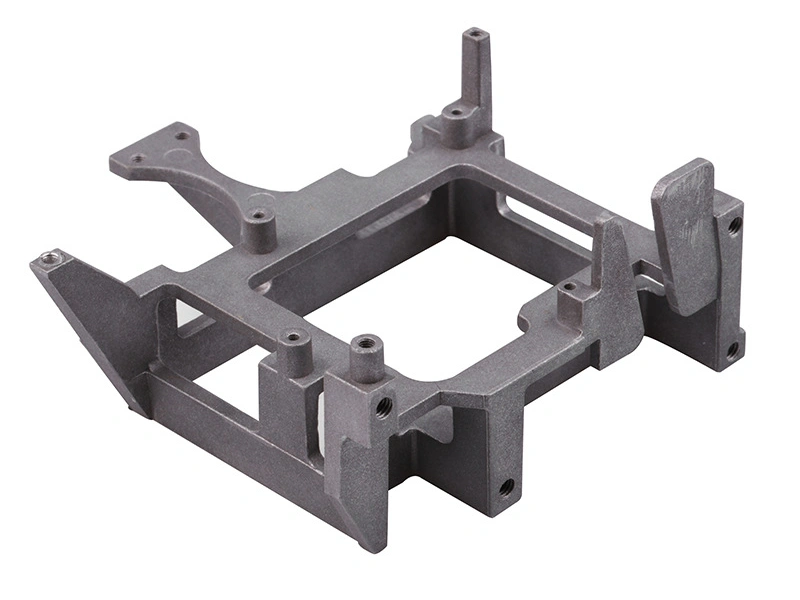
Material Selection in Prototype Casting
Material selection during prototype casting should be connected to the final production route. Buyers should not choose a prototype material only because it is fast or convenient if the final product will use a different metal. A prototype is more valuable when the material direction reflects the intended production application.
Prototype Material Direction | Suitable Validation Purpose | Related Production Direction |
|---|---|---|
Lightweight structures, housings, heat-related parts, brackets, and frames. | Aluminum Die Casting | |
Small complex parts, decorative parts, hardware, handles, and detailed features. | Zinc Die Casting | |
Conductive parts, thermal parts, terminals, connectors, and corrosion-related parts. | Copper Die Casting | |
Multi-material prototype casting | Product families with several metal parts requiring different materials. | |
Machined prototype plus casting review | Projects needing high-precision functional zones and future casting structure validation. | CNC and Metal Casting |
Buyers can use prototype casting material selection to compare aluminum, zinc, copper, and related casting materials before selecting the formal production route.
Design and DFM Review Before Prototype Casting
Prototype casting becomes more useful when it starts with proper DFM review. If the prototype only copies an unreviewed design, it may validate the wrong geometry and fail to provide useful production feedback. Before prototype casting, the supplier should review the 3D model, 2D drawing, wall thickness, draft angle, fillets, ribs, bosses, holes, parting line risk, machining allowance, surface finish feasibility, assembly interface, and production volume expectation.
DFM Review Item | Prototype Casting Value |
|---|---|
Wall thickness | Finds shrinkage, porosity, deformation, short fill, and local thick-section risks before tooling. |
Draft angle | Helps judge whether the design will be suitable for future production tooling. |
Bosses and ribs | Validates strength, support, material flow, and forming stability. |
Machining allowance | Confirms whether enough material is reserved for CNC machining and post-machining. |
Cosmetic surface | Identifies visible surfaces and possible conflicts with parting lines, gates, or ejector marks. |
Assembly interface | Checks mating surfaces, holes, threads, alignment, movement, and functional testing needs. |
Buyers can use design review for prototype casting and engineering support for prototype casting to make the prototype stage more meaningful for later production.
How Prototype Casting Supports Tooling Decisions
Prototype casting can help buyers decide whether the part is ready for formal tooling. It can also reveal whether the drawing should be modified, whether a single-cavity or multi-cavity tool is suitable, which surfaces need special attention, and which areas require post-machining.
This is one of the most important benefits of prototype casting. It helps buyers avoid opening production tooling before the part has been validated.
Tooling Decision | Prototype Casting Input |
|---|---|
Whether to open tooling | Prototype samples verify structure, function, material direction, and basic manufacturing feasibility. |
Tooling type | Quantity, complexity, and prototype results help decide single-cavity or multi-cavity tooling. |
Parting line planning | Prototype appearance and functional surfaces help guide parting line decisions. |
Gate and venting strategy | Prototype defects, geometry, and filling risks help guide production mold design. |
Machining allowance | Prototype machining results help confirm stock allowance and datum planning. |
Tooling revision | Prototype testing results can support drawing changes before formal tooling. |
After prototype validation, buyers can move into casting tooling after prototype validation. For production planning, tool materials for casting production can also be reviewed based on expected quantity, material, and mold life requirements.
Post-Machining and Surface Finishing for Prototype Casting Parts
If the final product needs finished metal parts, prototype casting should not stop at raw casting blanks. Buyers should also validate CNC machining, post-machining, deburring, surface finishing, coating thickness, appearance, and assembly fit where possible.
This helps the buyer understand whether the final production part can meet function, appearance, and delivery requirements after all secondary processes are completed.
Prototype Finishing Step | What It Validates |
|---|---|
Functional dimensions, hole positions, mounting faces, datums, and assembly surfaces. | |
Machining allowance, sealing faces, precision holes, threaded features, and fit areas. | |
Deburring effect, edge quality, hand feel, and small feature protection. | |
Color, adhesion, visual quality, masking, and surface preparation. | |
Coating thickness, surface coverage, durability, and assembly impact. | |
Anodizing | Aluminum prototype appearance, protection feasibility, and surface compatibility. |
Surface roughness, texture, coating preparation, and visual consistency. | |
Functional assembly | Real fit, movement, fastening, clearance, and product use behavior. |
A complete post processing for prototype casting parts plan helps buyers validate finished part requirements before approving production.
Inspection and Testing for Prototype Casting Samples
Prototype casting samples should be inspected and tested according to the future production goal. A prototype that only looks acceptable may still fail if it has poor dimensions, internal defects, unsuitable material, coating problems, or poor assembly performance.
Inspection and testing can include material verification, dimensional inspection, CMM inspection, X-ray inspection, surface inspection, coating inspection, thread gauge inspection, assembly testing, and functional testing.
Prototype Test | What It Confirms | Why It Matters |
|---|---|---|
Dimensional inspection | Basic dimensions and key dimensions. | Helps judge whether the drawing and prototype process are feasible. |
Hole position, flatness, position tolerance, datums, and machined features. | Supports assembly accuracy and dimensional verification. | |
Internal porosity, hidden defects, and casting integrity. | Helps judge structural reliability risk before production. | |
Surface inspection | Visible surfaces, casting marks, defects, scratches, and surface preparation quality. | Helps judge whether post-processing and cosmetic requirements are realistic. |
Coating inspection | Coating thickness, adhesion, color, gloss, and masking quality. | Validates the surface treatment plan before batch production. |
Functional test | Assembly fit, fastening, movement, sealing, or application performance. | Helps decide whether the part can move to the next production stage. |
The result of prototype casting should include samples, inspection results, problem records, and next-step recommendations. These outputs are more useful than a sample alone because they can guide tooling, machining, finishing, and production decisions.
How Prototype Casting Leads to Low-Volume Manufacturing
After prototype casting validates the main design, the next step is often low-volume trial production. A single prototype can confirm direction, but a small batch can better show process stability, machining repeatability, surface finishing consistency, inspection standards, and packaging requirements.
If the prototype is not stable, buyers should not move directly into mass production. The prototype stage should identify problems first, and low-volume manufacturing should confirm whether the process can repeat.
Stage | Main Purpose | Buyer Decision |
|---|---|---|
Prototype casting | Validate structure, material, function, machining needs, and surface feasibility. | Decide whether to modify the drawing or continue to the next stage. |
Prototype inspection | Confirm dimensions, appearance, internal defects, and functional results. | Decide whether to adjust material, process, machining, or finishing. |
Validate small-batch stability, inspection standards, finishing batches, and packaging. | Decide whether the process is ready for production release. | |
Production review | Build inspection, finishing, packaging, and quality records for repeat production. | Decide whether to approve mass production. |
Low-volume trial data helps buyers move from prototype validation to controlled production. It reduces the risk of scaling too quickly from one sample to full production.
How Prototype Casting Data Transfers to Mass Production
The real value of prototype casting is not only the sample. It is the data and decisions that can be transferred into final production. Prototype results should become the basis for approved samples, inspection points, tooling notes, machining allowance, material records, finish samples, functional test standards, packaging feedback, and revision records.
Prototype Data | How It Supports Production |
|---|---|
Approved sample | Acts as the reference for appearance, function, surface condition, and delivery state. |
Dimensional report | Becomes the basis for mass production inspection points and sampling standards. |
DFM feedback | Guides drawing optimization, tooling design, gate planning, venting, and production feasibility. |
Machining result | Confirms machining allowance, datum strategy, CNC process, and post-machining needs. |
Finish sample | Defines color, texture, coating, gloss, surface preparation, and visual acceptance standard. |
Functional test | Confirms assembly, movement, fastening, sealing, or application performance. |
Packaging feedback | Helps protect finished parts during shipment and production-line handling. |
Revision record | Prevents confusion between prototype version, tooling version, and production version. |
For final production, buyers can connect prototype records with quality control from prototype to mass production. This helps keep approved standards consistent when the project enters repeat production.
How to Choose a Prototype Casting Partner
Buyers should not choose a prototype casting partner only because it can make a sample quickly. A better partner should help convert prototype results into a production-ready plan. This means the supplier should understand engineering review, material selection, prototype support, casting feasibility, CNC machining, post-machining, surface finishing, inspection, testing, low-volume manufacturing, mass production transition, and one-stop project management.
Partner Capability | Why It Matters |
|---|---|
Engineering review | Helps identify design, material, tooling, machining, finishing, and assembly risks before prototype production. |
Material selection | Helps choose aluminum, zinc, copper, or other casting materials based on final application. |
Prototype support | Helps produce samples that are useful for real manufacturing decisions. |
Metal casting capability | Connects prototype results with future casting production requirements. |
CNC and post-machining | Validates functional dimensions, holes, threads, datums, and finished part accuracy. |
Surface finishing | Confirms appearance, coating, texture, corrosion protection, and finished part feasibility. |
Inspection and testing | Turns prototype results into measurable data for production decisions. |
Low-volume and mass production support | Helps transfer prototype findings into trial production and final production standards. |
If buyers need prototype casting for custom metal parts, Neway can support the project from rapid prototyping for metal parts and prototyping support for prototype casting to one-stop prototype casting support, assembly testing for prototype casting parts, low-volume manufacturing, and mass production transition.
Summary
Prototype casting helps buyers validate custom metal parts before production tooling, low-volume manufacturing, and mass production. It can confirm material direction, part geometry, functional fit, surface finishing feasibility, machining needs, inspection methods, and production route decisions.
For buyers, the main value of prototype casting is risk reduction. A well-planned prototype can reveal design problems, material mismatch, machining needs, surface finish issues, assembly risks, and tooling concerns before they become expensive production changes.
Prototype Casting Planning Area | Key Buyer Question | Recommended Action |
|---|---|---|
Validation purpose | What should the prototype prove before production? | Define whether the focus is geometry, material, function, surface finish, machining, assembly, or production route. |
Prototype method | Is prototype casting better than CNC machining, 3D printing, or sand casting? | Select the prototype method based on whether the project needs casting-related material and production validation. |
Material selection | Which material should the prototype represent? | Compare aluminum, zinc, copper, and related casting materials based on the final product requirement. |
DFM review | Can the prototype support future tooling and production decisions? | Review wall thickness, draft, bosses, ribs, machining allowance, cosmetic surfaces, and assembly interfaces before sampling. |
Tooling decision | Is the part ready for formal tooling? | Use prototype results to decide tooling type, parting line planning, gate and venting strategy, machining allowance, and revision needs. |
Post-machining and finishing | Does the prototype represent the final finished part? | Validate CNC machining, post-machining, tumbling, painting, powder coating, anodizing, sand blasting, and assembly testing when needed. |
Inspection and production transfer | How will prototype results become production standards? | Use dimensional reports, CMM inspection, X-ray inspection, finish samples, functional tests, packaging feedback, and revision records to guide low-volume and mass production. |
FAQ